The 12 step spiritual principles are more than just a set of rules; they're a collection of powerful ideas—like honesty, hope, and willingness—that act as a blueprint for genuine personal growth. While they got their start with Alcoholics Anonymous, these principles are a universal roadmap for anyone looking for a profound shift in their life, not just those in recovery. Think of them as a practical toolkit for building a more authentic and connected way of living.
Key Takeaways
- Universal Application: The 12 step spiritual principles are not exclusive to addiction recovery; they offer a universal framework for personal growth, improved relationships, and finding purpose.
- Foundation First: The journey begins with foundational principles like Honesty, Hope, and Faith, which create the necessary mindset for change.
- Action is Key: Principles such as Courage, Integrity, and Willingness move you from acceptance to action, turning belief into tangible change.
- Connection and Healing: Humility, Love, and Forgiveness are crucial for repairing relationships with others and yourself, fostering a sense of belonging.
- Lifelong Practice: The final principles, including Discipline and Perseverance, are tools for maintaining progress and integrating this new way of living into daily life.
A Practical Guide to Personal Transformation

Feeling stuck is a fundamentally human experience. We all search for a clearer sense of direction at some point, and that’s where the 12 step spiritual principles come in. They offer a time-tested framework for working through life’s toughest spots and creating change that actually lasts.
It’s important to know that while these principles are the heart of programs like Alcoholics Anonymous (AA), their wisdom isn't confined to recovery circles. These aren’t religious doctrines. They’re a practical code for living that champions self-awareness, personal responsibility, and connection to something bigger than ourselves.
This guide is here to break down these concepts into simple, actionable ideas. We'll show you how they can serve as your personal compass, guiding you toward a life built on integrity and purpose.
The Origins and Reach of the 12 Steps
The whole 12-step model kicked off back in the 1930s with the founders of AA, and its impact has been massive. Today, millions of people around the world are part of AA, and these principles are a core component of professional addiction treatment.
In fact, the numbers speak for themselves: roughly 1 in 8 Americans have attended a 12-step program. Even more telling, an estimated 95% of inpatient alcohol treatment programs weave AA principles into their recovery plans. This widespread use really underscores how valuable the program is seen to be in clinical environments.
The core idea is simple: personal growth is a journey, not a destination. It requires a willingness to look inward, take responsibility, and connect with a source of strength beyond your own understanding.
Why These Principles Work for Everyone
The real magic of the 12 step spiritual principles is how adaptable they are. They're designed to meet you exactly where you are, offering a clear path toward becoming a better version of yourself.
Whether you're wrestling with a major life challenge or just want to live more meaningfully, these concepts can help you navigate the various stages of recovery and personal growth.
Adopting these principles can bring some incredible benefits:
- Deeper Self-Awareness: You’re encouraged to take an honest look at yourself—your patterns, what drives you, and where you can grow.
- Healthier Relationships: Concepts like humility, forgiveness, and love give you the tools to repair damaged connections and forge stronger, healthier ones.
- A Real Sense of Purpose: When your actions start to line up with your core values, your life begins to feel more directed and meaningful.
- Tougher Resilience: They arm you with healthy coping skills to face life’s inevitable curveballs with a bit more grace and strength.
We’re about to dive into each of these principles, showing you practical ways to bring them into your everyday life. The goal is simple: to make this path to change accessible to anyone who's ready to take that first step.
Building Your Foundation with Honesty, Hope, and Faith
Every solid house needs a solid foundation. The same is true for building a new life. In this journey, your foundation is poured from three essential spiritual principles: Honesty, Hope, and Faith. These aren't just nice ideas; they're the first tools you'll pick up to start the real work.
These three principles work in tandem, creating that first crucial shift from feeling hopelessly stuck to seeing a glimmer of possibility. Honesty clears away the wreckage, Hope draws up the blueprint for something better, and Faith is the trust you put in the process, long before the walls go up. Let's look at how to lay these first essential bricks.

Honesty: The Courage to See Clearly
Of all the 12 step spiritual principles, Honesty comes first for a reason. It's the bedrock. And we're not just talking about telling the truth to other people. The real challenge, and the real power, lies in getting radically honest with yourself.
This means taking a hard, unflinching look at your life exactly as it is—without the usual filters of denial, blame, or downplaying the seriousness of it all. It’s like finally turning on the lights in a room you’ve been navigating in the dark.
Think of it this way: you can't get accurate directions if you aren't honest about your starting point. In many 12-step programs, this is the essence of the first step—admitting you're powerless over the problem and your life has become unmanageable. This isn't an admission of failure; it’s an act of profound courage. It's the moment you stop fighting a battle you can't win and finally face the truth.
Hope: The Engine for Change
Once honesty has illuminated the real problem, Hope is what keeps you from sinking into despair. It's the quiet but powerful belief that a different, better life isn't just a fantasy—it's truly possible. Without hope, a clear-eyed look at reality can be crushing. With it, that same reality becomes your starting line.
Hope is the little voice that says, "What if it could be different?" It’s what gets you out of bed and willing to try something new. It's more than wishful thinking; it’s an active trust in the potential for healing and growth.
"Hope is being able to see that there is light despite all of the darkness." – Desmond Tutu
Often, this light first appears when we hear the stories of others who have been where we are. Seeing people who have used these very principles to turn their lives around provides the tangible proof we need. It transforms hope from a flimsy wish into a real expectation.
Faith: Trusting the Process
If honesty is your starting point and hope is your fuel, then Faith is the willingness to get in the car and trust the directions. Within the 12 step spiritual principles, faith isn't necessarily about religion. It’s about learning to trust a power greater than your own willpower, which, let's be honest, hasn't been working out so well.
This concept of a "higher power" is deeply personal. It can be whatever you need it to be.
- A support group: The collective wisdom of people who have found a way out.
- The principles themselves: Trusting that if you follow the map, you'll get to the destination.
- A mentor or guide: Leaning on the experience of someone who has walked the path ahead of you.
- Nature, the universe, or God: A connection to something bigger than yourself.
The core idea is simply to surrender the belief that you have to figure this all out on your own. Faith is the act of letting go, raising your hand, and accepting that help is available. It’s this trust that opens you up to a strength far beyond your own, making lasting change not just possible, but probable.
Taking Action with Courage, Integrity, and Willingness
After laying a foundation of Honesty, Hope, and Faith, the real work of personal growth begins. The journey pivots from acceptance to action, and this is where the next three of the 12 step spiritual principles take center stage: Courage, Integrity, and Willingness. These aren't just nice ideas to think about; they are active, hands-on virtues that demand daily practice to turn belief into real-world change.
Think of it like learning to swim. Honesty is admitting you can't swim and Hope is believing you can learn. But sooner or later, you have to actually get in the water. Courage is taking that first step into the pool, even with your fear. Integrity is listening to the instructor's directions, and Willingness is the simple choice to keep trying, even after you've swallowed a little water.
Unlocking Change Through Willingness
Before you can take any meaningful action, you first have to open the door with Willingness. This principle is the quiet but powerful engine driving this entire phase of growth. It’s simply being ready to try a new way of living, especially when it feels uncomfortable, strange, or completely against your old instincts.
Willingness isn't about being perfect or getting it right on the first try. It just asks that you show up and give a new approach an honest shot. This might mean going to a support meeting when you’d much rather stay home, picking up the phone to ask for help, or starting the intimidating process of a self-inventory. It's the small "yes" that unlocks everything else. Many people find that approaches like motivational interviewing can help build this willingness by connecting them with their own internal reasons for change.
The infographic below shows how these principles work together, creating a powerful cycle that leads to genuine personal growth.
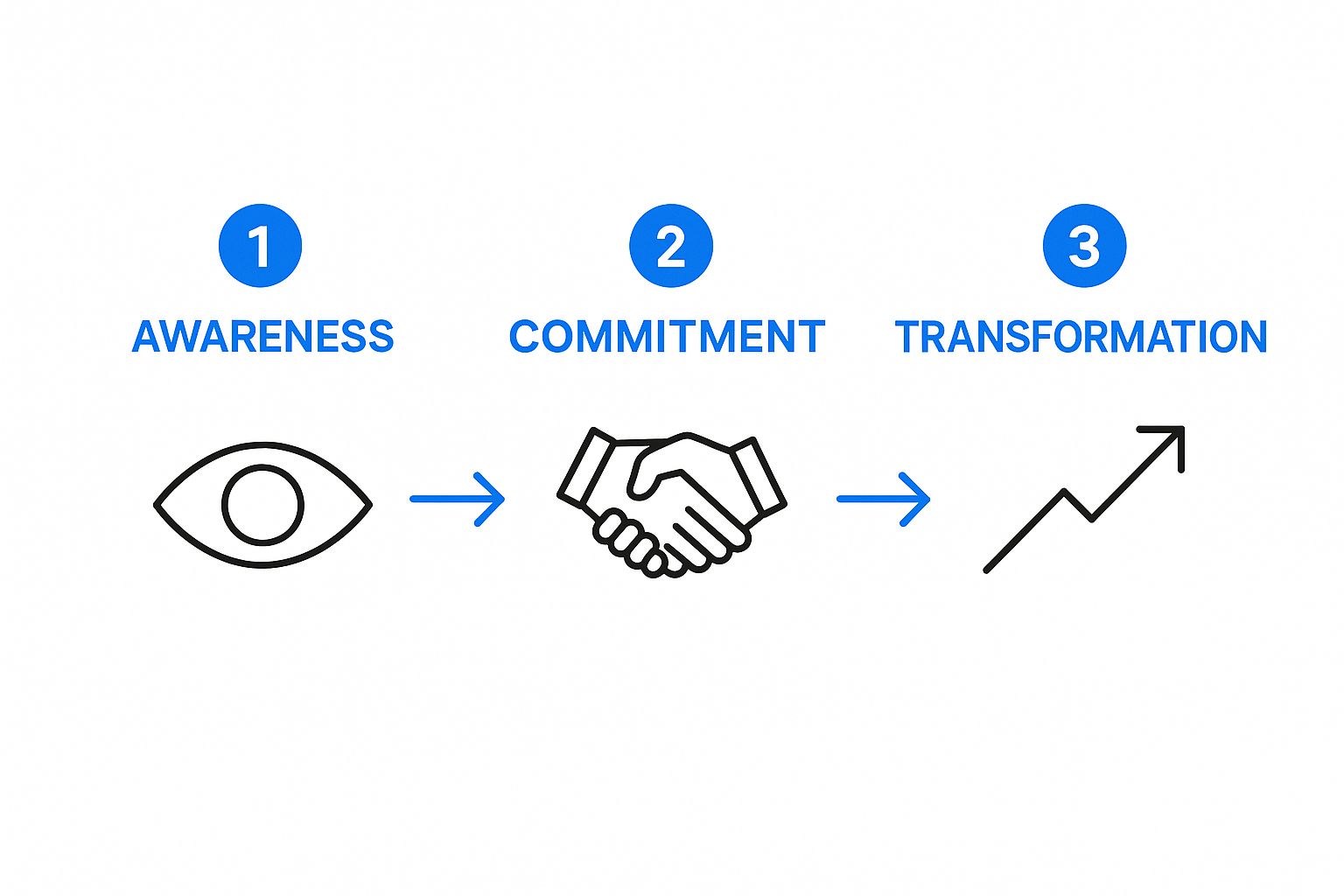
As you can see, moving from awareness to a real transformation requires a solid commitment—one that’s fueled by courage, integrity, and willingness.
The True Nature of Courage
With willingness opening the door, Courage is the force that turns the handle. It’s a common mistake to think courage is the absence of fear. In the world of the 12 step spiritual principles, courage is all about feeling the fear and taking the necessary action anyway.
This is the kind of courage you need for some of the program's most challenging work, such as:
- Conducting a fearless moral inventory: Looking at your past actions, behaviors, and character defects without turning away.
- Admitting your wrongs: This requires immense vulnerability, as you share your inventory with another human being.
- Becoming ready to change: It's a truly brave step to acknowledge deep-seated patterns and become genuinely ready to let them go.
Courage is what allows you to look at uncomfortable truths and finally take responsibility. It’s not a one-and-done deal; it’s a muscle you build with every hard, honest choice you make.
Integrity: The Practice of Living Your Values
Finally, Integrity is the principle that ties it all together. It means aligning your actions with your values. After finding the courage to face your past and pinpoint where you need to grow, integrity is the commitment to live differently from this day forward.
Integrity is doing the right thing, even when no one is watching. – C.S. Lewis
This principle is about creating harmony within yourself. When your daily choices start reflecting your new principles, the internal conflict that plagued your old life begins to fade. Making amends for past harms is a core practice of integrity—it’s the act of cleaning up your side of the street, which does wonders for restoring your self-respect.
The positive impact of putting these principles into practice isn't just a feeling; it’s backed by research. One study found that increasing spiritual practices within a 12-step framework led to tangible functional improvements in as little as 4 to 6 months. The research also showed that these spiritual changes were a direct predictor of better outcomes, acting as a crucial ingredient in the recovery process itself.
Fostering Connection Through Humility, Love, and Forgiveness
Once you've found the courage to live with integrity, the path of the 12 spiritual principles naturally turns outward, toward our relationships with others. After all, real, lasting change rarely happens in a vacuum. This is where we learn to build and mend connections using three of the most powerful principles in the entire process: Humility, Love, and Forgiveness.
Think of these as the essential tools for repairing relationships, building new ones on a solid foundation, and finding a genuine sense of belonging. They guide us away from a life of self-obsession and toward a more connected, meaningful existence. It's a beautiful flow: humility lays the foundation, love provides the building materials, and forgiveness clears away the wreckage of the past.
The Quiet Strength of Humility
Let’s clear something up right away: humility isn't about thinking less of yourself; it's about thinking of yourself less. In the context of the 12 spiritual principles, Humility is simply about seeing yourself clearly—your strengths and your weaknesses—without arrogance or shame. It's about finding a realistic, balanced perspective on your place in the world.
This principle comes right after the brave work of taking a personal inventory. Humility is that moment when you can finally say, "I can't do this alone," and ask a higher power (or the recovery process itself) for help in removing your shortcomings. This isn't a sign of weakness; it’s an incredible act of strength. It's the admission that you don't have all the answers.
When you embrace humility, you become teachable. Your ego stops shouting, and you can finally listen—to others, to your intuition, and to your experiences.
The Active Practice of Love
With the open-heartedness that humility brings, there's suddenly room for Love. But we're not just talking about a warm, fuzzy feeling. Here, love is a verb. It's the conscious, daily practice of extending goodwill, kindness, and compassion to others and, crucially, to yourself.
This is where the spiritual journey gets very real and very practical. Love shows up in small, consistent actions that demonstrate respect and care.
- Service: This could mean sharing your story to help someone else or simply showing up for a friend who's struggling.
- Patience: It’s about giving people the room to be imperfect, just as you've been given that same grace.
- Understanding: It means taking a breath and trying to see things from another person's point of view before you react.
Love is about putting the principles into action in your relationships. It’s the decision to treat people with kindness and decency, even when it's difficult, and to start by extending that same grace to yourself.
Practicing love is the antidote to the self-centeredness that fuels so much personal struggle. It builds connection and reminds you that you’re part of something much bigger than your own problems.
Forgiveness: The Path to Freedom
The final principle in this powerful trio is Forgiveness, which is a direct and necessary extension of love. It’s the conscious decision to let go of the anger and resentment you hold toward others—and just as importantly, toward yourself. Carrying old hurts is like lugging a heavy bag of rocks around; it drains your energy and keeps you chained to the past. Forgiveness is choosing to finally set that bag down.
This is rarely easy, but it is absolutely essential for freedom. It's vital to understand that forgiveness doesn't mean you condone what happened or that you have to let that person back into your life. Forgiveness is for you. It’s an internal act of healing that you do for your own peace of mind.
By releasing old resentments, you break the cycle of bitterness and reclaim all the emotional energy that was being wasted. You can then redirect that energy toward building a healthier, brighter future. Of all the 12 spiritual principles, this one might be the most liberating.
Weaving It All Together: Discipline and Perseverance for the Long Haul
Making it through the 12 spiritual principles isn't like crossing a finish line. There's no trophy at the end. Instead, it’s the beginning of a lifelong practice—a new way of living that you have to actively maintain. The final principles are the tools you'll use to build a resilient, sustainable life. This is where we shift gears from the big, dramatic changes to the quiet, consistent work of showing up for yourself, day in and day out.
Think of it like tending a garden. All the hard work of tilling the soil and planting the seeds is done. Now, the real effort begins: the daily watering, weeding, and nurturing that ensures everything you've planted continues to thrive for years to come.
The True Meaning of Discipline in Recovery
When we hear the word "discipline," it's easy to think of punishment or rigid, joyless rules. But in this context, it’s much closer to self-discipline. It’s the gentle but firm commitment to keep doing the things that support your well-being, even when you don't feel like it. It’s about taking responsibility for your actions, especially when making things right with people you may have harmed.
This is the principle that powers practices like the Tenth Step, which is all about taking a continuous personal inventory. You’re simply being mindful of your actions as you go through your day. And when you realize you're wrong? You promptly admit it. This isn't some impossible quest for perfection; it's about staying accountable in real-time.
Discipline is choosing between what you want now and what you want most. – Abraham Lincoln
This daily practice of self-correction stops new resentments from taking root and keeps your side of the street clean. It’s a practical, everyday application of honesty and integrity.
Perseverance: The Quiet Engine of Progress
If discipline provides the framework, then Perseverance is the quiet resolve that keeps you moving forward. It’s that unwavering commitment to keep practicing these principles, especially on the hard days. Of all the final 12 step spiritual principles, this might be the most crucial for long-term success.
Let's be real: there will be days filled with challenges. Setbacks will happen. Old temptations will pop up. Perseverance is what gets you through those moments without throwing in the towel. It reminds you that this is a journey of progress, not perfection. A stumble isn’t a sign of failure; it’s just an opportunity to learn, lean on the principles, and get right back on track.
This is where having a solid relapse prevention plan becomes so important. It gives you a clear roadmap to navigate those tough situations and supports your commitment to keep going.
Making These Principles a Part of Your Day
The real secret to sustaining this growth is to weave these practices into the natural rhythm of your daily life. We're not talking about grand, heroic gestures. It's the small, consistent actions that truly reinforce this new way of living.
Here are a few simple routines that build incredible momentum over time:
- Morning Reflection: Before the day gets hectic, take just a few minutes for quiet thought or meditation. Set a simple intention to live by your principles for the day ahead.
- Midday Check-In: Hit the pause button at some point in the afternoon. Ask yourself: "Are my actions lining up with my values right now?"
- Evening Inventory: Before you go to sleep, do a quick review of your day. What went well? Where did you fall short? No judgment, just a mental note to try again tomorrow.
These simple routines create a powerful framework for self-awareness and accountability. And it’s not just talk—the research backs it up. Studies have shown that the consistent application of the 12 spiritual principles is directly linked to significant improvements in life satisfaction. In fact, one study found that the number of steps a person actively practices strongly correlates with their levels of gratitude, spiritual well-being, and overall happiness. You can dive deeper into these findings in this detailed research analysis. It's clear proof that small, disciplined, and persistent efforts lead to real, tangible results.
Putting It All Together: Your Daily Practice
Let's be clear: embracing these 12 spiritual principles isn't about some sudden, dramatic transformation. It's much more like building a muscle—it happens through small, consistent efforts every single day.
Think of this framework less like a rigid instruction manual and more like a toolkit for life. The idea isn't to perfectly master all twelve principles at once. In fact, the best way to start is to pick just one or two that really speak to where you are right now.
The real power is in the small moments. When you choose to practice honesty in a tough conversation or show humility by finally asking for help, you're not just checking a box. You're actively weaving these powerful ideas into the fabric of your life.
"The journey of a thousand miles begins with a single step." – Lao Tzu
This ancient wisdom gets to the heart of it all. Every time you make a conscious choice to act with a little more integrity, courage, or forgiveness, you’re taking a step in the right direction. That's how real change happens.
A Quick-Reference Guide for Daily Action
To help you get started, here’s a simple guide that boils each principle down to one concrete, manageable action you can take today.
- Honesty: Admit one thing to yourself that you’ve been pushing aside.
- Hope: Pinpoint one small, positive outcome you genuinely believe is possible.
- Faith: For just today, trust the process or the guidance from a mentor.
- Courage: Take one small step that feels scary but aligns with your values.
- Integrity: Make sure your actions line up with your words in one specific instance.
- Willingness: Say "yes" to a healthy suggestion you'd normally brush off.
- Humility: In your next conversation, make a point to listen more than you talk.
- Love: Do one small act of kindness for someone, expecting nothing back.
- Forgiveness: Let go of one minor grudge or resentment you’ve been holding onto.
- Discipline: Finish one small but important task you've been procrastinating on.
- Perseverance: When you feel overwhelmed, just focus on taking the next right action, no matter how small.
Remember, this path is about progress, not perfection. Anyone can use these principles to navigate life’s ups and downs and discover a deeper sense of self.
Frequently Asked Questions

When you first start exploring the 12 spiritual principles, it's natural for questions to pop up. As you try to bring these ideas off the page and into your daily life, some things might feel a bit unclear. This section is here to address those common points of confusion.
My goal is to help you get past any initial hurdles so you can feel more comfortable on this personal journey. Remember, these principles are more like flexible tools for growth, not a rigid set of rules you have to follow perfectly.
Do I have to be religious to practice these principles?
Absolutely not. This is probably the biggest misconception out there. While the principles were born out of a spiritual context, their value is universal. Think of "spirituality" here as your connection to your deeper self, to others, and to the world around you.
The idea of a "higher power" is left open on purpose. It can be whatever you consider to be a source of strength or wisdom greater than yourself—your recovery group, the universe, nature, or even the principles themselves. The emphasis is always on personal growth, not religious doctrine.
Which principle is the best one to start with?
For most people, the best place to begin is with Honesty. It’s about taking a clear, gentle look at where you are right now, without sugarcoating or judging yourself. This honest self-appraisal creates the solid ground you need to build everything else on.
After that, you might naturally move toward Hope to keep you motivated, or Willingness to open your mind to new ways of doing things. The key is to pick the principle that speaks directly to the challenge you're facing today.
The most effective principle to start with is the one that resonates most deeply with your current life situation. Trust your intuition to guide you toward the area that needs the most attention right now.
How can I apply these principles at work?
These principles are surprisingly practical in a professional environment. Practicing Integrity, for example, is all about making sure your actions line up with your values. When you do that, you earn respect from your colleagues and, more importantly, from yourself.
Humility makes it easier to receive feedback gracefully and be a genuine team player. Honesty helps you communicate clearly and avoid workplace drama, while Courage gives you the strength to take on a tough project or have a difficult but necessary conversation. They really provide a solid ethical compass for your career.
Navigating the path to recovery can feel overwhelming, but you don't have to do it alone. The team at StartDrugRehab.com is here to provide the resources, support, and connections you need to find the right treatment options. Explore our comprehensive guides or call our helpline to take the first step toward a healthier future.
Article created using Outrank