When you're dealing with alcohol addiction, sometimes you need to completely step away from your daily life to heal. That's the core idea behind inpatient alcohol rehab—it provides a safe, structured, and medically supervised environment where you can detox and start your recovery journey without the triggers and stresses of the outside world.
It's an immersive program where you live at the facility, allowing you to focus 100% on getting better. This approach is designed to tackle alcohol addiction from all sides: the physical, the psychological, and the behavioral, all under 24/7 care.
Key Takeaways
- Immersive Environment: Inpatient rehab provides a 24/7 structured and supportive environment, removing you from daily triggers and allowing for complete focus on recovery.
- Comprehensive Care: Treatment is multi-faceted, including medically supervised detox, individual and group therapy, behavioral therapies (like CBT), and aftercare planning to address addiction from all angles.
- Personalized Treatment is Crucial: Effective programs don't use a one-size-fits-all approach. Your treatment plan will be tailored to your unique history, challenges, and co-occurring conditions.
- Recovery is a Long-Term Journey: Completing an inpatient program is a critical first step, but lasting sobriety depends on a strong aftercare plan, including ongoing therapy and support groups.
What Is Inpatient Alcohol Rehab?

Deciding to get help for an alcohol use disorder is a huge, courageous first step. The next is figuring out what kind of help is right for you. Inpatient rehab offers a deeply focused path to recovery by physically removing you from your everyday surroundings.
Think of it like putting your life on pause for a moment. This deliberate break lets you pour all your energy into healing within a secure, trigger-free space. You live onsite, surrounded by a dedicated team of medical professionals and, just as importantly, others who are on the same path.
The Core Components of Treatment
A good inpatient program isn't just one thing; it's a combination of several powerful elements working in harmony. These pillars are designed to build a solid foundation for sobriety by addressing the addiction from every possible angle.
To give you a clearer picture, here’s a quick breakdown of what you can expect inside a typical program.
Core Components of Inpatient Alcohol Rehab
| Component | What It Is | Its Purpose in Recovery |
|---|---|---|
| Medically Supervised Detox | The initial stage where alcohol is safely cleared from your system. | To manage potentially severe withdrawal symptoms under medical supervision, ensuring your physical safety and stability. |
| Individual Therapy | One-on-one counseling sessions with a trained therapist or addiction specialist. | To explore the personal, underlying causes of addiction and develop personalized coping strategies. |
| Group Therapy | Facilitated sessions with a small group of peers also in recovery. | To build a sense of community, reduce feelings of isolation, and learn from the shared experiences of others. |
| Behavioral Therapies | Evidence-based approaches like CBT or DBT. | To identify and change negative thought patterns and behaviors that contribute to substance use. |
| Family & Support System Involvement | Therapy sessions that include family members or close loved ones. | To heal relationships, improve communication, and establish a strong, informed support network for after treatment. |
| Holistic & Wellness Activities | Activities like yoga, meditation, art therapy, or fitness. | To support overall well-being and teach healthy ways to manage stress and emotions without alcohol. |
| Aftercare & Discharge Planning | Creating a detailed plan for continued sobriety after leaving the facility. | To ensure a smooth transition back to daily life and connect you with ongoing support like therapy or 12-step groups. |
Each of these pieces plays a vital role in creating a comprehensive treatment plan that doesn't just stop the drinking but helps you build a new life.
The real power of inpatient care is its immersive nature. By providing a constant support system and eliminating external distractions, it gives you the space to fully concentrate on building the skills you need for lasting sobriety.
A Dedicated Space to Heal
Ultimately, an inpatient alcohol rehab is more than just a clinical facility—it’s a community built for healing. It offers a clear path forward, combining medical stability with the emotional support needed to make real, lasting change. This environment is designed from the ground up to give you the time, tools, and expert guidance to reclaim your life from alcohol addiction.
What to Expect: Your Path Through Inpatient Rehab

The thought of checking into inpatient alcohol rehab can be overwhelming, mostly because of the unknowns. But knowing what the journey actually looks like can turn that anxiety into a sense of purpose. It’s a structured, supportive process designed to guide you toward a healthier life, one step at a time.
This whole process doesn't start with some huge, dramatic decision. It usually starts with a simple, confidential phone call. This is just a conversation, not a lifetime commitment. It’s your chance to get answers and for the admissions team to hear your story, making sure their program is the right fit.
The First Step: Your Initial Assessment
Once you decide you’re ready, the first real step is a comprehensive assessment. This isn’t a test. You can't pass or fail. It’s simply a deep dive into your history with alcohol, your overall physical and mental health, and your unique life circumstances. Think of it as the clinical team creating a detailed map of where you are right now so they can chart the best possible route to where you want to go.
This evaluation is what allows them to build a treatment plan just for you. It ensures everything—from the types of therapy you receive to how they'll help you manage co-occurring conditions like anxiety or depression—is specific to your needs.
Detox: A Safe and Supervised Transition
For most people, the first physical hurdle is detoxification, or detox. This is when your body begins to clear itself of alcohol. Alcohol withdrawal isn't just unpleasant; it can be genuinely dangerous. That’s why a medically managed detox is a non-negotiable part of quality inpatient care.
During this phase, you are under 24/7 medical supervision. The clinical team is there to:
- Monitor your vitals: They'll keep a constant eye on your heart rate, blood pressure, and other key signs to make sure you're stable and safe.
- Manage withdrawal symptoms: Medications can be used to make you more comfortable, reduce cravings, and prevent serious complications like seizures.
- Offer emotional support: Getting through detox is tough mentally, too. Having compassionate staff right there with you makes a world of difference.
This controlled environment gets you through the most physically demanding part of early recovery as safely and comfortably as possible.
The point of detox isn't just to get the alcohol out of your system. It's about getting you physically and mentally stable, creating a solid foundation so the real work of recovery can begin.
A Typical Day in Residential Treatment
After detox, you move into the main residential program. While every facility has its own rhythm, days are almost always highly structured. This routine is intentional—it provides focus and stability when things might feel chaotic. A typical day is a balanced mix of therapy, personal reflection, and activities for your well-being.
For example, a day might look something like this:
- Morning: You’d start with a healthy breakfast, then head to a group therapy session or an educational class about the science of addiction.
- Afternoon: This is often when you’ll have one-on-one counseling with your main therapist, participate in a specialized therapy like Cognitive Behavioral Therapy (CBT), and get some personal time for journaling or just quiet reflection.
- Evening: You might attend a 12-step meeting or another peer support group, followed by dinner and a more relaxed activity like yoga, meditation, or art therapy.
The structure is there to minimize idle time and keep you fully engaged in the healing process.
Getting Ready for Life After Rehab
As your stay nears its end, the focus shifts to creating a solid aftercare plan. This is your personal roadmap for staying sober when you return to your daily life. You'll work closely with your counselor to identify potential triggers and develop strong, practical coping skills.
This plan is a vital part of the inpatient alcohol rehab experience. It usually involves setting up follow-up therapy, finding local support groups, and sometimes arranging a "step-down" level of care, like an intensive outpatient program. The goal is simple: to make sure you leave not just sober, but also armed with a clear, actionable plan to protect that sobriety for good.
Inpatient vs. Outpatient Rehab: Which Is Right for You?
Deciding on the right kind of treatment is one of the first and most critical steps in your recovery. This isn’t just about picking a program off a list; it’s about finding the right environment and structure that fits your life and your specific needs. The two main roads are inpatient and outpatient rehab, and knowing what makes them different is key to making the right choice.
Think of inpatient alcohol rehab like a full-immersion experience. You live at the facility, which means you’re completely removed from the daily stresses and triggers that might be fueling your addiction. This setup allows you to focus 100% on getting better, surrounded by a structured routine and 24/7 medical and emotional support.
Outpatient rehab, on the other hand, is more like taking a specialized course. You live at home and keep up with your job, school, or family life, but you attend scheduled therapy sessions at a treatment center. This can be a great option for people who have a strong support system at home and whose addiction is less severe.
To give you a clearer picture of the commitment and potential outcomes for residential treatment, here’s a look at some key data.
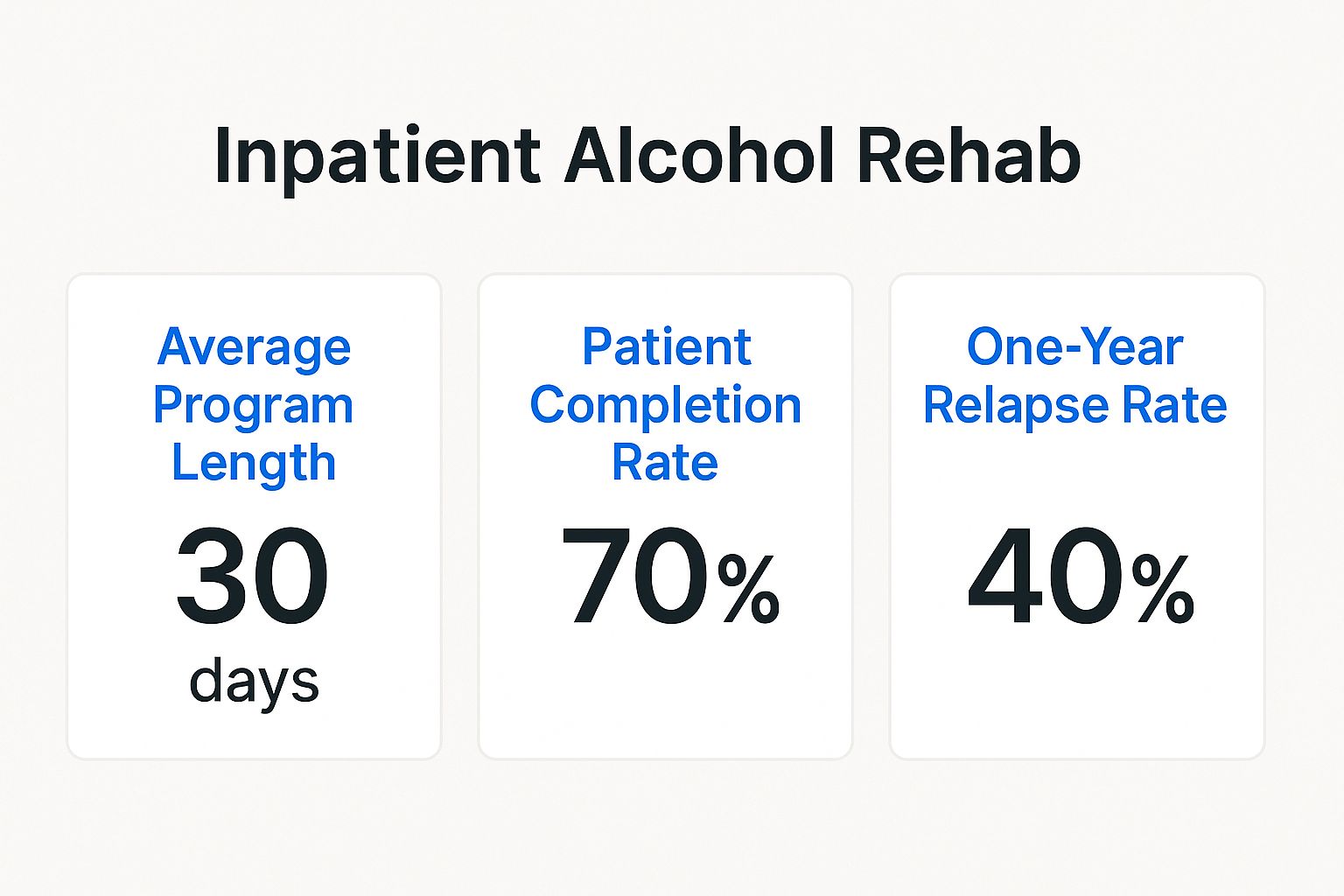
These numbers show that while inpatient care is a serious time investment, it has a solid completion rate. It's also a reminder that staying sober is an ongoing journey that requires commitment long after the program ends.
Core Differences to Consider
The choice between inpatient and outpatient really comes down to a few personal factors. It's about the intensity of care you need and the kind of setting where you'll feel most equipped to succeed. Both paths have their own unique strengths.
A major benefit of an inpatient alcohol rehab program is the constant medical supervision. This is especially important during detox, when withdrawal symptoms can be not just uncomfortable but genuinely dangerous. This around-the-clock care is ideal for anyone with a history of long-term or heavy alcohol use. Outpatient programs offer far less direct supervision, so you have to be more independent in managing your own physical and mental well-being between appointments.
The real power of inpatient care is the "recovery bubble" it creates. By taking you out of your everyday life, it cuts off access to alcohol and separates you from the people, places, and situations that could trigger a relapse.
This controlled environment provides a safe, secure space to build a solid foundation for sobriety before you have to face the pressures of the outside world again. For a more detailed breakdown, check out our guide on the difference between inpatient and outpatient care.
Comparing Inpatient and Outpatient Treatment Options
Ultimately, there’s no single "best" choice—only the best choice for you. An honest look at your own situation is the best way to decide. Think about how severe your alcohol use has become, how stable your home life is, and whether you have other mental health issues that need integrated, intensive care.
This table puts the two options side-by-side to help you weigh the pros and cons.
| Feature | Inpatient Rehab (Residential) | Outpatient Rehab |
|---|---|---|
| Living Arrangement | You live at the facility 24/7. | You live at home and commute for treatment sessions. |
| Level of Supervision | High; constant medical and clinical monitoring. | Lower; support is available only during scheduled sessions. |
| Ideal Candidate | Individuals with severe addiction, unstable home lives, or co-occurring disorders. | Those with milder addiction, a strong support system, and daily obligations. |
| Environment | Highly structured and completely free from external triggers. | Allows you to practice recovery skills in your real-world environment. |
| Flexibility | Low; requires a full-time commitment away from work and family. | High; treatment is scheduled around your personal and professional life. |
Talking through these factors with a doctor, therapist, or addiction specialist is a great next step. They can offer the guidance you need to choose the path that gives you the best possible chance at a healthy, sober future.
Untangling Rehab Costs and Insurance
Let’s be honest: one of the first questions people ask about rehab is, "How much is this going to cost?" It's a huge, often intimidating, hurdle. Seeing the price tag on an inpatient program can feel overwhelming, but it's crucial to reframe it as what it truly is: an investment in saving a life.
The truth is, there’s no single answer to the cost question. Think of it like booking a hotel—a 90-day stay will cost more than a 30-day stay, and a facility with private rooms and gourmet chefs will have a different price point than a more straightforward, clinically-focused center. The key is understanding the variables and knowing how to navigate insurance to make it affordable.
What Goes into the Price of Rehab?
Several key factors determine the final cost of an inpatient program. Location is a big one. A center on a scenic coastline or in a major city will naturally have higher overhead than one in a quieter, more rural setting.
The level of care required is another critical piece. If a program includes intensive medical detox, 24/7 nursing, or specialized psychiatric care for a dual diagnosis, its cost will reflect that higher level of medical expertise. This need for specialized treatment is driving growth in the field, with the addiction rehab market expanding from $19.02 billion in 2024 to an estimated $20.93 billion in 2025. You can dig deeper into addiction rehab facilities market trends to see where the industry is heading.
Making Insurance Work for You
Here’s the good news: you probably won't have to pay for it all yourself. Thanks to laws like the Affordable Care Act (ACA), most health insurance plans must provide coverage for substance use disorder treatment. The trick is to figure out exactly what your specific policy covers.
It might seem complicated, but you can break it down into a few simple steps:
- Call Your Insurance Company: The number is right on the back of your card. When you speak to a representative, ask specifically about your "mental and behavioral health benefits" for inpatient care.
- Learn the Lingo: Get clear answers on your deductible (what you pay first), your copay (your share of each service), and your out-of-pocket maximum (the absolute most you'll pay in a year).
- Stay In-Network: Ask for a list of treatment centers that are "in-network." Going out-of-network is almost always a recipe for a much, much bigger bill.
- Get Pre-Authorization: Most insurance plans require approval before you check in. The rehab’s admissions team is usually a huge help here and can often manage this for you.
Don't get bogged down by confusing insurance jargon. The admissions team at any good rehab facility deals with this every single day. They are experts at verifying benefits—often for free—and can walk you through your coverage in plain English.
What if Insurance Doesn't Cover It All?
Even with a good plan, you might still face out-of-pocket costs. If that happens, don't throw in the towel. Many centers are committed to helping people find a way and offer other payment options.
Look into possibilities like:
- Sliding-Scale Fees: Some non-profits or state-funded programs can adjust the cost based on your income.
- Payment Plans: Many centers will work with you to set up a monthly payment plan you can manage.
- Healthcare Financing: Specialized lenders offer loans specifically designed for medical and treatment costs.
By exploring all your options, you can often find a path forward. The goal is to ensure that a price tag is never the final barrier between you and the recovery you deserve.
Building a Life of Long-Term Sobriety After Rehab
Finishing an inpatient alcohol rehab program is a massive accomplishment. It’s the end of one incredibly important phase, but it’s really the beginning of a brand new chapter, not the end of the story. The real work of building a sober life begins the moment you walk back out into the world.
Think of it this way: inpatient rehab is like the major surgery that stabilizes a critical injury. Aftercare is the physical therapy that comes next. It’s the consistent, ongoing effort you put in to regain your strength, learn how to move differently, and prevent getting hurt again. Without that follow-up work, even the most successful surgery can't guarantee a full recovery. It's worth understanding the stages of the recovery process so you can prepare for lasting success.
The Transition to Everyday Life
The whole point of aftercare is to bridge the gap between the safe, structured bubble of rehab and the beautiful chaos of normal life. This is where all the skills and strategies you learned get put to the test in real-time.
Aftercare isn’t just one thing. It's a collection of support systems you intentionally put in place to back up your commitment to sobriety. It's about consciously designing a lifestyle that revolves around your well-being, so you always have a lifeline when challenges pop up.
Essential Components of Aftercare
A solid aftercare plan is never one-size-fits-all. It needs to provide support from multiple angles, combining professional help with the power of peer connection and a safe home base.
Here are a few key pieces of the puzzle:
- Ongoing Therapy: Sticking with individual or group therapy lets you work through real-world problems with a trusted guide, reinforcing the coping skills you built in rehab.
- Support Groups: Programs like Alcoholics Anonymous (AA) or SMART Recovery are invaluable. They connect you with people who just get it because they've walked the same path.
- Sober Living Homes: For many, this is a crucial stepping stone. These homes offer a structured, alcohol-free place to live before you're ready to return to your previous environment.
These elements create a safety net, making it so much easier to handle cravings or navigate a social event where alcohol is present. It's crucial to map out your own personal strategy, and you can get a head start by checking out a relapse prevention plan template to see what that looks like.
Long-term sobriety isn’t about gritting your teeth and relying on willpower. It’s about building a life so full of support that it’s simply easier to stay sober than it is to drink.
Building Your Personal Support Network
Outside of formal programs, the people in your life are your first line of defense. This means family, friends, and mentors who are genuinely cheering for your recovery. You have to be intentional about who you lean on, making sure to surround yourself with positive and supportive relationships.
The data backs this up. People who stay engaged with treatment and aftercare have a much higher chance of success. For example, among those who complete inpatient alcohol rehab, the numbers are promising: about 76% are still sober after three months, and 69% remain sober at the six-month mark. These statistics really show how powerful it is to stay plugged into a recovery community. The market for substance abuse treatment, where inpatient care plays a massive role, was valued at USD 11.82 billion in 2025 and is expected to balloon to USD 21.33 billion by 2032, showing just how many individuals are reaching out for dedicated support. You can see more details on the growth of the global substance abuse treatment market and why it's expanding.
Ultimately, creating a life of lasting sobriety is an active, ongoing process. When you fully embrace aftercare and build that strong support system, you take the foundation laid in rehab and turn it into a permanent home built on health, purpose, and genuine happiness.
Frequently Asked Questions (FAQ)
Deciding to go to inpatient rehab is a huge step, and it's completely normal to have a lot of questions. Knowing the nuts and bolts of what to expect can quiet a lot of the anxiety you or your family might be feeling. Let's walk through some of the most common concerns.
How long does inpatient alcohol rehab last?
There's no one-size-fits-all answer, as the length of stay is tailored to your individual needs. Standard programs often run from 28 to 90 days. The clinical team will consider factors like the severity of alcohol use, the presence of co-occurring mental health conditions, and your progress in the program to recommend the duration that provides the strongest foundation for sobriety.
What should I pack for my stay?
Focus on comfort and simplicity. Pack about a week's worth of casual, comfortable clothing appropriate for therapy sessions and light activities. Bring essential toiletries, but make sure they are new, unopened, and alcohol-free. Personal items like a journal or photos of loved ones are also encouraged. Most facilities restrict electronics to minimize distractions, so always check the center's specific packing list beforehand.
Can my family visit or contact me?
Yes, family involvement is considered a vital part of recovery. However, communication is usually structured. Most programs have an initial "blackout" period of a few days to a week to allow you to settle in. After that, facilities typically have scheduled phone times and visiting hours. Many also offer family therapy sessions to help heal relationships and build a strong support system for your return home.
Is my job protected while I am in rehab?
For many people, yes. The Family and Medical Leave Act (FMLA) is a federal law that allows eligible employees to take up to 12 weeks of unpaid, job-protected leave for serious medical conditions, which includes treatment for a substance use disorder. It's best to speak confidentially with your company's HR department to understand your specific rights and policies.
What happens after inpatient rehab?
Leaving rehab is the beginning of your long-term recovery journey. A crucial part of your program is creating a detailed aftercare plan before you leave. This plan typically includes ongoing individual or group therapy, participation in support groups like AA or SMART Recovery, and potentially a transitional step like a sober living home. The goal is to provide a "soft landing" and a continuous support system as you reintegrate into daily life.
At StartDrugRehab.com, our mission is to give you the clear, reliable information you need to move forward. Our platform is a trusted resource for understanding treatment options and connecting with the right support for your recovery. Find the help you deserve today at https://startdrugrehab.com.