When you boil it down, the whole inpatient vs outpatient rehab debate really comes down to one thing: environment. Inpatient programs pull you out of your day-to-day life for 24/7 immersive care, giving you a clean break from the people, places, and things that trigger your addiction. Outpatient programs, on the other hand, let you stay at home and fit therapy sessions into your existing schedule, weaving recovery into your daily routine.
Key Takeaways
- Inpatient rehab provides a 24/7 structured, immersive environment, ideal for severe addiction, co-occurring mental health disorders, or unstable home lives. It removes external triggers to allow for a deep focus on healing.
- Outpatient rehab offers flexibility, allowing individuals to live at home and maintain work or family commitments. It's best suited for mild-to-moderate addiction and requires a strong, stable support system.
- Cost and Duration Differ Significantly: Inpatient care is more expensive and requires a full-time commitment for a set period (e.g., 30-90 days), while outpatient care is more affordable and can extend over a longer, more flexible timeline.
- Long-Term Success Depends on Aftercare: Regardless of the initial program, lasting recovery hinges on a strong aftercare plan, including ongoing therapy, support groups, and a commitment to using learned coping skills in the real world.
Understanding The Core Differences
Deciding on the right path for addiction recovery is one of the most important choices you'll make. Both inpatient and outpatient programs are built on solid, evidence-based treatment methods, but they’re designed for very different situations—different levels of addiction, different life commitments, and different personal needs. Getting a handle on how they're structured is the first real step to finding what will work for you.
Think of inpatient rehab as a highly controlled, structured environment. It physically removes you from your daily world, which means no access to substances and fewer encounters with the triggers that can derail your progress. This creates a space where you can focus entirely on getting better without outside noise.
Outpatient rehab is all about flexibility. It allows you to keep up with your job, school, or family commitments while getting help. This approach demands a lot of self-discipline and works best when you have a solid, supportive home life to back you up.
Let's break down the key differences in a simple side-by-side comparison to see how they really stack up.
At a Glance: Inpatient vs Outpatient Rehab
This table cuts right to the chase, outlining the fundamental trade-offs between the immersive structure of inpatient care and the real-world flexibility of outpatient treatment.
| Feature | Inpatient Rehab (Residential) | Outpatient Rehab (Non-Residential) |
|---|---|---|
| Living Arrangements | You live at the treatment facility 24/7. | You live at home and travel to the facility for your sessions. |
| Environment & Support | You're in a controlled setting with constant medical and peer support. | Support is available during scheduled therapy hours. |
| Daily Structure | Your days are completely structured with therapy, meals, and activities. | You have a flexible schedule with appointments a few times a week. |
| Ideal Candidate | Best for severe addiction, a triggering home life, or co-occurring mental health issues. | Works well for mild-to-moderate addiction if you have a strong support system at home. |
Each model has a clear purpose. The right one for you depends entirely on your specific circumstances, the severity of the addiction, and the kind of support you need to succeed.
This infographic lays out some of the hard numbers—comparing things like how long each program typically lasts, what it costs, and the initial success rates.
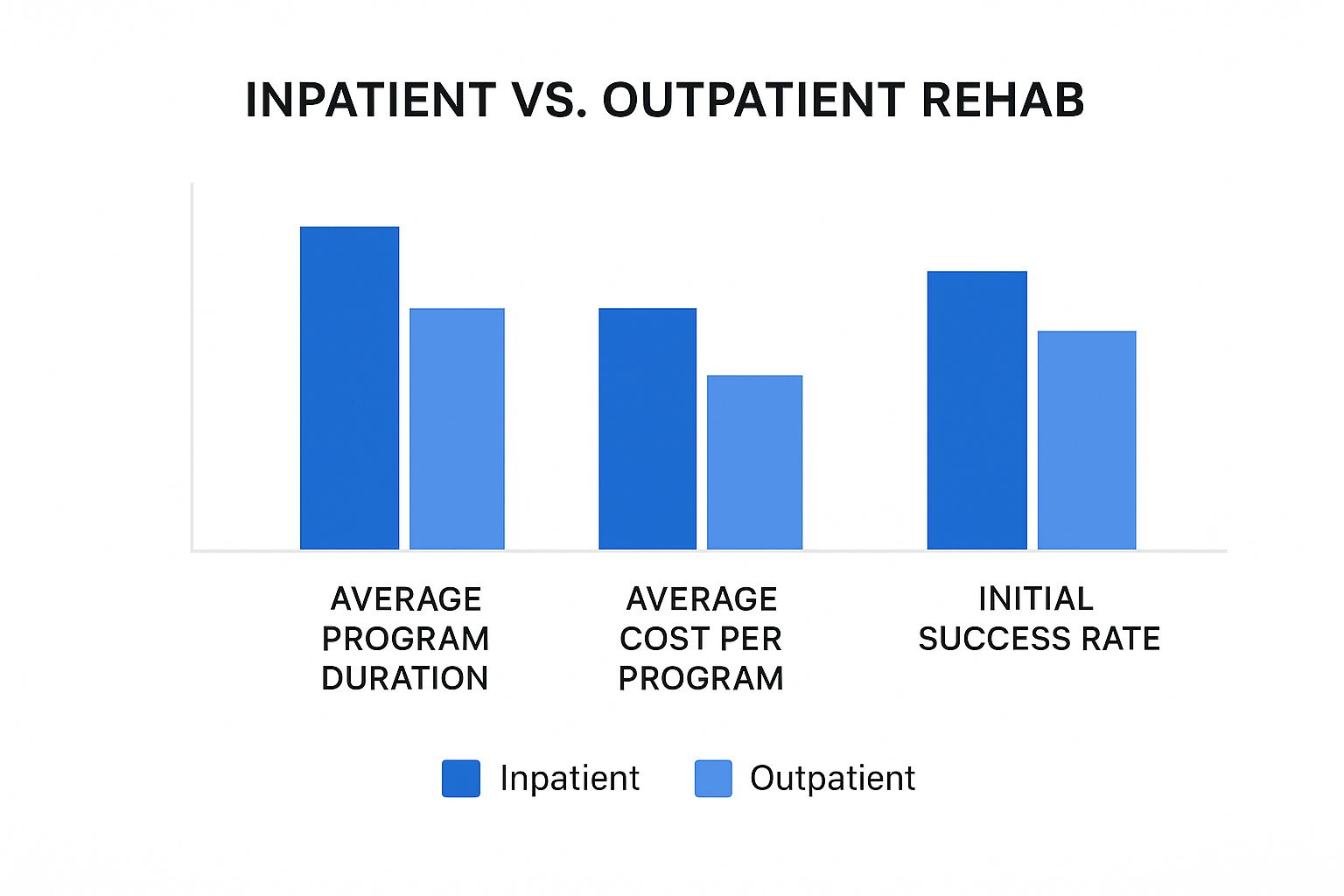
As the data suggests, inpatient programs tend to have higher initial success rates. That intensive, around-the-clock approach makes a real difference, though it comes at a higher cost and requires a bigger time commitment.
Daily Life: Structure vs. Flexibility
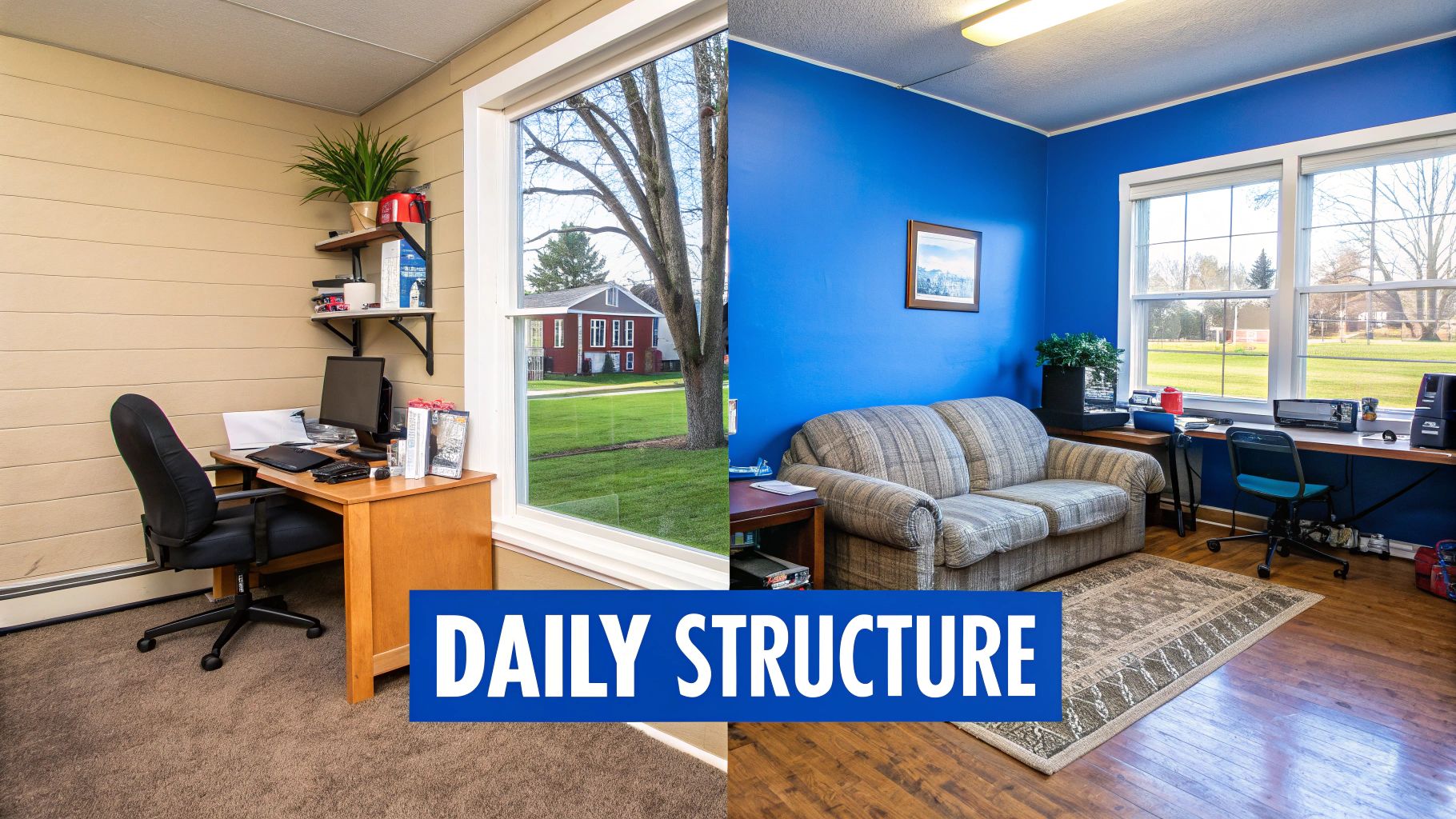
The biggest difference between inpatient and outpatient rehab really comes down to what your day-to-day life looks like. Each environment is built to help people recover in very different ways, and figuring out which one fits you means understanding that daily reality.
Think of inpatient rehab as a therapeutic bubble. It’s an immersive, highly structured environment where your only job is to heal. You’re completely removed from the people, places, and daily stressors that often trigger substance use.
The Inpatient Experience: A Controlled Setting
Inside a residential facility, every part of your day is planned with intention. The schedule is packed from morning until night, all aimed at helping you build healthy new routines and coping skills from the ground up.
A typical day might look something like this:
- Morning Sessions: You'll start with breakfast before moving into individual therapy, group counseling, or educational workshops.
- Afternoon Activities: The focus often shifts to holistic therapies like yoga or mindfulness, practical life-skills classes, or sessions with family members.
- Evening Wind-Down: Evenings usually involve support group meetings, like a 12-step program, along with some quiet time for reflection.
This constant, positive engagement and 24/7 supervision don’t leave much idle time for cravings to creep in. You're surrounded by professionals and peers who get what you're going through, which fosters a powerful and supportive community.
Inpatient care is all about total immersion. Stepping away from your normal environment gives you the focused space needed to work through deep-rooted addiction patterns without the usual distractions.
The Outpatient Approach: Blending Recovery with Real Life
Outpatient rehab, on the other hand, is built for flexibility. It’s designed so you can keep living at home, going to work or school, and taking care of your family while weaving treatment into your schedule. The structure here is based on appointments, not a full-day itinerary.
This path demands a lot more self-discipline. You get fantastic clinical support during your sessions, but once you walk out the door, you're navigating real-world triggers on your own. In the United States, the difference in intensity is stark; inpatient programs usually involve at least three hours of therapy daily, while outpatient appointments might be 30- to 60-minute sessions just a few times a week. You can get more details on how treatment intensity affects recovery from the experts at Recovery Centers of America.
For outpatient treatment to really work, a stable and supportive home life is almost a prerequisite. Without that solid foundation, the freedom can quickly become a risk. The whole idea is to take what you learn in therapy and immediately apply it to the challenges you face every single day.
Analyzing Treatment Intensity and Therapeutic Models

When you look past the obvious differences in location and schedule, the real heart of the inpatient vs outpatient rehab discussion comes down to the intensity of care and the therapeutic methods used. Each approach is built to meet people where they are, whether they're in the middle of an acute crisis or working to maintain their sobriety while navigating daily life.
Inpatient programs deliver the most concentrated level of care available. For many, the journey starts with medically supervised detox, a crucial first step for anyone with a severe physical dependency. It’s all about getting through withdrawal safely and as comfortably as possible. From there, the treatment becomes a deeply immersive and structured experience.
The Depth of Inpatient Therapeutic Models
Residential treatment isn’t just about stopping substance use; it’s designed to heal the whole person. This is absolutely essential for anyone struggling with co-occurring disorders—like depression, anxiety, or PTSD—which are often intertwined with and can drive addiction. In an inpatient setting, treatment plans are integrated to address both mental health and substance use at the same time.
A typical day in a residential facility is packed with a blend of therapies, including:
- Individual Counseling: Private, one-on-one sessions that dig into the personal history and root causes behind the addiction.
- Group Therapy: A chance to build a real support system with peers who understand the struggle and can share what’s working for them.
- Family Sessions: These sessions help repair relationships and equip the family to create a healthier, more supportive home environment for when treatment ends.
- Holistic Activities: Things like yoga, art therapy, or meditation are often included to help heal the mind and spirit, not just the body.
This all-encompassing strategy builds a powerful foundation for recovery, especially for those who need to untangle complex issues. You can get a clearer picture of what this looks like by reviewing guides on inpatient alcohol rehab.
Inpatient treatment acts as a clinical safety net, providing 24/7 medical and emotional support. It's built to get people stable during a crisis and help them work through deep-seated psychological challenges in a highly controlled environment.
The Spectrum of Outpatient Care
Outpatient care isn't a single thing—it's a spectrum. This flexibility allows treatment to be shaped around an individual's specific needs, from highly structured programs to just a few sessions a month.
At the more intense end, you have Intensive Outpatient Programs (IOPs). Someone in an IOP might attend therapy for several hours a day, a few days a week. It offers a substantial amount of clinical support while letting the person continue living at home and managing work or family responsibilities.
Standard outpatient care is a step down from that, usually involving weekly appointments for individual or group counseling. This approach is often a great fit for people with milder substance use disorders or for those who have already completed an inpatient program and need ongoing support. The focus shifts to practicing coping skills in real-world situations to maintain sobriety. The biggest difference is that medical support is only available during scheduled appointments, which means the individual carries more of the day-to-day responsibility for their recovery.
Identifying the Ideal Candidate for Each Program
Choosing between inpatient and outpatient rehab is a deeply personal decision. There’s no magic formula here; the “right” answer really comes down to your unique situation. The best path is the one that lines up with the severity of your addiction, your current mental health, and the environment you live in day-to-day. Figuring out who tends to succeed in each setting can help you see which one fits you best.
At its core, the choice is about how much structure and support you need to get stable. Some people need to hit pause on their current life and step away completely to heal. Others can successfully weave recovery into their existing routines from the start.
Who Thrives in Inpatient Rehab
Inpatient rehab is built for people who need a completely immersive, highly structured environment to get well. It creates a protective bubble, separating you from the triggers and daily stressors that fuel addiction, which is why it's the go-to option for those facing the toughest challenges.
You should seriously consider inpatient care if any of this sounds like you:
- Severe or Long-Term Addiction: If you’ve been struggling with substance use for a long time, residential care provides the kind of intensive, around-the-clock therapy needed to unravel those deep-rooted patterns.
- A History of Relapse: For anyone who has tried other treatments and found themselves slipping back, the 24/7 support of an inpatient program can be the game-changer.
- An Unstable Home Environment: Trying to recover in a chaotic, unsupportive, or trigger-filled home is like trying to swim upstream. Inpatient care offers a safe, sober sanctuary where you can focus entirely on healing.
- Co-Occurring Mental Health Disorders: If you're also dealing with conditions like severe depression, anxiety, or PTSD, you’ll benefit from integrated psychiatric care that’s available at all hours.
- The Need for Medical Detox: Getting through withdrawal safely is the first and most critical step. If you need medical supervision to manage what withdrawal symptoms may arise, an inpatient facility is non-negotiable.
Inpatient treatment is fundamentally about stabilization. It’s designed for individuals who need a controlled setting to safely get through withdrawal, address complex mental health needs, and build a new foundation for recovery, free from external pressures.
When Outpatient Rehab Is a Strong Fit
Outpatient rehab offers a far more flexible route to recovery, giving you the freedom to get help while keeping up with your daily life. This approach works incredibly well for people whose addiction is less severe and who, crucially, have a solid support system to lean on.
You might be the perfect candidate for outpatient care if you have:
- A Mild to Moderate Addiction: If your substance use isn't at a physically severe stage and is a more recent development, an outpatient program can equip you with the tools you need to make a change.
- A Strong, Sober Support System: This is the absolute key to outpatient success. Having a reliable network of family and friends who are genuinely committed to your recovery makes all the difference.
- Essential Daily Responsibilities: If you’re the primary caregiver for a child or can't afford to step away from your job or school, outpatient treatment lets you balance those duties with your recovery work.
Research comparing intensive treatment models backs this up. One study showed that while both inpatient and outpatient programs were effective, the inpatient group tended to have more severe depressive episodes. On the other hand, outpatient participants were more likely to be employed and have stable relationships. Essentially, the less stable your external life and internal health are, the more structure you're going to need.
Breaking Down Cost, Duration, and Success Rates

When you get down to the brass tacks of the inpatient vs outpatient rehab decision, three things usually come to mind: money, time, and whether it actually works. Getting a handle on these practical differences is crucial for picking a path that you can realistically and successfully stick with. Each option demands a different kind of investment, and understanding the trade-offs is what will ultimately lead you to the right fit.
Let’s be honest, the financial piece is often the first hurdle. Inpatient care comes with a much higher price tag, and for good reason—you’re not just paying for therapy. The cost covers 24/7 medical supervision, room and board, meals, and a whole team of professionals available at any moment. Outpatient programs are far more budget-friendly because you’re only paying for the treatment sessions themselves, without all the overhead that comes with living on-site.
Comparing Program Timelines
The time commitment is another major point of difference. Inpatient programs are designed as intensive, structured blocks of time where you are completely immersed in your recovery.
- Inpatient Stays: These typically run for 30, 60, or 90 days. Think of it as a concentrated, high-impact period of focused healing.
- Outpatient Programs: This model offers a much more flexible and extended timeline. Treatment can last for several months or even up to a year, providing consistent support over a longer period.
So, while going inpatient means stepping away from your daily life for a significant chunk of time, an outpatient approach weaves a longer, less intense recovery process directly into your existing routine.
The real difference in duration isn't just about counting days. It's about intensity versus consistency. Inpatient care is a short-term, high-intensity sprint, while outpatient is a long-term, steady marathon.
Understanding Success Rates with Context
Talking about "success rates" can be tricky because the numbers don't always tell the whole story. Many studies point to higher initial success for inpatient programs, particularly for severe addictions, but it’s important to understand why. The immersive, trigger-free environment of a residential facility gives people a powerful head start by completely removing them from the people, places, and pressures that fuel their addiction.
However, lasting recovery for both paths depends entirely on what happens after the formal program is over. This is where outpatient care really shines—it teaches you to manage daily triggers and use coping skills in real-world situations from day one. In the end, the most significant predictor of long-term sobriety isn't where you start, but your commitment to aftercare services like support groups and ongoing therapy. The best program is simply the one that prepares you to make that lifelong commitment.
Putting It All Together: Making the Right Choice for You
Choosing between inpatient and outpatient rehab isn't about picking the "best" option—it's about picking the right one for your specific life circumstances. Let's break down the core factors to help you make a clear-headed decision. This is your final gut-check.
1. Take an Honest Look at Addiction Severity and Your Home Life
This is often the most critical piece of the puzzle. If you're dealing with severe, long-term substance use, or if your home environment is filled with triggers and instability, inpatient rehab is almost always the answer. It creates a necessary buffer, a safe space where you can heal without the constant pressure of negative influences.
2. How Strong Is Your Support System?
Outpatient treatment hinges on having a rock-solid, sober support network. It can be a fantastic option if you have family and friends who are 100% on board with your recovery. But if that foundation isn't there, the autonomy of living at home can easily work against you.
The strength of your support system is often the deciding factor. Inpatient rehab provides a built-in community, while outpatient success relies heavily on the network you already have.
3. Consider the Practicalities: Time and Money
Let's be real—the logistics matter. You have to weigh the intensive, higher-cost nature of inpatient care, which requires stepping away from your life completely, against the more spread-out, flexible commitment of an outpatient program. Think of it this way: one is a focused sprint, while the other is a marathon integrated into your everyday routine.
4. Look Beyond Treatment: Plan for Long-Term Recovery
Finally, remember that rehab is the first step, not the final destination. True, lasting recovery is built on the support you have in place after your initial program ends. Whether you choose inpatient or outpatient, a solid aftercare plan is non-negotiable. Exploring options like what recovery coaching is can give you a roadmap for maintaining momentum and staying on track long after treatment is over.
Frequently Asked Questions
Choosing between inpatient and outpatient rehab naturally brings up a lot of questions. Let's tackle some of the most common ones to help you figure out the practical side of this decision.
Can I Switch from Inpatient to Outpatient Care?
Absolutely. In fact, it's not just possible—it's often a core part of a well-designed, long-term recovery plan. Think of it as a "step-down" process.
This transition helps you move from the completely structured, protective environment of an inpatient facility back into the real world, but with continued support. It’s the perfect way to start using your new coping skills in everyday situations while still having the safety net of therapy and a support system. This bridge is often critical for lasting sobriety.
How Does Insurance Coverage Compare for Each Option?
This is a big one, and the answer almost always comes down to your specific policy. While most insurance plans cover both inpatient and outpatient treatment to some degree, the amount you'll actually pay can vary wildly.
- Inpatient Rehab: Coverage for residential care is typically based on what your insurer deems "medically necessary." They'll likely require pre-authorization and may only approve a set number of days based on the severity of the addiction and other health factors.
- Outpatient Rehab: Because it's less expensive overall, outpatient care often comes with lower co-pays. Insurers may also cover it for a longer period, which makes it a great choice for ongoing aftercare.
Before you decide anything, call your insurance provider directly. Ask about deductibles, co-pays, and any limits for both inpatient and outpatient care so there are no financial surprises.
Understanding your insurance isn't just a suggestion—it's a critical part of planning for recovery. Never assume you're covered. Always get the specifics for both options to avoid a huge, unexpected bill.
What Happens if I Relapse During an Outpatient Program?
First, it’s important to know that relapse can be a part of the recovery process; it is not a sign of failure. If you do relapse while in an outpatient program, the most important thing to do is tell your therapist or support group right away. Honesty is your best tool here.
Your treatment team won’t judge you. Instead, they’ll work with you to figure out what triggered the relapse and then adjust your recovery plan. This might mean adding more therapy sessions, finding another support group, or maybe even shifting to a more structured program like an Intensive Outpatient Program (IOP) to help you get back on solid ground.
Can I Keep My Job While in Rehab?
This really depends on the path you choose. The two options are completely different when it comes to work.
- Inpatient Rehab: No. You have to live at the facility 24/7, which means stepping away from all your outside responsibilities, including your job. Many people use the Family and Medical Leave Act (FMLA) to ensure their job is protected while they're away.
- Outpatient Rehab: Yes, and this is one of its biggest advantages. Outpatient programs are built for flexibility. Sessions are usually scheduled in the evenings or on weekends, allowing you to keep up with your job, school, and family life while getting the help you need.
At StartDrugRehab.com, we’re focused on giving you the clear, straightforward information you need to find the right path forward. Use our resources to make a confident decision and start building a healthier life. https://startdrugrehab.com