Supporting someone in recovery is a journey, and it calls for a tremendous amount of patience, empathy, and education. The best way to help starts with a fundamental shift in perspective: understanding that addiction is a complex health condition, not a moral failing. Their path will have its own unique set of challenges and victories, and your role is to walk alongside them.
Key Takeaways
- Educate Yourself First: Understanding that addiction is a chronic health condition, not a moral failing, is the most critical first step. This knowledge allows you to replace judgment with informed compassion.
- Practice Healthy Communication: Use "I" statements to express your feelings without blame, and practice active listening to create a safe space for honesty. This is the foundation for rebuilding trust.
- Set Firm, Loving Boundaries: Learn the difference between supporting their recovery and enabling their addiction. Boundaries protect your own well-being and encourage their accountability.
- Prioritize Your Own Self-Care: You cannot provide sustainable support if you're burnt out. Attending support groups like Al-Anon or seeking therapy is essential for your own health and your ability to help your loved one long-term.
Understanding the Reality of Their Recovery Journey
To genuinely support someone you care about, you have to move beyond well-meaning but unhelpful advice. Phrases like "just stop" or "why don't you try harder?" miss the point entirely. This isn't a battle of willpower. It's a fight against a condition that physically and psychologically rewires a person's brain and behavior.
Building a foundation of real empathy begins with getting educated. When you learn about the nature of addiction, you start to replace frustration with informed compassion. That perspective is what allows you to offer support that actually helps.
Addiction Is a Complex Health Condition
The single most important mindset shift is to see addiction as a chronic health condition, much like you would diabetes or heart disease. It involves cycles of relapse and remission and requires ongoing, long-term management. Viewing it this way helps you frame setbacks not as failures, but as part of the process.
Once you grasp the science behind it, you can see their behaviors—the intense cravings, the mood swings—as symptoms of their condition rather than personal flaws. This allows you to offer support without judgment, which in turn creates a much safer space for them to be honest and for you both to connect.
The Recovery Path Is Not a Straight Line
Many of us picture recovery as a straight shot from point A to point B. The reality is almost never that simple. It’s usually a winding road with progress, plateaus, and, yes, even steps backward. Understanding this from the get-go prepares you for the tough days and helps you both maintain hope.
Recovery is a process with distinct phases, from the shaky ground of early abstinence to the stability of long-term maintenance. Each stage brings new hurdles and requires different kinds of support. To be a truly effective ally, it helps to know what they might be up against. For a deeper dive, you might find it helpful to read our guide on understanding the stages of the recovery process.
The global scale of addiction really puts the importance of this support into perspective. In 2023, the number of people with drug use disorders shot up by 13%, yet only a fraction—about 8.1%—were able to access treatment worldwide. This staggering gap shows just how critical the support from friends and family is in bridging the space between need and professional care. You can learn more about these global drug report findings and its implications.
Ditch Unhelpful Advice for Constructive Actions
Knowing what not to do is just as important as knowing what to do. Unsolicited advice, lectures, and expressions of disappointment almost always backfire, pushing your loved one away. Instead, shift your focus to creating an environment that encourages their growth and autonomy.
Your role is to support, not to control. This means listening far more than you speak, asking thoughtful, open-ended questions, and always respecting their boundaries.
It's easy to fall into old communication patterns. The table below outlines some common reactions and offers more constructive ways to approach these situations.
Mindset Shifts for Effective Support
| Common Misconception | Supportive Reality | What to Say or Do Instead |
|---|---|---|
| "They just need to try harder. It's a choice." | Addiction changes the brain, making it incredibly difficult to stop without support. | "I can see how hard you're fighting. How can I help you stick with your recovery plan today?" |
| "If they loved me, they would stop." | Addiction isn't about a lack of love. It's a compulsive disorder that can overpower relationships. | "I love you, and I'm worried. I'm here to support your recovery, not to judge your past." |
| "A little slip-up means they've failed." | Relapse can be a part of the long-term process, not a sign of complete failure. | "This must be really disappointing for you. Let's focus on what we learned and get back on track. What's the next step?" |
| "I have to fix this for them." | You cannot control their recovery; you can only support their efforts. | "I believe in you and your ability to do this. What specific support do you need from me right now?" |
Learning these new ways of communicating takes practice, but it makes a world of difference in creating a truly supportive relationship.
Here are a few practical ways to put this into action:
- Listen Actively: Truly hear what they're saying without just waiting for your turn to talk. Validate their feelings, even if you don’t fully understand them. Saying "That sounds incredibly hard" goes a long way.
- Offer Practical Help: The generic "let me know if you need anything" is easy to ignore. Be specific. Offer a ride to a meeting, join them for a sober activity, or help with an errand they're too overwhelmed to handle.
- Celebrate Small Wins: Recovery is built on small, consistent efforts. Acknowledge them. Celebrating milestones, like 30 days of sobriety or navigating a tough trigger successfully, reinforces all their hard work.
How to Communicate and Rebuild Trust

Real, meaningful support stands on a foundation of open and honest communication. But let's be realistic—after the damage addiction leaves behind, conversations can feel like walking through a minefield. The goal here is to create a safe space where your loved one feels heard, not managed. This is absolutely critical for rebuilding the trust that’s been shattered.
This isn't the time for lectures, ultimatums, or dredging up the past. That just doesn't work. Instead, we’re going to focus on repairing the connection by truly listening, acknowledging their experience, and sharing your own feelings without pointing fingers. A relationship built on mutual respect is one of the most powerful tools you can offer for their long-term recovery.
Practice Active Listening
One of the most profound things you can do for someone in recovery is to just listen. And I mean really listen. Active listening is about being fully present, absorbing what they’re saying without mentally preparing your response or counter-argument. It sends a clear message: "I respect your perspective, even if I don't fully understand it."
Instead of jumping in with advice, try reflecting their words back to them. Simple phrases like, "It sounds like you're feeling completely overwhelmed," or "What I'm hearing is that you're worried about…" can make a huge difference. This small act validates their feelings and often encourages them to share more.
Use 'I' Statements to Share Your Feelings
When it’s time to talk about something difficult, the way you start the conversation changes everything. "You" statements—like "You never think about how your actions affect me"—feel like an attack and will almost always put someone on the defensive. The conversation is over before it even begins.
The trick is to shift the focus to your own experience using "I" statements. For example, that same concern can be rephrased: "I feel scared and lonely when I don't hear from you." This expresses your emotions honestly without assigning blame, opening the door for a real conversation instead of a fight. It’s a go-to technique in family therapy for a reason—it works.
Navigating Tough Conversations
Some topics are just going to be tough. Discussing triggers, setting new boundaries, or talking about the fear of relapse can feel incredibly charged. The key is to approach these moments with a sense of calm and a clear purpose. You're not trying to win an argument; you're trying to solve a problem together.
Before you even start, ask yourself: what is my goal? Do I need to establish a new rule for the house? Do I need to understand their relapse prevention plan better? A clear goal keeps the discussion from spiraling.
Here are a few ways to gently open these conversations:
- About Triggers: "I really want our home to be a safe place for you. Could you help me understand what some of your triggers are so I can be more aware?"
- About Boundaries: "I need to talk about our finances. I've been feeling anxious not knowing where the money is going, and I'd like for us to work on a budget we can both stick to."
- About Relapse Fears: "I've been feeling worried lately, and I know that's my own fear talking. Can we go over your support plan so I can feel more confident about how to help if things get hard?"
This collaborative approach has roots in a therapeutic technique called Motivational Interviewing, which helps people find their own motivation for change. You can learn more about what Motivational Interviewing is and see how its principles can radically improve your communication.
Rebuilding Trust Is a Process
Trust doesn't just reappear overnight. It’s earned back, slowly, through consistent and reliable actions over a long period. Addiction often destroys credibility through a pattern of broken promises, so your loved one is going to be watching to see if your actions finally match your words. Be patient. Be consistent.
And just as importantly, celebrate the small wins. When they follow through on something they promised, acknowledge it. It doesn't have to be a big deal—a simple, "Thank you for being home on time like you said you would. It means a lot to me," reinforces that positive behavior. It shows you're paying attention.
Think of it this way: every act of honesty and every kept promise is another brick being laid in the new foundation of trust you're building together.
Setting Boundaries That Protect Everyone
This is, without a doubt, one of the toughest parts of the journey. You’re trying to walk a very fine line between supporting the person you love and enabling the addiction. It’s a gut-wrenching conflict because your every instinct is to shield them from pain. But in the world of recovery, protecting them from the natural consequences of their actions can actually hold them back.
True support is about empowering them. Enabling, on the other hand, cripples them.
It’s important to remember that enabling almost always comes from a place of love and deep-seated fear. It’s making excuses to their boss when they can’t get out of bed. It’s giving them cash for "groceries" when you have a sinking feeling it’s for something else. It’s cleaning up the messes—both literal and figurative—so they don’t have to face the fallout. It feels like you're helping in that moment, but what it really does is remove the very life lessons that fuel genuine change.
How to Tell Support from Enabling
Getting clear on the difference is everything. Supporting behaviors build independence and accountability. Enabling behaviors create a cycle of dependence and remove all consequences from the equation.
I often think of it like this: support is being the driving instructor. You're in the passenger seat, offering guidance, pointing out hazards, and providing encouragement as they learn to navigate a really difficult road. Enabling is grabbing the steering wheel every time things get a little shaky and driving the car for them.
The Bottom Line: Support helps someone face reality, no matter how hard it is. Enabling helps them avoid it. Your goal isn't to manage their life for them, but to help them build the skills to manage it themselves.
Communicating Boundaries with Compassion
Let’s be clear: setting boundaries is not about punishment. It's about self-preservation and creating a stable, predictable environment for everyone involved, including you. The trick is to frame them around your actions, not their choices. This takes the focus off trying to control them and puts it back on what you are and are not willing to do or accept.
The most effective way to do this is with clear "I" statements.
For example, instead of saying, "You can't ask me for money anymore," which sounds accusatory, you could try: "I will no longer be giving you money. I have to protect my own financial well-being. But I am more than willing to help you create a budget or drive you to a job interview."
Here are a few other real-world examples:
- On Money: "I love you, and it hurts me to see you struggle, but I won't be paying your rent this month. I'm happy to sit down with you and research financial aid resources, though."
- On Your Home: "Our home has to be a safe, sober space for everyone here. Because of that, if you are under the influence, I'm going to have to ask you to find another place to stay."
- On Your Time & Energy: "I really need to focus on my own well-being tonight, so I'm going to my support group meeting. I won't be able to talk on the phone after 9 PM, but I'm all yours first thing in the morning."
These statements are loving but firm. They aren't up for debate. They clearly define what you will do, which gives you a sense of control and provides your loved one with the consistent structure they desperately need.
Don't Forget to Take Care of Yourself
You've heard it a million times, but you really can't pour from an empty cup. This isn't just a fluffy saying; it's a critical truth when you're in the trenches of supporting someone through recovery. The constant stress, worry, and emotional gymnastics are draining. If you don't actively protect your own well-being, you will burn out.
Taking care of yourself isn’t selfish—it’s the only way you can provide sustainable, healthy, long-term support. You absolutely need your own outlets and your own support system. That could mean finding a therapist, going to Al-Anon or Nar-Anon meetings, or just carving out non-negotiable time for a hobby that recharges your soul.
For so long, the stigma of addiction forced families into silence and isolation, making it incredibly hard to find help. And while global drug use has risen, treatment systems have struggled to keep pace. In 2023, a staggering one in twelve people with drug dependence worldwide received any formal treatment, leaving families to shoulder much of the burden.
The good news? Public education is slowly chipping away at that stigma, and we now know that integrating family support initiatives leads to much better recovery outcomes. You can read more about the World Health Organization's efforts to improve recovery support systems and see how the landscape is changing.
Ultimately, setting boundaries and practicing self-care are the two most powerful things you can do to make sure you stay healthy enough to be the ally your loved one needs for the long haul.
Practical Help: How to Offer Tangible Support
Emotional support is the bedrock, but practical help is how you put that support into action. In the early days of recovery, a person's entire focus is on one thing: not using. That's it. Everyday tasks that you and I take for "granted—like grocery shopping or getting to an appointment—can feel completely overwhelming. This is where you can step in and make a real, tangible difference.
By offering hands-on help, you're not just saying you care; you're showing it. You're helping to lower their stress levels, which is a major trigger for relapse, and allowing them to focus their energy on building a new, sober life. The goal isn't to take over, but to be a steady support system while they learn to stand on their own two feet again.
Make Your Home a Safe Harbor
If you live with the person in recovery, one of the most powerful things you can do is help create a home environment that feels safe and supportive. This isn’t about walking on eggshells; it’s about working together to make the space a sanctuary, free from the triggers and chaos of their past life.
Start with a conversation. Ask them what would help them feel most secure at home. It’s a team effort.
- Scrub the House Clean: This is the first, most crucial step. Together, go through every room and get rid of any alcohol, drugs, or anything associated with substance use. This means everything—the bottle of wine in the cabinet, the decorative shot glasses, even old magazines that might be triggering.
- Find a Rhythm: Life in active addiction is chaotic. Bringing predictability back can be incredibly calming. Simple routines, like having dinner at the same time every night or setting aside a quiet hour for reading, can create a comforting sense of stability.
- Lower the Tension: You can’t avoid all of life's problems, but you can control the atmosphere at home. Make a pact to shelve difficult conversations for a time when you're both calm and rested. Try not to rehash old wounds; the focus now needs to be on the future.
More than anything you can say, your actions show where you stand. A calm, sober, and stable home is a powerful, unspoken message: "I'm all in on your recovery, and we're going to do this together."
Offer Real Help with Everyday Life
Figuring out how to support someone in recovery often boils down to the small stuff. Early sobriety is draining, and taking a few things off their plate can be a game-changer. The trick is to be specific.
A vague "Let me know if you need anything!" puts the burden on them to ask, which is often hard to do. Instead, try offering concrete help they can easily say "yes" to.
- Be Their Ride: Getting to therapy sessions, doctor’s appointments, or a 90-minute AA meeting is non-negotiable for their recovery. Offer to drive them. Having reliable transportation removes a huge logistical headache and ensures they get the support they need.
- Help Them Find New Hobbies: A huge challenge in recovery is figuring out what to do with all the time once spent using. Suggest and, more importantly, join them in sober activities. Go for a hike, try a new recipe together, or plan a movie night. It's about filling the void with something positive.
- Share the Load: Offer to help with practical things like meal planning or running errands. Cooking a healthy meal together not only helps them physically but also provides a structured, positive way to connect.
Celebrate the Wins—Big and Small
Recovery is a marathon made up of countless tiny victories. Acknowledging their progress is crucial for keeping them motivated, but it has to be done in a way that feels genuine.
Focus on celebrating their effort and courage, not just the number of days they’ve been sober.
- Acknowledge the Work: A simple, heartfelt comment goes a long way. Try something like, "I've seen how hard you're working every single day. Hitting your 90-day milestone is amazing, and I'm so proud of you."
- Rethink "Celebration": Plan something special that aligns with their new lifestyle. A great dinner out, a day trip to the coast, or tickets to see a band they love are all fantastic ways to celebrate without involving alcohol or old triggers.
- Give a Thoughtful Gift: A present that supports their new path shows you’re really paying attention. Think about a nice journal for their thoughts, a book about mindfulness, or some new gear for a hobby they've picked up. It’s a way of saying, "I see the new you, and I love it."
How to Handle Setbacks and Relapse
One of the hardest things to come to terms with when you love someone in recovery is that the path is rarely a straight line. Setbacks and even a full-blown relapse are incredibly common. They aren't a sign that all hope is lost, but your response in these moments can make all the difference.
When a setback happens, it's natural to feel a rush of panic, anger, or even despair. But reacting with judgment will only push your loved one away. The real goal is to approach the situation with compassion and a clear head, showing them this is a bump in the road, not the end of it.
Recognizing Warning Signs and Triggers
Long before a relapse happens, you can often spot subtle shifts in behavior. Being aware of these isn't about playing detective; it's about being an attentive, caring ally who can offer support before things escalate.
Keep an eye out for some of these common signs:
- Growing Isolation: They might start skipping meetings, pulling away from sober friends, or withdrawing from family.
- Changes in Attitude: You may notice they're more irritable, defensive, or have gone back to blaming others for their problems.
- Romanticizing Past Use: A major red flag is when they start talking fondly about their old "using days," which shows their commitment to sobriety might be shaky.
- Poor Self-Care: If they start neglecting hygiene, nutrition, or sleep, it's often a sign that their emotional energy is running low, making them more vulnerable.
Noticing these changes early gives you a chance to be proactive. You can gently open a conversation and explore relapse prevention strategies to help them find their footing again before a slip happens.
Responding to a Relapse with Strength
If a relapse does happen, your first job is to manage your own emotions. Take a deep breath. A calm, steady presence is what they need most. This is definitely not the time for lectures or an "I told you so."
Instead, focus on immediate safety and reconnecting them with their professional support system. Reassure them that while this is a serious challenge, it doesn't wipe out all the progress they've made. The key is to frame it as a tough lesson—a chance to figure out what went wrong and build a stronger recovery plan for the future.
This simple decision tree can help you gut-check your response.
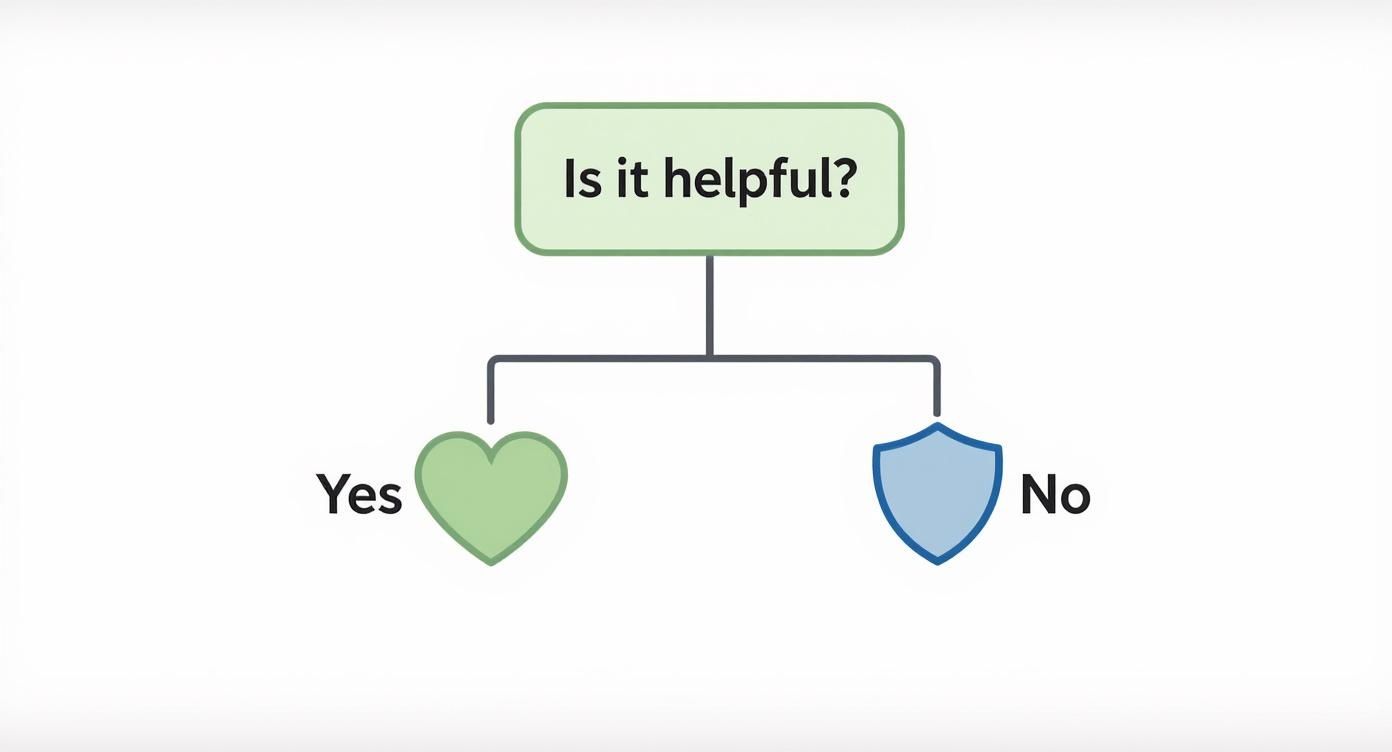
It’s a great reminder to pause and ask yourself: Am I acting from a place of love that encourages growth, or am I trying to shield them from lessons they need to learn on their own?
The Power of Your Unwavering Support
You can't overstate the impact of a strong, positive support system. Consider this: in 2023, only about 14.6% of people in the U.S. with a substance use disorder received any kind of treatment. That's a massive gap, and it's often family and friends who have to fill it.
Your consistent encouragement can be the one thing that keeps them going.
A relapse is an event. It doesn't define their character or their future. By treating it as a problem to solve together, you send the most important message of all: "You are not alone in this, and I still believe in you."
Supporting someone through recovery means being there for the bad days just as much as the good ones. Your unwavering belief in their ability to get back up can give them the hope they need to try again.
4 Guiding Principles for Supporting a Loved One
Figuring out how to support someone in recovery can feel like walking a tightrope. When you're not sure what to do or say, coming back to a few core ideas can keep you grounded. Think of these as your North Star for navigating the tough moments.
Remember, this is a marathon, not a sprint. It’s going to take patience, consistency, and a whole lot of compassion—for them, but just as importantly, for yourself.
1. Lead with Empathy, Not Judgment
If you only remember one thing, let it be this: empathy is your most powerful tool. It’s about listening to understand, not to respond. It’s about validating their feelings, even if you can’t make sense of their past actions.
Judgment builds walls and shuts down communication. Empathy, on the other hand, creates a safe space where they can be honest without fear. Every conversation is a chance to show them they are seen as a whole person, not just their addiction.
2. Protect Your Own Peace with Healthy Boundaries
You can't offer sustainable support if you're running on empty. Setting healthy boundaries isn't about punishing them—it's about protecting your own mental, emotional, and even financial well-being so you can be there for the long haul.
These limits create a stable and predictable environment. When your loved one knows what to expect from you (and what not to), it helps them build their own accountability instead of relying on you to fix things. It’s the difference between helping and enabling.
3. Offer Practical, Concrete Help
Sometimes, the best way to show you care is through small, tangible actions. Words of encouragement are great, but offering a ride to a 12-step meeting, helping them research sober living options, or just making dinner on a tough day can mean the world.
This kind of practical support shows you’re in their corner without you having to become their therapist or manager. It’s about showing up in real, meaningful ways.
4. Prioritize Your Own Self-Care
This one feels counterintuitive, but it's non-negotiable. You simply cannot pour from an empty cup. If you're stressed, exhausted, and overwhelmed, you won't have the capacity to offer the patient, empathetic support your loved one needs.
Taking care of yourself isn't selfish; it's essential. Whether it's therapy, a support group like Al-Anon or Nar-Anon, or just making time for a hobby you love, your well-being has to be a priority.
Frequently Asked Questions
What do I do if my loved one refuses to get help?
You cannot force someone into recovery. Your focus should shift to what you can control: setting firm boundaries to stop enabling the behavior and seeking support for yourself. Groups like Al-Anon can be invaluable. Let your loved one know that you support their recovery, not their addiction, and that the door to help is always open when they are ready.
How should I handle a relapse?
First, manage your own emotions. Reacting with anger or disappointment is counterproductive. Approach the situation with calm compassion, focusing on their immediate safety. Encourage them to reconnect with their support system (therapist, sponsor, etc.) immediately. Frame the relapse not as a failure, but as a difficult lesson that can be used to strengthen their recovery plan.
What is the difference between supporting and enabling?
Support empowers your loved one to become independent and accountable. It involves actions like helping them find resources, encouraging healthy habits, and enforcing boundaries. Enabling, in contrast, shields them from the consequences of their actions. This includes making excuses for them, giving them money without accountability, or cleaning up their messes. Support helps them face reality; enabling helps them avoid it.
How can I rebuild trust after it's been broken by addiction?
Rebuilding trust is a slow process built on consistent, reliable actions over time. Be patient. Acknowledge and appreciate when they follow through on their commitments, no matter how small. Open, honest communication using "I" statements helps create a safe environment where trust can begin to grow again. It won’t happen overnight, but small, consistent efforts from both of you will lay a new foundation.
At StartDrugRehab.com, we understand how challenging this journey is. We’re here to give you the guidance and tools you need to support your loved one without losing yourself in the process. Find the right path forward with our expert-backed articles and treatment directories.