You’ve made the decision to get sober. That’s a monumental step, but as anyone in recovery will tell you, the real work is what happens next—learning how to live sober, one day at a time. This isn't about chasing perfection; it's about building a life you don't want to escape from, a life you're genuinely proud of.
Key Takeaways
- Proactive Planning is Essential: Lasting sobriety isn’t about willpower alone. It's about creating a sober-friendly environment, building healthy routines, and developing a clear relapse prevention plan before you need it.
- A Strong Support System is Non-Negotiable: You cannot do this alone. Actively build a network that includes professionals, mentors, sober peers, and supportive allies to provide accountability, wisdom, and encouragement.
- Trigger Management is a Learnable Skill: Identify your personal emotional, social, and environmental triggers. Use in-the-moment coping strategies like HALT and grounding exercises to navigate cravings without giving in.
- Joy and Purpose are the Goals: Recovery isn't just about avoiding substances; it's about rediscovering what makes life meaningful. Actively pursue hobbies, creative outlets, and connections that bring you genuine happiness and a sense of purpose.
Your Journey to Lasting Sobriety

Choosing sobriety is a fundamental shift in how you live your life. Think of this guide as a collection of real-world tools and hard-won insights from people who have walked this path. It’s here to help you move past the initial "I quit" and into the everyday practice of long-term recovery.
Everyone's journey looks different, but the foundational skills are universal. You'll need to get good at spotting your triggers, building a support system you can actually count on, and finding new ways to experience joy without substances. It's all about creating new, healthier patterns that become second nature over time.
Understanding the Broader Context
Stepping away from substance use can feel isolating, but you're not alone in this fight. The numbers paint a stark picture of a global issue. Worldwide, excessive alcohol use is responsible for 5.3% to 6.0% of all deaths each year. Men, in particular, are three times more likely to die from alcohol-related causes.
Here in the U.S., the statistics are just as sobering: about 385 people die every single day from excessive drinking. This highlights just how crucial it is to have solid, effective support systems in place for people trying to stay sober. If you're curious about how these trends look globally, you can find more insights on global-relocate.com.
Sobriety isn't about what you are giving up; it’s about what you are gaining. The goal is to build a life so full and authentic that the thought of returning to old habits loses its power.
Embracing the First Steps
Those first few weeks and months can feel incredibly fragile. If you're coming out of a structured environment like rehab, the sudden freedom and flood of real-world pressures can be a shock to the system. This is precisely why a plan isn't just nice to have—it's essential. Knowing what's coming makes the transition feel far less overwhelming.
A solid start is all about practical, everyday actions and a mindset that's ready for the long haul. This guide will walk you through building that foundation, focusing on:
- Proactive Strategies: Learning to see your personal triggers coming from a mile away and knowing what to do before they take hold.
- A Reliable Support Network: Figuring out how to assemble a team of friends, family, and professionals you can lean on when things get tough.
- New, Healthy Routines: Swapping out old, destructive habits with positive daily rituals that reinforce your new way of life.
- Renewed Purpose: Rediscovering activities and passions that bring you genuine joy and align with the person you want to be.
Focusing on these key areas will give you the confidence to move forward. If you're right at the beginning of this process, taking a look at the first steps to recovery can offer some really valuable direction.
Laying the Groundwork for a Sober Life
Here’s a hard-won truth from the recovery world: long-term sobriety isn’t about white-knuckling it through cravings. It’s about intentionally building a life where you don't need to escape. It starts by creating a solid foundation, beginning with the one place you have the most control—your home.
Think of your living space as your command center for recovery. In the early days, this means being ruthless about removing anything that whispers, "just one won't hurt." We're not just talking about pouring out the last of the wine. It's about getting rid of the "special" glasses, the bottle openers, the beer signs—anything that glorifies or normalizes your past use. By creating a safe, neutral space, you give your brain a break from the constant battle against temptation.
Curate a Sober-Friendly Environment
After you've cleared out the old stuff, it's time to bring in the new. You want to make your home an active participant in your recovery, not just a passive space.
- Upgrade Your Beverage Game: Stock your fridge with things you actually want to drink. Think beyond tap water. Try fancy sparkling waters with a squeeze of lime, experiment with herbal teas, or find a craft soda you love. Having a go-to non-alcoholic drink makes the ritual of "having a drink" feel satisfying.
- Carve Out a "Decompression Zone": Find a corner of your home and make it all about calm. This could be a comfy armchair with a soft blanket, a yoga mat, or just a small table with your journal and a good pen. This becomes your dedicated spot to hit the pause button when stress starts to build.
- Post Your "Why": Put up visual reminders of what you're fighting for. It could be a picture of your kids, a list of goals you wrote, or a souvenir from a fun, sober weekend. These little cues are surprisingly powerful on tough days.
This isn’t about bubble-wrapping your life. It's about building a strong home base so you can head out into the world feeling grounded and prepared.
How to Handle Social Events with Confidence
Let’s be honest: social situations can feel like a minefield in early recovery. The fear of feeling awkward or getting pressured is real, but a little bit of planning completely changes the game. Your goal is to walk in feeling like you're in the driver's seat.
Before you even leave the house, have your strategy locked in. Know how long you plan to stay and have your own way home. Driving yourself is a great move—it gives you the freedom to leave the second you feel uncomfortable, no questions asked. A classic pro-tip? Get a drink in your hand right away. A club soda with lime looks just like a cocktail and usually stops people from offering you something else.
You also need a few go-to phrases for when someone inevitably asks. You don't owe anyone your life story.
A simple, "No thanks, I'm good for now," usually does the trick. If they're persistent, a calm, "I'm not drinking tonight" or "I'm taking a break for my health" works well. Say it with confidence. Your decision isn't up for discussion.
Building New Routines to Replace the Old
Addiction loves chaos. Recovery, on the other hand, thrives on structure. A predictable daily routine is one of the most powerful tools you have for staying sober because it reduces mental fatigue and squeezes out the idle time where cravings love to creep in.
Your old life probably had routines that revolved around drinking or using. Now, you get to design new ones that actually make you feel good. It doesn't need to be a military-style schedule, just a gentle, predictable rhythm to your days.
- The Morning Launch: How you start your day matters. Instead of grabbing your phone and scrolling into an anxiety spiral, try something different. Take 10 minutes to stretch, journal a few thoughts, or just sit quietly with a cup of coffee. It sets a completely different tone for the hours ahead.
- The Evening Wind-Down: Create a ritual that tells your brain it's time to power down. This is crucial for getting good sleep, which is a non-negotiable in recovery. Put your phone away, read a chapter of a book, listen to a calming podcast, or do some gentle stretches.
Over time, these small, consistent actions become second nature, creating a lifestyle that reinforces your sobriety without you even having to think about it.
Finding the Right Professional to Have in Your Corner
While your own efforts are the core of recovery, getting professional support is like adding a seasoned guide to your team. It’s not a sign of weakness—it's a smart, strategic move to give yourself the best possible chance at success.
There are many paths to choose from. Cognitive Behavioral Therapy (CBT), for example, is incredibly practical. A therapist can help you connect the dots between your thoughts, feelings, and actions, giving you real-world skills to manage triggers and stress.
Support groups are the other major pillar. People often think of 12-step programs, which are fantastic for many, but there are also great alternatives like SMART Recovery, which uses a science-backed approach focused on self-empowerment. The key is to find the right fit. Having a therapist, a group, or both in your corner provides a level of accountability and understanding that is hard to find anywhere else.
Managing Triggers and Preventing Relapse
Let's be real: triggers are a part of life in recovery. You can't avoid them entirely, but you absolutely don't have to let them control you. Learning how to stay sober is like becoming a detective of your own mind and environment. You learn to spot what sets off cravings and, most importantly, you build a solid game plan before they show up.
This isn't about being on high alert 24/7. It's about being prepared, which is where true confidence comes from.
Think of triggers as falling into three main buckets:
- Emotional Triggers: This is the internal stuff. Feeling stressed after a brutal day at work, that ache of loneliness on a quiet night, or even the buzz of excitement for a big celebration can all be triggers.
- Social Triggers: These are all about people and places. It could be going to a wedding, a concert, or a tailgate where everyone else is drinking. It can also be subtle peer pressure from old friends.
- Environmental Triggers: This is your physical world. Driving past the bar you used to frequent, hearing a specific song on the radio, or even just seeing a beer commercial on TV can hit you out of nowhere.
Simply knowing your personal triggers is the first step to disarming them. Acknowledging them doesn't give them power—it takes it away.
Developing a Proactive Relapse Prevention Plan
A Relapse Prevention Plan is your personal playbook for those tough moments. It’s not something you invent on the fly; it's a simple document you write when you're feeling clear and strong, outlining exactly what you’ll do when a craving hits.
This plan needs to be specific to you. It might include a list of three supportive people to call, a few go-to distraction activities (like a 15-minute walk or a specific podcast), and a powerful reminder of why you chose this path in the first place. Having this ready means you don't have to scramble when you're feeling vulnerable. For a structured approach, you can check out this helpful relapse prevention plan template for more detailed guidance.
This infographic breaks down how a simple plan can make a huge difference in a common social situation.
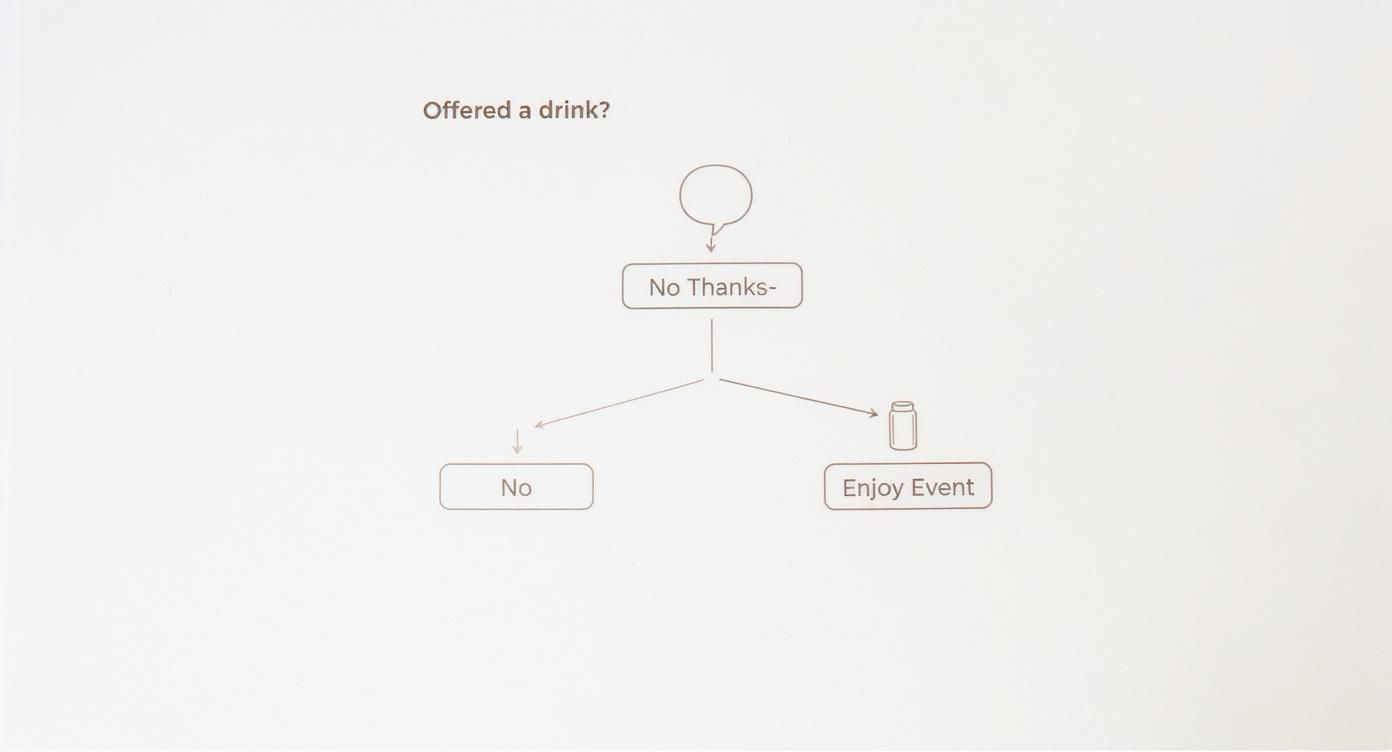
As you can see, having a plan simplifies things. It lets you focus on enjoying the event itself instead of stressing about how to turn down a drink.
In-the-Moment Coping Skills That Work
What about when a trigger catches you completely off guard? You need immediate, practical tools to stay grounded. These techniques are designed to interrupt the craving cycle and give you the space to make a conscious choice.
One of the most effective tools is the HALT acronym. It’s a quick self-check to see if a basic, unmet need is fueling your craving. Just ask yourself: am I Hungry, Angry, Lonely, or Tired? These four states are notorious weak spots for anyone in recovery because they drain your emotional resilience.
Addressing the underlying need is often the fastest way to diffuse a craving. If you're hungry, eat a healthy snack. If you're angry, call a friend to vent. If you're lonely, go to a public place like a coffee shop. If you're tired, take a short rest.
Mindfulness exercises are another powerful way to reclaim your focus. A simple but incredibly effective one is the 5-4-3-2-1 grounding technique:
- Acknowledge 5 things you can see.
- Acknowledge 4 things you can feel.
- Acknowledge 3 things you can hear.
- Acknowledge 2 things you can smell.
- Acknowledge 1 thing you can taste.
This simple exercise yanks your attention out of the craving and plants it firmly back in the present moment, which does wonders for calming your nervous system.
For a more personalized approach, use the table below to map out your own triggers and responses. It’s a great way to turn abstract ideas into a concrete, usable plan.
Your Relapse Prevention Planning Tool
A template to help you identify personal triggers and develop proactive coping strategies for each.
| Trigger Category (e.g., Emotional, Social) | Specific Trigger Example (e.g., Feeling stressed after work) | Proactive Coping Strategy (e.g., Go for a 15-min walk, call a support person) |
|---|---|---|
| Emotional | Feeling overwhelmed by a long to-do list. | Practice a 5-minute breathing exercise before starting. |
| Social | A friend invites me to a bar for their birthday. | Suggest an alternative celebration, like dinner or bowling. If I go, I'll drive myself and have an exit plan. |
| Environmental | Driving by my old liquor store. | I will consciously take a different route home from work for the next few months. |
Putting this down on paper makes your plan feel real and actionable. Come back to it often and update it as you learn more about yourself in sobriety.
Handling a Slip with Compassion
If a slip-up happens, it is not a sign of failure. It is a sign that your plan needs an adjustment. The most important thing is to act immediately. Don't hide it. Reach out to your support system, be honest about what happened, and take a clear-eyed look at the trigger that led to the slip.
Treat it as a learning opportunity. What went wrong? What can you do differently next time? A slip does not erase all the incredible progress you've made. Use it to strengthen your resolve and refine your relapse prevention plan, making you even better prepared for what comes next.
Self-compassion is your most important tool here; shame will only push you further away from your goals.
Building Your Sober Support System
One of the biggest truths I've learned in recovery is that you simply can't do this alone. Trying to white-knuckle your way through sobriety is a recipe for burnout and relapse. Building a solid support system isn't a weakness—it's one of the smartest, most strategic things you can do for a lasting, fulfilling life without alcohol or drugs.
Think of this network as your personal safety net, your trusted advisors, and your biggest cheerleaders all rolled into one. It’s a mix of different people who get the journey, respect your choices, and can offer exactly the right kind of help when you need it most.
Who's In Your Corner?
First things first, take a real, honest look at the people currently in your life. Who are the ones who genuinely lift you up and support your new path? These are your allies. They don't have to be in recovery themselves, but they absolutely must respect your decision without making you feel weird about it.
This also means you'll probably have to set some new boundaries. This doesn't need to be a big, dramatic confrontation. It can be as simple as saying "no thanks" to invitations to bars or explaining that you're focusing on different activities now.
A true support system is built on quality, not quantity. One reliable, understanding friend is more valuable than a dozen fair-weather acquaintances who don't respect your new life.
And you're not alone in making this change. The sober-curious movement is growing fast, signaling a major shift in how we think about drinking. Recent surveys show that nearly half of American adults (49%) are actively trying to cut back. This is especially true for younger people, with 65% of Gen Z planning to reduce their alcohol intake to protect their mental and physical health. You can see more on these trends in a recent report from Circana.
Finding Your People
While your existing allies are gold, early recovery is the perfect time to forge new connections with people who share your sober lifestyle. Finding others who are on the same page can make a world of difference, helping you feel less isolated and more like you belong.
Here are a few ways to start meeting new people:
- Follow Your Interests: Join a local hiking club, a book group, a pottery class, or a community sports league. When you're doing something you love, you'll naturally meet people you click with.
- Give Back: Volunteering for a cause you're passionate about connects you with others who share your values. Plus, it gives you a powerful sense of purpose.
- Sober Social Groups: Look for sober meetups in your area. Many groups organize fun, alcohol-free events like coffee hangs, game nights, or outdoor adventures.
These new friendships are built on a solid foundation of healthy habits, which does wonders for reinforcing your own commitment to staying sober.
Assembling Your A-Team
A strong support network isn't one-size-fits-all. It's made up of people who play different, equally important roles. Having this variety means you'll always have the right person to turn to, no matter what you're facing.
Your Support Team Roster:
- The Professional: This is your therapist, counselor, or doctor. They offer evidence-based guidance, help you untangle the "why" behind your addiction, and provide an objective, expert perspective.
- The Mentor or Sponsor: This is someone who's been where you are and has come out the other side. They offer priceless wisdom from their own lived experience and can hold you accountable when things get tough.
- The Sober Friend: This is your peer on the journey. They're the one you can text at 10 p.m. when a craving hits or celebrate a milestone with, because they just get it.
- The Ally: A friend or family member who might not be sober, but is 100% in your corner. They cheer you on, respect your boundaries, and value you for who you are.
You might also find incredible value in working with a specialized guide. To learn more about this unique role, check out this resource on what recovery coaching is and how it can help you on your path. Building out this diverse team ensures you’re never alone in this.
Finding Joy in a Sober Life

One of the biggest, unspoken fears in early recovery is that life will be… well, boring. But here’s the thing: sobriety isn’t about taking things away. It’s about making space for the things that genuinely bring you joy and help you reconnect with who you really are.
This is your invitation to get curious and experiment. Think of it as a chance to explore all the interests you pushed aside or never had time for before.
- Get creative: Try painting, writing, or learning an instrument. Expressive outlets are incredible for managing stress and rebuilding your confidence.
- Get outside: Go for a hike, take up cycling, or just walk around a new park. Fresh air and physical movement are natural mood-boosters.
- Get social: Join a book club, take a cooking class, or find a local sports league. Building meaningful connections without alcohol is a game-changer.
- Give back: Volunteering for a cause you believe in gives you a strong sense of purpose and community.
These aren't just ways to pass the time; they are the building blocks of a full, vibrant life that doesn't need alcohol to feel exciting.
Embrace Creative Passions
Picking up a paintbrush, a guitar, or even just a pen can be a powerful way to process emotions without saying a word. Creative outlets give you a healthy place to channel all that energy that might otherwise turn into a craving.
And you know what? With every small project you finish, you're not just creating art—you're proving to yourself that you can follow through and accomplish something.
- Start small. Grab a cheap watercolor set or download a free music-making app on your phone.
- Give yourself a mini-deadline, like finishing one sketch or learning one song in a week.
- Share what you made! Send a picture to a friend or post it online. Celebrating the outcome is part of the fun.
Even spending a few minutes a day on something creative starts to rewire your brain to seek rewards from healthy sources. It's a small shift, but it makes a huge difference when you’re facing a moment of doubt.
Reconnect with Nature
There's a reason we're told to "get some fresh air." Spending time outside is scientifically proven to reduce stress and ground you in the present moment.
Building simple outdoor routines into your day can add structure and a reliable source of endorphins. This is a key part of staying resilient, especially on those tough days.
- Watch the sunrise. Starting your day with a moment of peace can set a positive tone for everything that follows.
- Go for a weekend hike. Exploring local trails is a great way to see new scenery and connect with others.
- Try "forest bathing." It’s as simple as it sounds—just walk slowly and mindfully through the woods. The stress reduction benefits are well-documented.
- Start a small garden. Tending to plants is a beautiful way to nurture life and practice patience.
When a craving hits hard, a quick walk among the trees can feel like hitting a reset button. It’s a tangible reminder that changing your environment can change your mindset.
Celebrate Small Wins
Every single day you stay sober is an achievement. Don't let those victories pass by without acknowledging them. Tracking your progress makes the journey feel real and reinforces your commitment.
Use a journal, a calendar, or an app to mark your sober days. On a tough day, looking back at a string of successes can be the exact motivation you need to keep going.
“Celebrating small wins builds momentum and proof that every step forward counts.” – Recovery Coach Insight
Rewarding yourself doesn't have to be expensive. Treat yourself to a nice dinner, buy that book you’ve been eyeing, or take a day trip. These rewards are tangible reminders of your strength.
Plus, when you share these wins with your support system, the joy multiplies. A quick text to a friend or a post in your support group strengthens your connections and keeps you accountable.
Try Mindful Wellness Practices
Practices like yoga, meditation, and breathwork are tools for building emotional balance. They teach you how to sit with your thoughts and feelings without letting them control you—a crucial skill in recovery.
Weaving these into your daily routine builds the mental muscle you need to handle stress without reaching for a drink.
- Start with 5 minutes of guided meditation. Apps like Insight Timer have thousands of free sessions to get you started.
- Try a yoga flow. You can find endless free videos on YouTube. The focus on breathing and movement is incredibly calming for the nervous system.
- Use box breathing. Inhale for 4 seconds, hold for 4, exhale for 4, and hold for 4. This simple technique can anchor you in a stressful moment.
- Create a bedtime ritual. Gentle stretching, a few drops of lavender oil, and some quiet music can help you wind down and get the restorative sleep your body needs.
Frequently Asked Questions About Staying Sober
How can I stay sober when my friends still drink?
Navigating friendships can be one of the trickiest parts of early recovery. The key is setting clear boundaries. You may need to suggest new activities that don't revolve around alcohol, like hiking, going to a movie, or grabbing coffee. True friends will respect your decision. It’s also important to be prepared with a polite "no thanks" and have an exit strategy for social events.
What should I do if I relapse?
A relapse is not a failure; it's a sign that your recovery plan needs adjustment. The most important thing is to be honest immediately. Reach out to your support system—a sponsor, therapist, or trusted friend—and talk about what happened. Analyze the trigger that led to the relapse and use it as a learning experience to strengthen your coping strategies for the future. Self-compassion is crucial.
How do I deal with boredom in sobriety?
The fear of boredom is common, but sobriety is an opportunity to discover what truly brings you joy. This is the time to explore new hobbies or rediscover old passions. Try creative outlets like painting or learning an instrument, get active outdoors, volunteer for a cause you care about, or join a social group. Filling your time with purposeful activities is the best way to build a fulfilling sober life.
Is it necessary to go to meetings to stay sober?
Support groups like Alcoholics Anonymous (AA) or SMART Recovery are invaluable for many people, but they aren't the only path. The most important thing is to have some form of a support system. This could be a therapist, a recovery coach, a close-knit group of supportive friends, or a combination. The goal is to have accountability and connection with people who understand your journey.
Finding your way in sobriety is a journey of rediscovering your own strength. At StartDrugRehab.com, we're here to offer the resources and support you need for every step of that journey. From in-depth guides to a community that gets it, we can help you build the fulfilling, sober life you deserve. Find the right path for you at https://startdrugrehab.com.