Finding the right inpatient rehab facility is a critical first step toward lasting recovery, but the process can feel overwhelming. In a landscape filled with options, distinguishing between high-quality, evidence-based programs and those with misleading claims is a significant challenge. This guide cuts through the noise by focusing on the most reliable platforms and verification tools that empower you to identify the best inpatient rehab facilities tailored to specific needs.
Instead of presenting a static list of centers, this article provides a comprehensive roundup of the premier locators and databases. These resources solve a crucial problem: they offer objective, data-driven information to help you vet potential treatment centers effectively. You will learn how to use government-backed search tools, nonprofit quality evaluators, and accreditation verifiers to make a confident and informed decision for yourself or a loved one.
Each entry in our list includes a detailed overview, practical steps for using the platform, screenshots for clear navigation, and direct links to get you started immediately. We will explore how these tools help you:
- Verify a facility’s licenses and accreditations.
- Filter searches based on treatment approach, payment options, and specialized care.
- Understand quality metrics and patient safety standards.
- Avoid predatory marketing and find ethically operated programs.
This resource is designed to be your roadmap, equipping you with the essential tools to navigate your search for compassionate and effective care. Let’s explore the platforms that will guide you to a premier inpatient program.
1. Find Local Drug Rehabilitation Centers Near You Today
Navigating the landscape of inpatient rehabilitation can be overwhelming, filled with complex terminology and critical decisions. StartDrugRehab.com’s “Find Local Drug Rehabilitation Centers Near You Today” resource distinguishes itself by transforming this daunting task into a manageable, step-by-step process. It serves as a comprehensive educational hub and a practical search tool, making it an indispensable first stop for individuals and families seeking the best inpatient rehab facilities. Instead of merely listing options, this platform empowers users with the knowledge needed to make a truly informed choice, demystifying everything from clinical approaches to financial considerations.
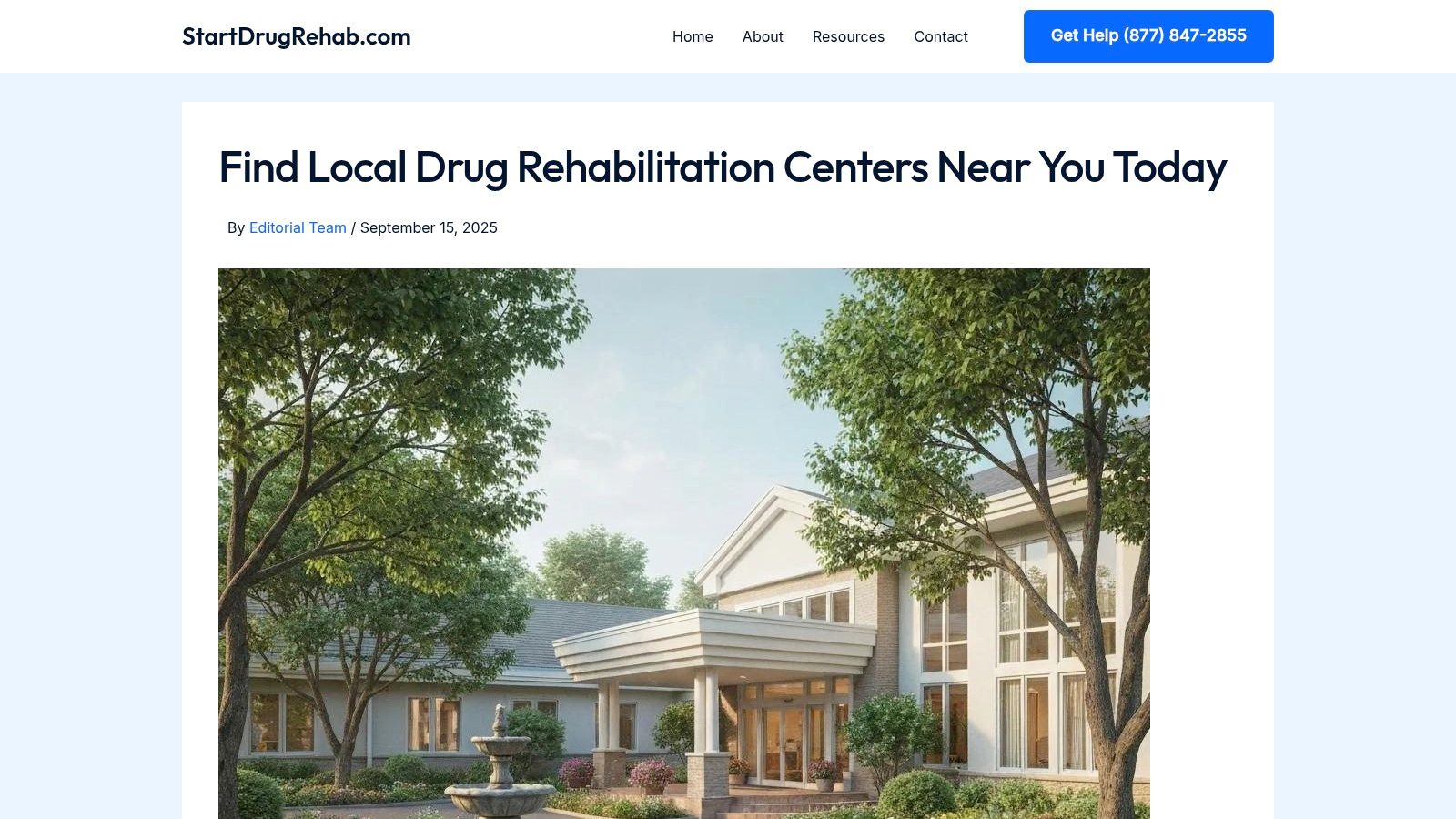
What makes this resource a standout choice is its seamless integration of in-depth guidance with actionable tools. It moves beyond a simple directory, offering a structured framework for evaluating and selecting a facility that aligns with specific clinical needs, personal preferences, and logistical constraints. This dual-functionality ensures users are not just finding a center, but finding the right center.
Comprehensive Guidance and Practical Tools
The core strength of this platform lies in its exhaustive yet accessible content. It methodically breaks down the entire recovery journey into distinct, understandable stages:
- Detoxification: Explains the medical necessity of supervised detox and what to expect during this initial phase.
- Residential/Inpatient Care: Details the structure, benefits, and immersive environment of inpatient programs.
- Therapy Models: Provides clear explanations of evidence-based therapies like Cognitive Behavioral Therapy (CBT), Dialectical Behavior Therapy (DBT), and Motivational Interviewing, helping users understand the clinical backbone of effective treatment.
- Aftercare Planning: Emphasizes the importance of continued support post-treatment, covering sober living, support groups, and ongoing therapy to sustain long-term recovery.
Beyond explaining what these services are, the resource provides a practical checklist of questions to ask potential facilities. This empowers users to confidently inquire about staff credentials, licensing, accreditation (such as from The Joint Commission or CARF), and specific program success metrics. This structured approach helps ensure that the chosen facility meets the highest standards of care.
Navigating Costs and Verifying Quality
Financial concerns are often a significant barrier to accessing care. This resource directly addresses this challenge with a transparent guide to understanding costs, utilizing insurance benefits, and exploring alternative financing options. It walks users through the process of verifying their insurance coverage and provides clarity on what services are typically included in inpatient treatment.
The platform’s connective service element is another key advantage. It helps users efficiently locate and compare local centers, filtering by specific needs to save valuable time and reduce stress. By combining expert-backed education with a user-friendly search function, it bridges the gap between knowing what to look for and actually finding it. To dive deeper into their structured approach, you can learn more about finding local drug rehabilitation centers on StartDrugRehab.com.
Pros and Cons
| Strengths | Weaknesses |
|---|---|
| All-in-One Resource: Combines educational guides, selection criteria, financial advice, and a facility locator in one place. | Data Fluidity: Directory information like bed availability or exact costs can change quickly and requires direct verification. |
| Action-Oriented: Provides practical checklists and questions to vet facilities effectively. | Not a Medical Substitute: Cannot replace a professional medical or psychiatric assessment to determine the appropriate level of care. |
| Evidence-Based Focus: Grounds all recommendations in established, evidence-informed treatment practices. | |
| User-Centric Design: compassionate tone and clear structure make it accessible for both individuals and their families. |
Ultimately, StartDrugRehab.com offers more than a list of names; it delivers a strategic roadmap for finding high-quality, effective inpatient care. By equipping users with knowledge and tools, it fosters confidence and clarity during a critical time of need.
2. FindTreatment.gov (SAMHSA’s official locator)
When searching for the best inpatient rehab facilities, starting with a trusted, unbiased source is crucial. FindTreatment.gov, operated by the Substance Abuse and Mental Health Services Administration (SAMHSA), serves as the U.S. government's official and most comprehensive directory for substance use and mental health treatment. Unlike commercial directories, this platform is entirely free, anonymous, and does not feature paid placements, ensuring that the information provided is objective and solely for public service.
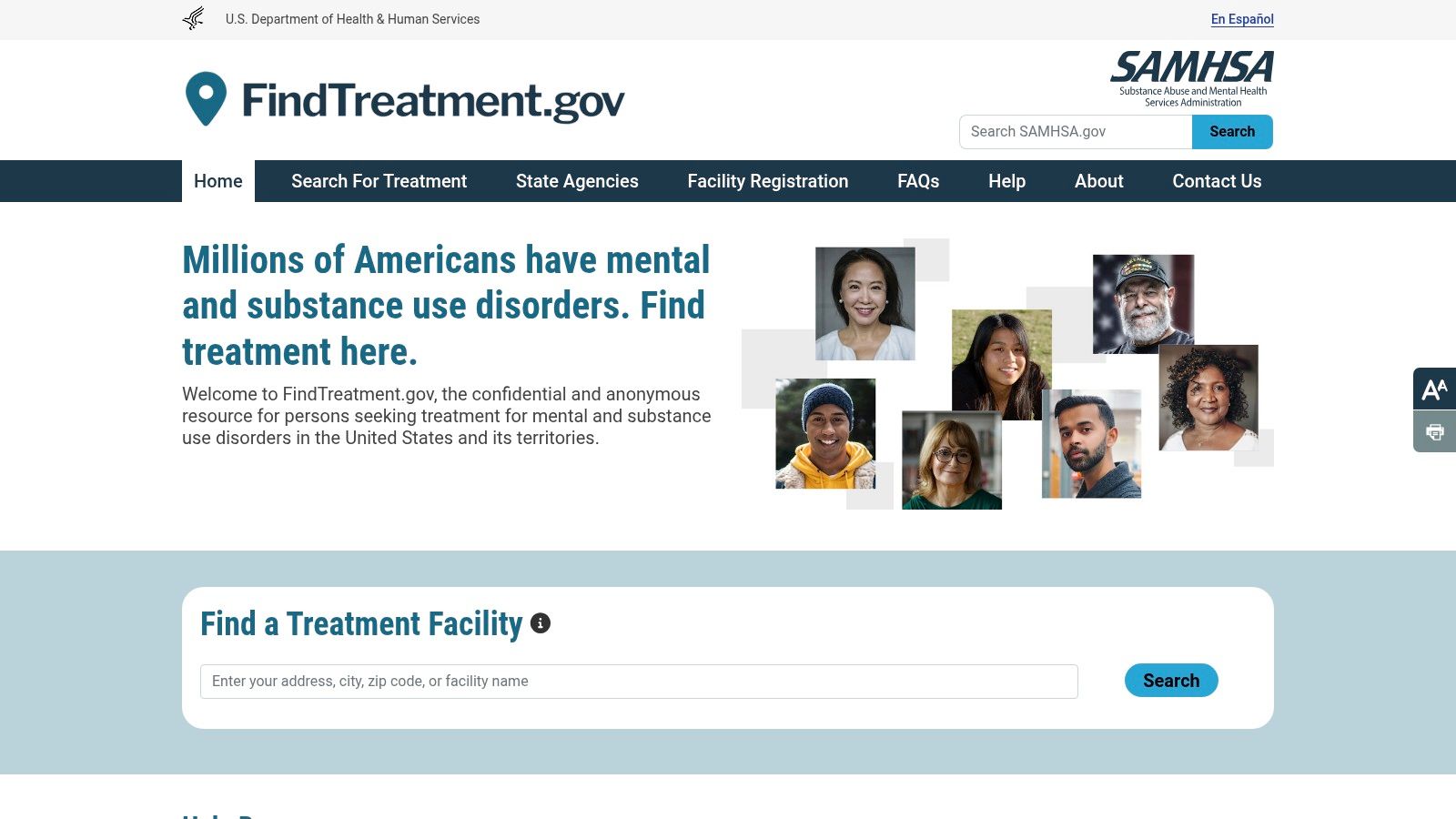
This powerful tool consolidates a nationwide database of state-licensed providers, making it a one-stop-shop for locating vetted inpatient programs, detoxification centers, outpatient services, and medication-assisted treatment (MAT) providers. Its primary strength lies in its robust filtering system, which allows users to narrow their search with remarkable precision.
How to Use FindTreatment.gov Effectively
The user interface is straightforward. You begin by entering a location (city, state, or zip code) to generate a list of nearby facilities. From there, you can apply a series of filters to find a program that perfectly matches your needs.
Key filtering options include:
- Service Type: Select "Residential/Inpatient" to specifically find 24/7 care facilities. You can also filter for detox, transitional housing, or outpatient services.
- Payment & Insurance: Filter by payment assistance options (like sliding scale fees), Medicare/Medicaid, or specific private insurance plans.
- Special Programs: Locate facilities that cater to specific populations, such as veterans, pregnant/postpartum women, adolescents, or LGBTQ+ individuals.
- Languages: Find centers where staff speak Spanish, ASL, or other languages.
Why It Stands Out
FindTreatment.gov’s non-commercial nature is its greatest asset. The listings are based on state licensing data, not advertising budgets. This removes the commercial bias often found in for-profit directories where facilities pay for top spots. The platform also provides access to SAMHSA’s National Helpline (1-800-662-HELP), a free, confidential, 24/7 treatment referral and information service. For those new to the process, understanding what to expect in rehab can be a crucial first step, and this platform provides the direct link to find where that journey can begin.
Platform Breakdown
| Feature | Details |
|---|---|
| Cost to Use | Completely free and anonymous. No sign-up required. |
| Coverage | Nationwide, including all U.S. states and territories. |
| Pros | Comprehensive, unbiased, government-backed data; advanced filtering; ad-free experience. |
| Cons | Facility profiles can be basic, lacking detailed descriptions, photos, or patient reviews. |
While it may not offer the rich, qualitative insights of a review-based site, FindTreatment.gov is an unparalleled starting point for creating a reliable, comprehensive list of licensed inpatient rehab facilities in your area.
Website: https://findtreatment.gov/
3. Shatterproof Treatment ATLAS
For those seeking to find the best inpatient rehab facilities based on quality and adherence to best practices, Shatterproof's Treatment ATLAS is an invaluable, next-generation tool. Developed by a national nonprofit, this platform goes beyond simple listings by providing transparent data on whether a facility uses evidence-based standards of care. It is a quality-measurement system designed to help people find appropriate, high-quality treatment for substance use disorders.
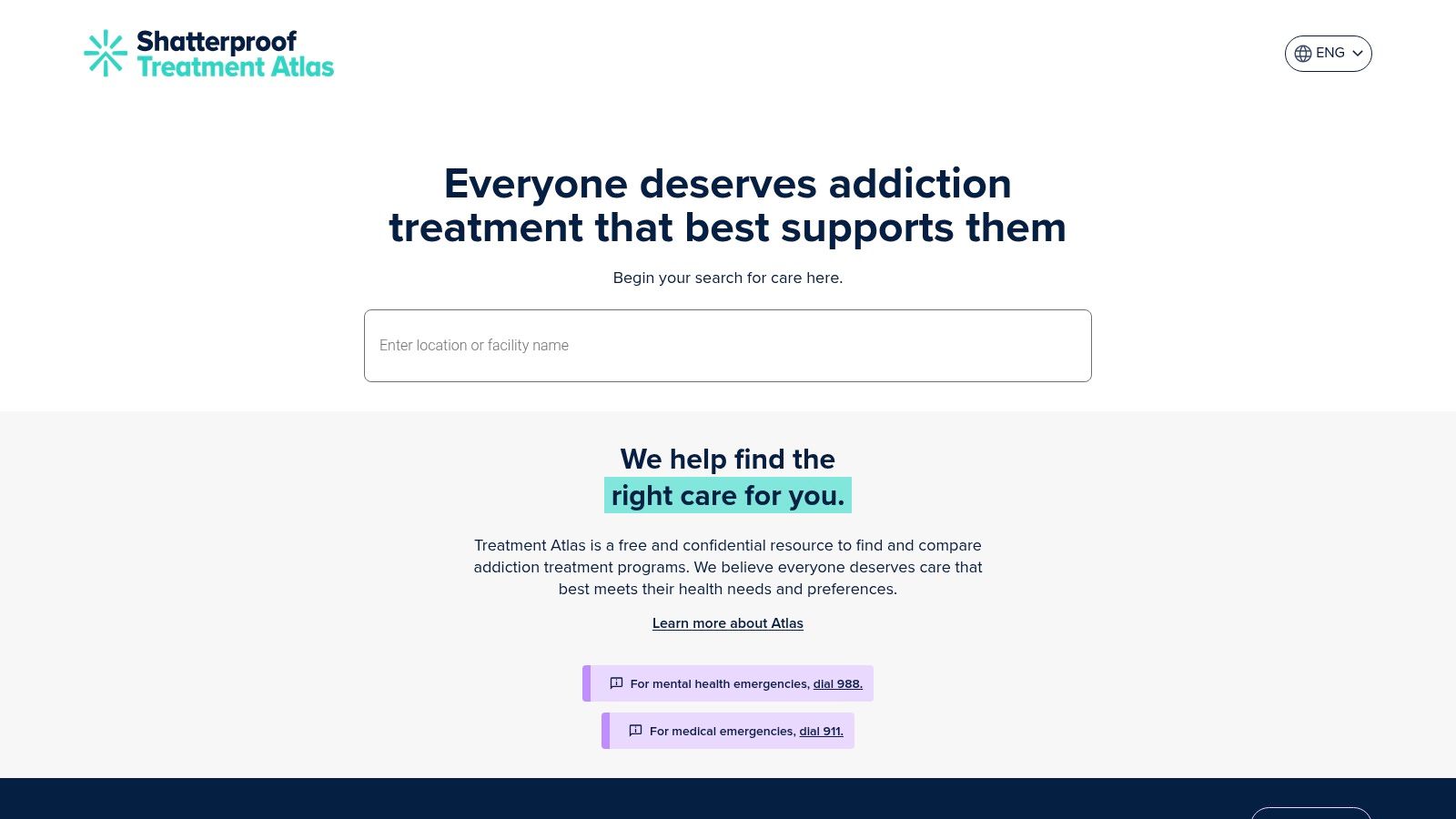
Unlike a basic directory, Treatment ATLAS combines state-verified licensing information with self-reported data from facilities and patient experience feedback. This unique blend allows users to see not just what services are offered, but also how well they are delivered according to nationally recognized principles of care. Its primary strength is its focus on empowering consumers with quality metrics that have historically been difficult to access.
How to Use Treatment ATLAS Effectively
The platform is designed for comparison and quality assessment. You start by selecting a participating state and entering a location. From there, you can view a list of facilities and dive into their detailed quality profiles.
Key filtering options include:
- Quality Measures: Filter facilities based on their reported use of best practices, such as comprehensive assessment, use of FDA-approved medications, and continuing care planning.
- Levels of Care: Select "Residential/Inpatient" to find 24/7 programs, along with options for detox, outpatient, and intensive outpatient services.
- Payment & Insurance: Narrow your search by facilities that accept Medicaid, Medicare, private insurance, or offer sliding scale fees.
- Specific Needs: Find programs for unique populations, including adolescents, veterans, or individuals with co-occurring mental health disorders.
Why It Stands Out
Treatment ATLAS’s commitment to transparency and evidence-based care is its defining feature. As a nonprofit initiative, it does not accept money from treatment facilities for listings or prominent placement, which significantly reduces commercial bias. The platform's framework is built on Shatterproof’s National Principles of Care, which are derived from the Surgeon General's Report on Alcohol, Drugs, and Health. This ensures that the quality markers are rooted in scientific research and expert consensus. For anyone wanting to understand the importance of this, learning more about evidence-based addiction treatment is a great way to appreciate the value ATLAS provides.
Platform Breakdown
| Feature | Details |
|---|---|
| Cost to Use | Completely free for public use. |
| Coverage | Currently available in a growing number of participating states (not yet nationwide). |
| Pros | Focuses on quality and evidence-based practices; nonprofit and unbiased; includes patient feedback data. |
| Cons | Limited to specific states; some facility profiles may be incomplete if they haven't submitted data. |
While its geographic reach is still expanding, Treatment ATLAS is a pioneering resource for anyone who prioritizes proven, high-quality care when searching for an inpatient rehab facility in a covered state.
Website: https://treatmentatlas.org/
4. The Joint Commission – Substance Use Disorder Provider Locator
When your search for the best inpatient rehab facilities prioritizes safety and quality, The Joint Commission's provider locator becomes an indispensable tool. As a leading healthcare accreditation body in the U.S., The Joint Commission evaluates organizations against rigorous performance standards. Facilities that earn its "Gold Seal of Approval" for Behavioral Health Care have undergone comprehensive onsite surveys, demonstrating a deep commitment to patient safety and high-quality care.
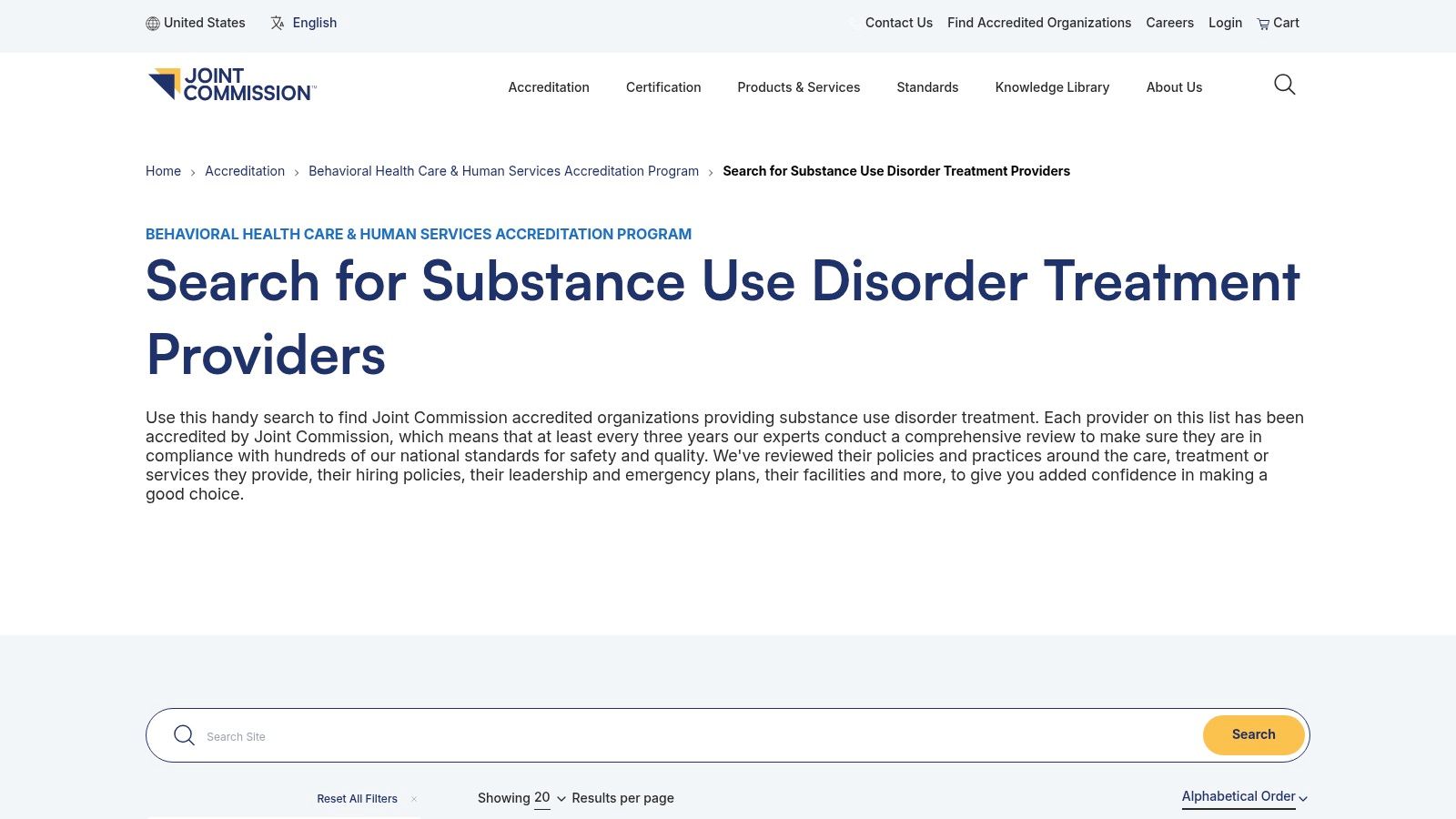
This locator is not a typical search engine filled with paid advertisements; it is a verification tool. It allows you to confirm if a facility you are considering has met these demanding national standards. For families and individuals navigating the often-overwhelming treatment landscape, this accreditation serves as a powerful signal of credibility and operational excellence.
How to Use The Joint Commission’s Locator Effectively
The platform is designed for verification and discovery of accredited providers. While the interface is more clinical than commercial directories, its function is straightforward and targeted.
Key search options include:
- Location-Based Search: Enter the name of an organization, city, state, or zip code to find accredited providers in a specific area.
- Program-Specific Search: Use the "Program" filter to select "Substance Use Disorders" to narrow the results to relevant treatment centers.
- Verify Accreditation: The primary use is to enter the name of a specific facility you are researching to check its current accreditation status and view its performance report.
Why It Stands Out
The Joint Commission locator's value lies in its objectivity and focus on quality assurance. Unlike platforms driven by user reviews or marketing budgets, this tool is based entirely on formal, expert evaluations of a facility’s processes, safety protocols, and patient care environment. Seeing a facility listed here provides peace of mind that it adheres to a nationally recognized benchmark for excellence. This "Gold Seal" is often a requirement for facilities to receive reimbursement from certain insurance providers, highlighting its significance in the healthcare industry.
Platform Breakdown
| Feature | Details |
|---|---|
| Cost to Use | Completely free for public use. |
| Coverage | Nationwide list of healthcare organizations that have voluntarily sought and achieved accreditation. |
| Pros | A strong, trusted indicator of quality and patient safety; widely recognized "Gold Seal of Approval." |
| Cons | Not an exhaustive list of all rehabs; profiles lack details on amenities, cost, or treatment style. |
While this locator won't give you a feel for a center's culture or a breakdown of its daily schedule, it is a crucial resource for vetting the best inpatient rehab facilities on your shortlist and ensuring they meet stringent standards for safe, effective care.
5. CARF International – Find a Provider
When your search for the best inpatient rehab facilities prioritizes verified quality and rigorous standards, the CARF provider directory is an indispensable resource. CARF International (Commission on Accreditation of Rehabilitation Facilities) is an independent, nonprofit accreditor of health and human services. A facility that earns CARF accreditation has undergone a meticulous peer-review process and demonstrated that its programs and services meet internationally recognized standards of quality, a powerful indicator of a provider's commitment to excellence and patient outcomes.
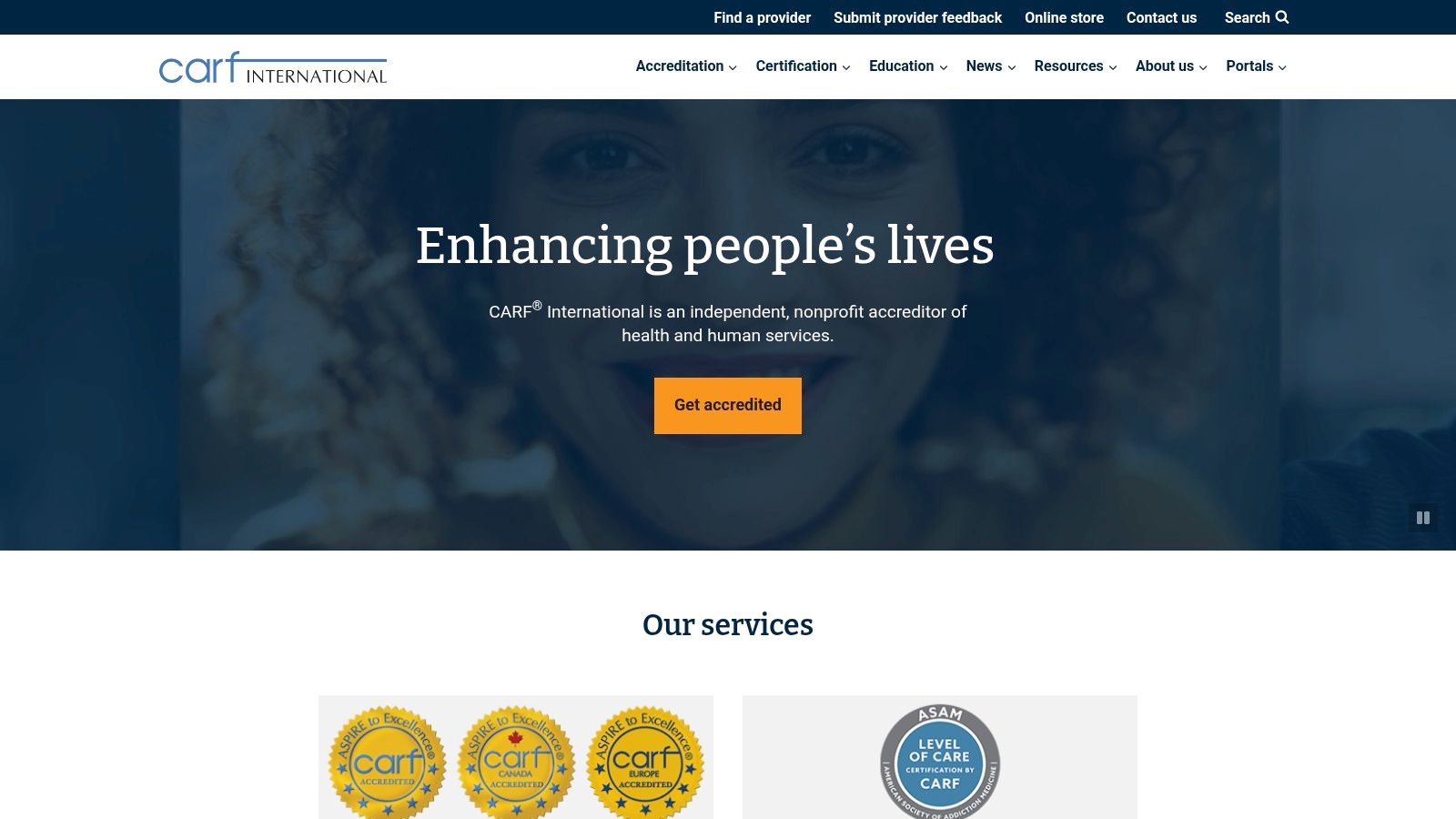
This directory allows you to specifically locate programs that have voluntarily subjected themselves to this high level of scrutiny. For those seeking assurance beyond a facility's own marketing claims, CARF accreditation serves as a trusted, third-party seal of approval. It signifies that a program is focused on delivering safe, effective, and person-centered care.
How to Use the CARF Provider Directory Effectively
The search function is designed to connect you with accredited providers. You can start with a broad search by location and then refine it based on specific program types to find the right fit for your needs.
Key search filters and steps:
- Location Search: Begin by entering a city, state, or postal code to find accredited providers in your desired area.
- Program Type: Use the "Program" filter and look for terms like "Case Management/Services Coordination: Alcohol and Other Drugs/Addictions (Adults)" or "Inpatient Treatment: Alcohol and Other Drugs/Addictions (Adults)" to pinpoint residential care.
- ASAM Level of Care: CARF also administers ASAM Level of Care certification. If a provider has this certification, it means their services have been validated against the industry-standard ASAM criteria for addiction treatment, ensuring the level of care matches patient needs.
Why It Stands Out
The primary advantage of using the CARF directory is the built-in quality assurance. Accreditation isn't easy to achieve; it requires a facility to demonstrate a deep commitment to continuous improvement and accountability. Choosing a CARF-accredited facility gives you confidence that the provider adheres to best practices in the field. Many state regulators and insurance payers also recognize CARF accreditation as a benchmark for quality, which can sometimes impact insurance coverage and referral options. It effectively cuts through the noise of advertising to highlight programs that have proven their value.
Platform Breakdown
| Feature | Details |
|---|---|
| Cost to Use | Completely free for consumers. No sign-up is necessary. |
| Coverage | International, though heavily concentrated in North America. |
| Pros | Focuses on accredited, high-quality providers; ASAM certification offers an extra layer of validation; internationally recognized standards. |
| Cons | Not a comprehensive list of all rehabs, as many good facilities are not CARF-accredited; the interface can be less intuitive than commercial directories. |
While the directory may not include every available option, it serves as a powerful tool for creating a shortlist of facilities that have already passed a significant quality and safety benchmark, making it a crucial step in a well-researched treatment search.
Website: https://carf.org/
6. Psychology Today – Treatment Centers Directory
While widely known for its therapist directory, Psychology Today also hosts one of the most comprehensive and user-friendly directories for finding the best inpatient rehab facilities. This platform excels by combining a massive database with visually rich, detailed profiles that help users quickly understand a facility's environment, treatment approach, and amenities. It serves as a practical bridge between a high-level search and creating a qualified shortlist of potential centers.
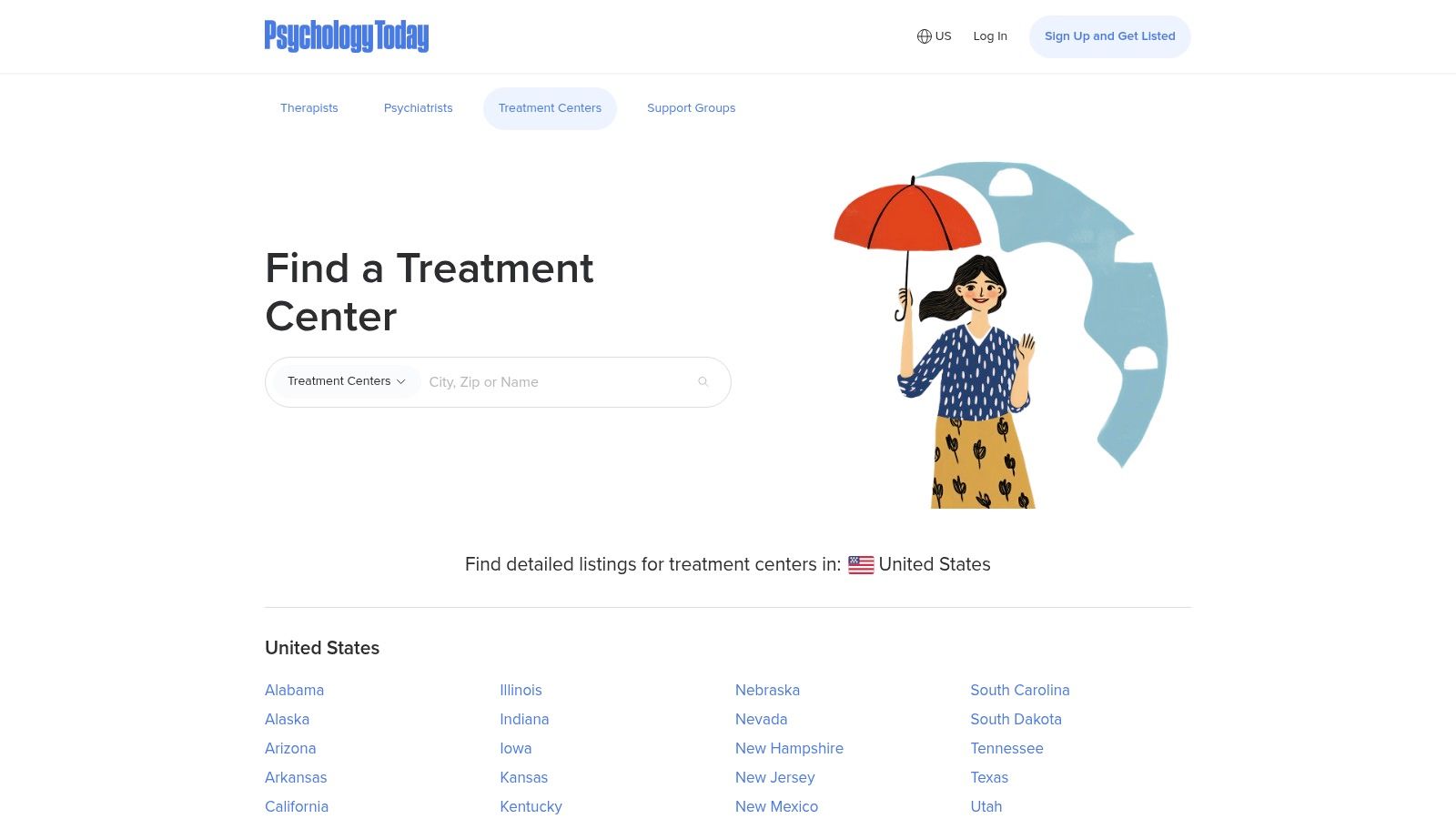
The directory is designed for easy navigation, allowing individuals and families to explore options without feeling overwhelmed. Its strength lies in the detailed, self-reported information provided directly by the facilities, which often includes everything from photos of the rooms to a list of accepted insurance providers, giving a much clearer picture than a basic government listing.
How to Use Psychology Today’s Directory Effectively
The search process is intuitive. After entering your location, you can immediately begin applying filters to narrow the results. The platform’s filters are robust and tailored to the key decision-making factors for choosing an inpatient program.
Key filtering options include:
- Level of Care: Easily select "Residential / Inpatient" or "Detoxification" to focus your search on 24/7 programs. You can also find Partial Hospitalization (PHP) and Intensive Outpatient (IOP) options.
- Insurance Accepted: This is a crucial filter. You can check off specific private insurance providers, as well as Medicare and Medicaid, to see only facilities that accept your plan.
- Specialties & Issues: Refine your search based on specific needs, such as co-occurring disorders, trauma/PTSD, chronic relapse, or process addictions like gambling.
- Client Focus: Find programs designed for specific demographics, including adolescents, college students, veterans, or LGBTQ+ clients.
Why It Stands Out
Psychology Today's directory stands out by offering a more qualitative, detailed view of each treatment center. While government sites provide essential data, this platform adds a human element with photos, detailed program descriptions, and lists of specific therapeutic modalities like CBT, DBT, or EMDR. This richness helps you get a "feel" for a center before making contact, which is invaluable when making such an important decision. The direct contact information also streamlines the process of reaching out for verification and admissions.
Platform Breakdown
| Feature | Details |
|---|---|
| Cost to Use | Completely free for users. Facilities pay a subscription fee to be listed. |
| Coverage | Nationwide coverage in the U.S. and extends to several other countries. |
| Pros | User-friendly interface; rich, detailed profiles with photos and amenities; robust insurance and specialty filters. |
| Cons | It is a paid advertising model, so results may have commercial bias. Information is self-reported and requires verification. |
Because it is a paid directory, it's important to use Psychology Today as a powerful discovery and shortlisting tool, but always follow up by cross-referencing information with official sources and speaking directly with the facility’s admissions team.
Website: https://www.psychologytoday.com/us/treatment-rehab
7. LegitScript – Certification Lookup
When your search for the best inpatient rehab facilities takes you through online advertisements or unfamiliar directories, an extra layer of verification is essential. LegitScript offers a unique and powerful tool not for finding treatment, but for validating it. Its public certification lookup allows you to verify if an addiction treatment provider’s website meets stringent standards for legality, transparency, and ethical marketing practices, providing a crucial safeguard against predatory or misleading operators.
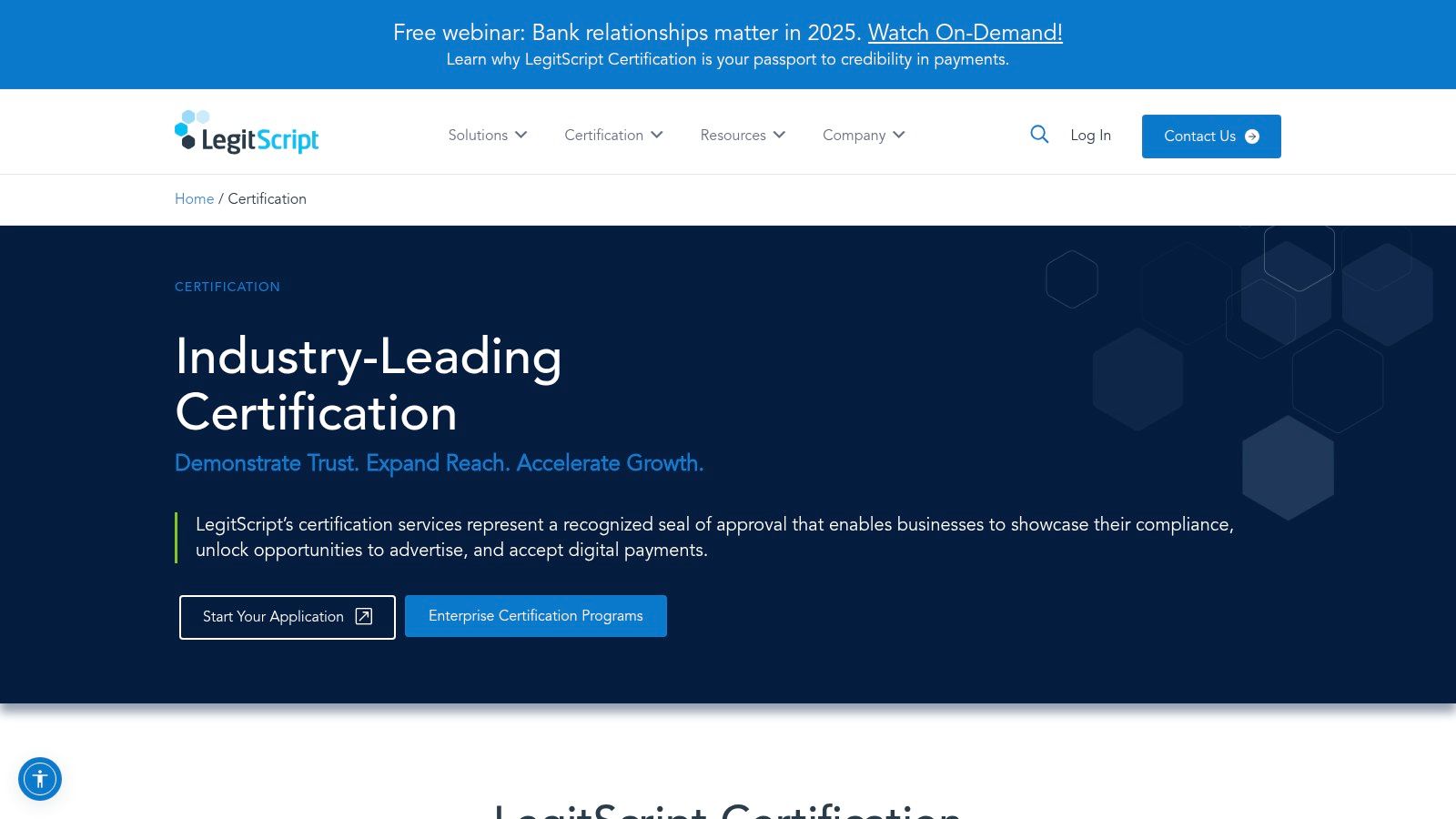
Unlike a traditional treatment locator, LegitScript focuses on the compliance and business practices of a facility's online presence. Major advertising platforms like Google and Facebook require this certification for any addiction treatment provider wishing to run ads. This means that a LegitScript-certified program has undergone a rigorous vetting process, making it a reliable indicator of a facility’s commitment to ethical patient outreach and transparency.
How to Use LegitScript Effectively
The tool is incredibly straightforward. It's designed for a quick and simple check to give you peace of mind before you contact a facility you've found online.
Using the lookup tool involves a single step:
- Website Verification: Simply navigate to the certification lookup page and enter the website address (URL) of the treatment center you are considering. The tool will immediately tell you whether the site is LegitScript-certified, which is a strong signal that it operates with transparency.
Why It Stands Out
LegitScript’s value lies in its role as an independent, third-party verifier of ethical marketing. While other sites list facilities, LegitScript vets their business practices. This is vital in an industry where deceptive advertising can lead vulnerable individuals to substandard or inappropriate care. If a center has invested in LegitScript certification, it shows they are committed to a higher standard of transparency and have been approved to advertise on major online platforms, distinguishing them from unvetted providers.
Platform Breakdown
| Feature | Details |
|---|---|
| Cost to Use | Completely free for public lookup. No account needed. |
| Coverage | International, but primarily used for providers advertising in the U.S. |
| Pros | A powerful tool for verifying the legitimacy and ethical marketing of a provider found online; helps avoid predatory programs; trusted by major ad networks. |
| Cons | It is not a treatment locator or a measure of clinical quality; certification focuses on marketing compliance, not the effectiveness of the treatment itself. |
While LegitScript won't help you find a facility, it's an indispensable final-check tool. Once you have a shortlist of potential inpatient rehab facilities, running their websites through this lookup can provide an added layer of confidence in your choice.
Website: https://www.legitscript.com/certification/
Top 7 Inpatient Rehab Facility Locators — Comparison
| Resource / Tool | Implementation Complexity 🔄 | Access & Resource Needs ⚡ | Expected Quality / Effectiveness ⭐ | Ideal Use Cases 📊 | Key Advantages & Tips 💡 |
|---|---|---|---|---|---|
| Find Local Drug Rehabilitation Centers Near You Today (StartDrugRehab.com) | Low — step-by-step web guide and tools; user-driven | Free online access; needs internet and caller follow-up to confirm details | High for education, comparison, and planning; not a clinical assessment | Initial research, comparing local inpatient programs, insurance navigation | Comprehensive checklists and selection criteria; always verify bed availability and clinical fit |
| FindTreatment.gov (SAMHSA) | Low — simple national locator | Free, nationwide; 24/7 helpline available | Moderate–High — authoritative but often basic profile detail | Nationwide anonymous searches; immediate helpline support | Government-backed, ad-free listings; follow up with facilities for qualitative info |
| Shatterproof Treatment ATLAS | Medium — combines state data and provider self-reports | Free nonprofit platform; coverage varies by state | High where available — displays evidence-based practice indicators and patient feedback | Comparing quality and evidence-based adherence in participating states | Emphasizes National Principles of Care; check state coverage and completeness of profiles |
| The Joint Commission – SUD Provider Locator | Low — accreditation lookup tool | Public free access to accreditation status | High for system-level safety and quality signals; not exhaustive of all good programs | Credibility check for program safety and quality systems | Recognized “Gold Seal”; use alongside patient-experience and pricing sources |
| CARF International – Find a Provider | Low–Medium — accreditation and ASAM level info | Public directory; may require navigation to find details | High for accredited programs and ASAM-certified levels | Verifying accreditation and appropriate ASAM level-of-care | Useful for payer/state recognition; not all quality programs are CARF-accredited |
| Psychology Today – Treatment Centers Directory | Low — consumer-friendly directory with rich profiles | Broad national coverage; many paid listings but free for users | Variable — detailed profiles but self-reported by facilities | Rapid shortlisting by amenities, insurance, photos and specialties | Easy to use for shortlists; cross-verify self-reported claims and pricing |
| LegitScript – Certification Lookup | Low — simple website certification lookup | Free public lookup focused on online marketing compliance | Specific — effective for marketing/legal compliance, not clinical quality | Vetting programs discovered via ads or websites | Practical safeguard against misleading operators; combine with clinical/ accreditation checks |
Taking the Next Step with Confidence
The journey to find one of the best inpatient rehab facilities is a profound and courageous step toward healing and recovery. This guide has equipped you with a robust toolkit, featuring seven distinct and powerful resources designed to demystify the selection process. From government-sponsored locators like SAMHSA’s FindTreatment.gov to quality-focused databases like The Joint Commission and CARF International, you now have multiple avenues to verify credentials, explore treatment options, and identify centers that align with your specific needs.
Navigating this path requires more than just a list of names; it demands a strategic approach. By using tools like Shatterproof's Treatment ATLAS, you gain access to patient-reported data and quality metrics, adding a crucial layer of transparency. Similarly, directories such as Psychology Today and the tool you're using right now, StartDrugRehab.com, offer detailed profiles and filters that allow you to narrow your search based on therapy types, specialized programs, and insurance coverage. The key is to use these resources in combination, creating a comprehensive picture of each potential facility.
Key Takeaways for Your Search
As you move forward, keep these four essential principles in mind to ensure your search is as effective and empowering as possible:
- Verification is Non-Negotiable: Always cross-reference facilities using accreditation locators like The Joint Commission, CARF, and LegitScript. Proper licensing and accreditation are the bedrock of safe, evidence-based care and a critical indicator of a reputable program.
- Utilize Multiple Search Tools: No single tool provides the complete picture. Start with a broad search on a user-friendly platform like FindTreatment.gov, then dive deeper into quality metrics with ATLAS, and finally, verify credentials with the accrediting bodies. This multi-pronged approach minimizes gaps in information.
- Prioritize Personalized Fit over Prestige: The "best" facility is the one that best fits your unique clinical needs, personal values, and recovery goals. Consider factors like therapeutic modalities (CBT, DBT), dual-diagnosis capabilities, location, and aftercare support. A prestigious name means little if the program isn't tailored to the individual.
- Ask Targeted, Informed Questions: Your research empowers you to be an active participant in the selection process. Use the information you've gathered to formulate specific questions for admissions counselors. Ask about staff-to-patient ratios, the specifics of their aftercare planning, and how they measure treatment success.
Making a Confident and Informed Decision
Choosing an inpatient rehab facility is one of the most important decisions you or your loved one will ever make. The process can feel overwhelming, but by breaking it down into manageable steps, you can regain a sense of control and clarity. Start by creating a shortlist of 3-5 potential centers that meet your initial criteria.
Next, reach out to each one directly. An initial phone call can reveal a great deal about a center's culture and responsiveness. Trust your intuition during these conversations. Do the staff sound compassionate and knowledgeable? Are they transparent about costs and treatment protocols? Remember that your comfort and trust in the provider are vital components of successful treatment.
Ultimately, the goal is to find a facility where you feel safe, supported, and confident in the care provided. The tools and strategies outlined in this article are your allies in this process, designed to illuminate the path forward and help you find a program that can genuinely facilitate lasting recovery. The right support system is out there, and you now have the resources to find it.
Frequently Asked Questions (FAQ)
What makes an inpatient rehab facility "the best"?
The "best" inpatient rehab facility is one that is licensed, accredited by a recognized body like The Joint Commission or CARF, uses evidence-based therapies, and offers individualized treatment plans that fit your specific clinical and personal needs. Key factors include qualified staff, a low staff-to-patient ratio, comprehensive aftercare planning, and the ability to treat co-occurring disorders (dual diagnosis).
How long does inpatient rehab typically last?
Inpatient rehab programs vary in length, but common durations are 30, 60, or 90 days. The appropriate length of stay is determined by a clinical assessment of the individual's needs, the severity of the substance use disorder, and the presence of any co-occurring mental health conditions. Some long-term programs can last six months or more.
How do I pay for inpatient rehab?
Most private health insurance plans cover a portion of inpatient rehab costs, though the amount varies. Other payment options include private pay (out-of-pocket), Medicare/Medicaid (at participating facilities), financing or personal loans, and sliding scale fees offered by some nonprofit centers. Always verify your insurance benefits directly with the facility's admissions department before committing.
What is the difference between inpatient and residential rehab?
The terms "inpatient" and "residential" are often used interchangeably. Both refer to 24/7 care in a structured, live-in environment. Technically, "inpatient" may refer to treatment in a hospital setting with more intensive medical supervision, while "residential" often describes a more home-like, non-hospital setting. However, the core principle of immersive, round-the-clock care is the same for both.
How can I verify a rehab facility's claims and credentials?
Use the tools listed in this article. Check for accreditation on The Joint Commission and CARF websites. Use SAMHSA's FindTreatment.gov to ensure the facility is state-licensed. For centers found through online ads, use LegitScript's lookup tool to verify their marketing practices are ethical. Finally, call the facility and ask for specific details about their licenses, staff credentials, and treatment methodologies.
Your search for hope and healing begins with the right information. At StartDrugRehab.com, we simplify the process by providing a comprehensive directory and expert-vetted resources to help you find and connect with the best inpatient rehab facilities that fit your unique needs. Explore our free, confidential resources and take the first step toward a new beginning at StartDrugRehab.com.