The damage from substance abuse doesn't just stop with the person using. It creates a ripple effect, a cascade of consequences that can devastate a person's health, mind, relationships, and financial stability. These aren't just isolated problems; they tangle together, creating a difficult knot for individuals, their families, and entire communities to unravel.
Key Takeaways
- Holistic Impact: Substance abuse affects every aspect of a person's life, causing severe physical damage to vital organs, significant mental and emotional distress, and the breakdown of social relationships.
- Physical Deterioration: Chronic substance use leads to long-term health consequences, including heart disease, liver failure, and irreversible brain damage. It physically rewires the body, creating a dependence that results in severe withdrawal symptoms when use is stopped.
- Mental Health Connection: There is a strong link between substance abuse and mental health conditions like depression and anxiety. Many individuals use substances to self-medicate, creating a vicious cycle of co-occurring disorders that requires integrated treatment.
- Social and Familial Breakdown: The effects radiate outward, eroding trust within families, isolating individuals from friends, and leading to professional and financial collapse. The societal cost is immense, straining healthcare systems and impacting community safety.
Understanding the True Scope of Substance Abuse
It's easy to dismiss substance abuse as a matter of personal choice, but that view misses the bigger picture entirely. We're talking about a massive public health issue with consequences that spread like wildfire. The initial spark might be personal, hitting one person's health and life, but the blaze quickly grows to engulf family, friendships, workplaces, and the wider community.
Just how big is this problem? The numbers are staggering. Recent data shows that a shocking 70.5 million people in the U.S. aged 12 or older have used illicit drugs or misused prescription medications in the past year alone. This isn't a fringe issue; it's a reality for millions of Americans. For more on these trends, you can explore the data over at drugabusestatistics.org.
The Societal and Personal Costs
The fallout from such widespread use carries a hefty price tag, both socially and economically. Our healthcare systems are strained, businesses suffer from lost productivity, and families are pushed to their breaking point. The emotional and financial toll can shatter trust and create long-lasting instability.
This chart really puts the scale of the problem into perspective, showing the immense annual healthcare costs, lost workdays, and the sheer number of family members caught in the crossfire.
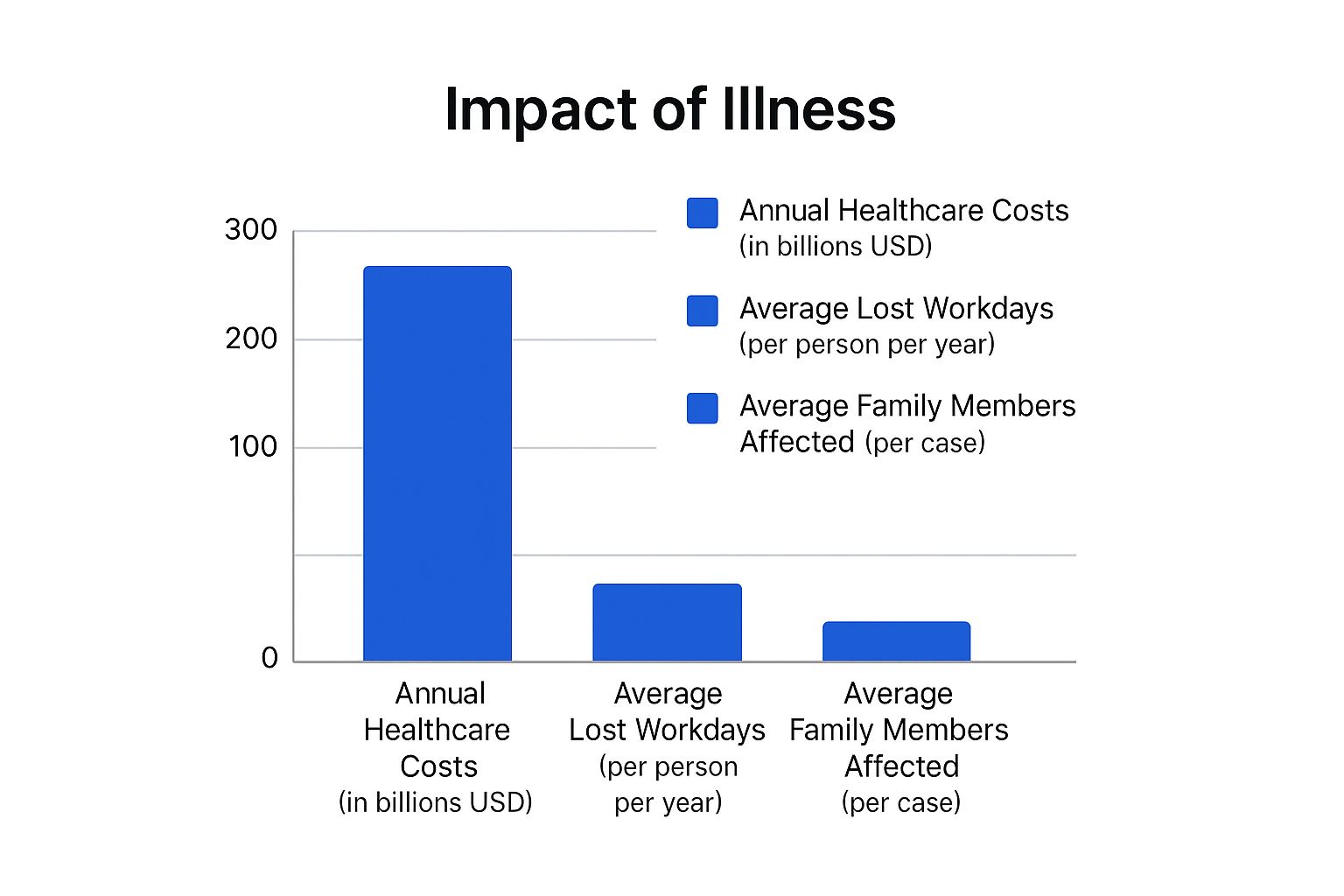
As you can see, what starts as a personal struggle quickly morphs into a massive societal expense and widespread disruption for families.
Navigating the Path to Recovery
Getting a handle on the full impact of substance abuse is the first, crucial step toward finding a solution. It changes the conversation from one of blame to one focused on a public health crisis that demands compassion and real, effective support systems.
The journey to recovery often begins with recognizing the true cost of inaction. Acknowledging the widespread impact—on health, relationships, and finances—is a powerful motivator for change.
Cost is often a huge roadblock for people who want to get help. The good news is, there are resources designed to make treatment more accessible. A great starting point is exploring options for insurance coverage for rehab, which can help map out a clear path forward. To create lasting change, we have to tackle this from every angle—personal, familial, and societal.
How Substance Abuse Physically Damages the Body
When we talk about substance abuse, it's easy to focus on the immediate high. But behind the scenes, a silent war is being waged on the body, causing damage that can range from short-term harm to permanent, irreversible conditions.
Think of your body as a high-performance engine. Substance abuse is like constantly flooring the gas pedal and running it in the redline. For a while, it might keep up, but eventually, critical parts will start to break down under the relentless strain.
This physical toll isn’t just a side effect; it's a fundamental part of how addiction takes hold. As the body is forced to adapt to a constant flood of foreign chemicals, it begins a downward spiral that becomes incredibly difficult to escape.
The Brain Under Siege
The brain is often ground zero. Many addictive substances hijack its reward system, unleashing a flood of dopamine that creates an intense, artificial sense of pleasure. Over time, the brain gets used to this shortcut and starts to produce less dopamine on its own.
Soon enough, the substance isn't about getting high anymore—it's about just trying to feel normal.
This isn't just a chemical change; it physically rewires the brain's neural pathways. It's like a computer's operating system being slowly corrupted by malware. The circuits responsible for good judgment, decision-making, and self-control are weakened, while the pathways driving compulsive, drug-seeking behavior are reinforced and strengthened.
Damage to Vital Organs
The damage doesn't stop at the brain. The physical consequences ripple outward, putting immense strain on every major organ system and often leading to chronic, life-threatening illnesses.
Different substances target different parts of the body, but the end result is a systematic breakdown of your health.
- Cardiovascular System: Stimulants like cocaine and meth put the heart into overdrive. This can cause high blood pressure, an irregular heartbeat, and dramatically increase the risk of a heart attack or stroke, even in young people.
- Liver and Kidneys: Your liver is the body's primary filter, and it takes a beating from chronic alcohol and drug use. This can lead to serious inflammation (hepatitis), permanent scarring (cirrhosis), and eventually, complete liver failure.
- Respiratory System: Opioids are infamous for suppressing the body's instinct to breathe, which can lead to dangerously slow breathing or stop it altogether. Smoking substances like crack or marijuana directly assaults lung tissue, raising the risk of chronic bronchitis and other lung diseases.
The constant chemical assault also weakens the immune system, leaving the body vulnerable to infections and other illnesses. The damage might be gradual, but it is undeniably destructive.
"The human body is remarkably resilient, but it has its limits. Chronic substance abuse pushes past those limits, systematically dismantling the very systems that keep us alive."
To better understand how specific substances affect the body, here's a breakdown of the damage they can cause to different organ systems.
Physical Effects of Common Substances on Body Systems
| Substance Category | Cardiovascular System | Nervous System (Brain) | Liver and Kidneys | Respiratory System |
|---|---|---|---|---|
| Opioids | Low blood pressure, slowed heart rate, collapsed veins from injection. | Drowsiness, confusion, brain damage from hypoxia (lack of oxygen). | Can contribute to kidney damage over time. | Severe respiratory depression, leading to overdose and death. |
| Stimulants | Increased heart rate, high blood pressure, heart attack, stroke. | Anxiety, paranoia, psychosis, permanent brain damage. | Kidney failure, liver damage, especially with methamphetamines. | Lung damage if smoked, perforation of nasal septum if snorted. |
| Alcohol | High blood pressure, irregular heartbeat, cardiomyopathy (weak heart). | Memory loss, impaired coordination, permanent brain damage. | Alcoholic hepatitis, cirrhosis, fatty liver disease, kidney failure. | Increased risk of pneumonia and other respiratory infections. |
| Cannabis | Increased heart rate, potential risk for heart attack soon after use. | Impaired memory, learning, and attention; risk of psychosis. | Can stress the liver if consumed in high-potency edibles. | Lung irritation, bronchitis, and lung damage from smoking. |
This table illustrates just how widespread the physical assault on the body can be, with no organ system left untouched.
The Ultimate Physical Consequence
Tragically, the most severe physical outcome of substance abuse is an increased risk of death. Substance use is becoming more lethal every year, with a stark UNODC report warning that at least 450,000 people died from drug-related causes in 2021.
This terrifying trend is backed by research showing global drug-related deaths have more than doubled since 1990, driven largely by the rise of potent synthetic opioids like fentanyl. You can explore the full report for a deeper dive into these global drug trends.
This physical deterioration also means that when someone tries to quit, their body protests with severe and painful distress. It's crucial to understand what withdrawal symptoms are, as they represent the body's desperate struggle to function without a substance it has grown to depend on. From agonizing cravings to life-threatening seizures, withdrawal is the clearest sign of how deeply addiction has rewired a person's physical state.
The Unseen Scars: Mental and Emotional Toll

While the physical damage from substance abuse can be plain to see, the internal wounds are often invisible and just as devastating. These psychological scars run deep, capable of completely changing a person's mental and emotional world. We're not just talking about bad moods; this is about profound, chemical-level shifts in how the brain works.
Many people first reach for a substance to self-medicate. They're looking for a way to turn down the volume on anxiety, depression, or past trauma. A drink to take the edge off, a pill to numb the pain—at first, it can feel like it's working.
But this coping strategy is a trap. The very substances people use to manage their mental health almost always end up making it worse in the long run. This kicks off a vicious cycle: worsening mental health leads to more substance use, which in turn digs the psychological hole even deeper. It’s a downward spiral that feels impossible to escape.
The Cycle of Co-Occurring Disorders
This link between addiction and mental health is so common that it has a name: co-occurring disorders, sometimes called a dual diagnosis. It’s when someone is battling both a substance use disorder and another mental health condition—like depression, an anxiety disorder, or PTSD—at the same time.
According to the National Institute on Drug Abuse, this overlap is staggering. About half of all people who experience a mental illness will also struggle with a substance use disorder at some point, and the reverse is also true.
Think of it as two gears locked together. When one turns, the other can’t help but move with it. If you only try to treat the addiction, the untreated mental health issue will eventually pull the person back into substance use. Lasting recovery depends on a plan that addresses both issues together.
The Persistent Mental Fog
Beyond specific diagnoses, one of the most common psychological effects of chronic substance use is a serious decline in cognitive function. Long-term use can wrap the mind in a persistent "mental fog," making even the simplest daily tasks feel like climbing a mountain.
This isn't just about feeling tired or distracted. It’s a genuine impairment of the brain's executive functions.
- Memory Problems: Chronic substance use can damage the hippocampus, the part of the brain responsible for creating new memories. This leads to frustrating forgetfulness and a struggle to hold onto important information.
- Poor Judgment: The prefrontal cortex, our brain's CEO in charge of decision-making and impulse control, takes a heavy hit. This results in risky behavior and an inability to think through the consequences of actions.
- Emotional Dysregulation: The brain's ability to manage emotions gets thrown out of whack. People often experience wild mood swings, constant irritability, and over-the-top reactions to normal, everyday stress.
Imagine trying to navigate a dense fog with a faulty compass. That's what daily life can feel like for someone experiencing cognitive decline from substance abuse. Every decision is harder, and the path forward is always unclear.
This mental fog makes it incredibly difficult to hold a job, keep up with relationships, or manage life's responsibilities. It creates a profound sense of isolation, reinforcing the very feelings of failure and shame that often fuel the addiction in the first place.
Reclaiming Mental Clarity
While the journey out of this fog is tough, it is absolutely possible. Sobriety is the first step, giving the brain the chance it needs to rest, heal, and start building new, healthy neural pathways.
Some cognitive damage can be long-lasting, but with sustained recovery, many people see incredible improvements in their memory, judgment, and emotional stability. Breaking free from this mental and emotional weight is a core part of healing—and just as critical as mending the physical body.
The Social Ripple Effect on Families and Communities
Addiction is never a solo act. It’s more like a stone tossed into a quiet pond, with ripples that spread out and disrupt everything—and everyone—in their path. The fallout from substance abuse radiates outward, systematically fracturing the very social bonds that give our lives meaning and stability.
Too often, our most important relationships with family, friends, and colleagues are the first casualties. This goes far beyond simple arguments or hurt feelings. Substance abuse erodes the bedrock of trust and reliability that healthy relationships are built on.
Broken promises become the norm. Responsibilities are cast aside. Communication shuts down, leaving loved ones adrift in a sea of confusion, anger, and helplessness.
The Breakdown of the Family Unit
Inside a family, addiction is a corrosive force. It eats away at trust and intimacy, leaving behind a hollowed-out version of what once was. The person struggling with substance use often retreats behind a wall of secrecy and defensiveness, becoming increasingly isolated from the people who care most.
This forces family members to adopt unhealthy roles just to cope with the escalating chaos. You might see one spouse become an enabler, constantly making excuses or covering up for their partner's behavior to keep the peace. A child might become the "hero," trying to be perfect to make up for the turmoil at home.
These coping mechanisms, while usually born from love and fear, only make the situation worse. They shield the person from facing the real-world consequences of their actions, allowing the cycle to continue.
This environment is profoundly damaging for children. They often face neglect, instability, and deep emotional trauma, learning to bury their own feelings and needs. The psychological scars from this can last a lifetime. Breaking these patterns is incredibly difficult, which is why understanding recovery resources for families is such a crucial first step toward healing for everyone involved.
Isolation from Friends and Professional Collapse
It doesn't stop with family. The person’s entire social circle begins to shrink. Friendships that aren't built around using drugs or alcohol slowly fade into the background. Social events that were once fun are now avoided, either due to shame or because the person's entire focus has narrowed to just one thing: the substance.
Professionally, the consequences are just as stark. The mental fog and emotional volatility that come with substance abuse make it nearly impossible to be reliable or focused at work.
- Plummeting Productivity: Deadlines get missed, absences become frequent, and overall performance suffers.
- Serious Safety Risks: In many jobs, from construction to healthcare, impaired judgment can create dangerous situations for everyone.
- Destroyed Reputation: As responsibilities are ignored, trust with managers and coworkers is shattered, often leading directly to job loss.
"Addiction creates a profound sense of isolation. It builds walls between people, leaving both the individual and their loved ones feeling trapped and alone, even when they're in the same room."
The sheer scale of this problem is staggering. A recent United Nations (UNODC) report found that 316 million people between the ages of 15 and 64 used an illicit drug in 2023. That’s a 28% increase in just the last decade, a frightening surge that experts believe is partly fueled by growing global instability.
At its core, the social damage of substance abuse is all about disconnection. It disconnects people from their values, their loved ones, and their own potential. Rebuilding those bridges is one of the toughest, but most essential, parts of the journey back to a healthy life.
A Quick Look at the Toll of Substance Abuse
When you're trying to grasp the true impact of addiction, it's easy to get lost in the details. To cut through the noise, let’s focus on four key areas that are profoundly changed by substance abuse.
Think of these as the core pillars of a person's life—and understanding how each one is affected is the first step toward seeing the full picture and finding a way forward.
1. The Body Is Under Constant Attack
Addiction isn't just a matter of choice; it's a full-blown assault on a person's physical health. Vital organs like the heart, liver, and brain are put under immense and constant strain. This isn't a hypothetical risk—it leads to very real, long-term damage like heart disease, liver failure, and lasting cognitive problems.
Over time, the body doesn't just want the substance; it needs it to function. When it's taken away, the withdrawal can be agonizing and even life-threatening. This physical dependence is proof that addiction is a medical condition, not a sign of weakness.
2. Mental and Emotional Health Spirals Downward
Substance abuse and mental health are tangled together in a complicated knot. Many people start using drugs or alcohol to cope with anxiety, depression, or trauma, but it’s a temporary fix that ultimately backfires, making both problems much worse.
Substance use literally rewires the brain's reward circuits. This damages judgment, scrambles memory, and makes it incredibly difficult to manage emotions. The result is a constant "mental fog" that makes a clear path to recovery seem impossible.
This vicious cycle often leads to what experts call co-occurring disorders, where addiction and a mental health condition feed off each other, demanding specialized, integrated treatment.
3. Relationships and Social Circles Collapse
Addiction pushes people into isolation. It acts like a corrosive acid, eating away at the trust, communication, and bonds that hold relationships together. Family and friends are often the first casualties.
Loved ones can get trapped in damaging patterns of their own, like enabling the behavior or becoming codependent, which only keeps the addiction going. The fallout extends to work and finances, too, often leading to poor performance, job loss, and serious financial trouble.
4. Society Carries a Heavy Burden
The damage doesn't stop with the individual. The ripple effects of substance abuse place a massive strain on society as a whole. Our healthcare systems are stretched thin, crime rates often rise, and lost productivity in the workplace costs the economy billions of dollars every year.
Every person struggling with addiction impacts their community, from public health resources to emergency services. Tackling substance abuse isn't just about helping one person get better—it's a critical investment in the health and safety of everyone.
Frequently Asked Questions
When you're trying to grasp the realities of substance abuse, it's natural to have a lot of questions. It's a complex topic, and the answers aren't always straightforward. We've put together some plain-language answers to the questions we hear most often.
What are the first signs of substance abuse?
Often, the first clues are subtle shifts in someone's day-to-day life. You might notice they've become unusually private, started letting things slide at work or home, or are suddenly dealing with money problems that don't add up. There are physical red flags, too. Things like drastic changes in sleep, unexplained weight loss or gain, and a general lack of care for their appearance can all be early warning signs. Catching these changes early is the first, most crucial step toward getting help.
How is substance abuse different from addiction?
It's useful to see this as a continuum. Substance abuse is the earlier stage—it's any pattern of using a substance that causes real, negative fallout. This could be health issues, damaging relationships, or failing to keep up with important responsibilities. Addiction, which professionals call a substance use disorder, is the most severe point on that continuum. It’s a chronic, relapsing brain disease where someone compulsively seeks and uses a substance, even when it's wrecking their life. By this point, the brain's wiring has actually been altered, creating overwhelming cravings and a deep-seated dependence.
How does substance abuse affect the brain long-term?
Over time, substance use can cause serious, sometimes irreversible, harm to the brain's architecture and how it works. It essentially hijacks the brain's reward circuits, messing with the natural balance of chemicals like dopamine. This rewiring is what fuels the intense cravings and compulsive drive to keep using. But the long-term brain damage from substance abuse goes beyond just cravings. It can seriously impair vital cognitive functions like memory, the ability to learn, and sound decision-making. This makes it incredibly difficult for the person to even recognize the damage being done and break the cycle on their own.
What is the best way to help a loved one who is struggling?
Supporting someone you care about requires a delicate balance of compassion, patience, and firm boundaries. A great starting point is to educate yourself about addiction; understanding what they're truly up against will change your perspective. When you approach them, speak from a place of love and concern, not judgment or blame. The key is to offer help without enabling the substance use—this might mean refusing to make excuses for them or give them money that could fuel their habit. Encourage professional help, provide resources, and seek support for yourself through groups like Al-Anon.
Navigating the road to recovery can feel like an impossible task, but no one should have to face it alone. At StartDrugRehab.com, we connect people with clear, trustworthy resources and treatment centers. When you're ready to take that first step toward a healthier future, we're here to help you explore your options. Visit us at https://startdrugrehab.com.