Before we dive into the "how," let's be crystal clear about something: detoxing at home isn't a casual cleanse. It's a serious medical process that demands respect and careful planning. The entire approach hinges on a few non-negotiable pillars: getting a green light from a healthcare professional, lining up a rock-solid support system, keeping your body nourished and hydrated, and knowing the exact moment to call for emergency help.
Key Takeaways
- Medical Supervision is Non-Negotiable: Never attempt a home detox without a doctor's approval. A professional medical assessment is the only way to determine if it's a safe option for your specific situation.
- A Support Person is Essential: You cannot do this alone. A reliable, sober person must be physically present, especially during the first 72 hours, to provide support and watch for medical emergencies.
- Preparation is Key to Safety: Success starts before day one. You must remove all substances and triggers from your home and stock up on hydrating fluids and simple, easy-to-digest foods.
- Know the Medical Red Flags: You and your support person must know the difference between manageable withdrawal symptoms and a medical emergency. Hallucinations, seizures, or severe confusion require an immediate 911 call.
What Safe At-Home Detox Really Means
Taking this step in your own home can feel like the right move. You’re in a familiar, comfortable space, which can be incredibly grounding. But it's vital to understand the difference between a trendy "detox" and the medical reality of substance withdrawal. This isn’t about juice fasts and flushing out toxins. It’s about your body learning to function again without a substance it has come to depend on.
That readjustment period can be physically and emotionally grueling. For some, it can even be dangerous. The number one goal here is to manage withdrawal symptoms safely, minimize any health risks, and set you up for long-term success.
The Foundation Of A Safe Detox
A truly safe at-home detox is built on professional medical advice and your own thorough preparation. It's a partnership. While you’re in your own space, you are absolutely not going it alone.
That’s why your very first move must be a conversation with a doctor or an addiction specialist. They’re the only ones who can properly assess your individual situation—the substance involved, how long you’ve been using, and your overall health. The American Society of Addiction Medicine estimates that up to 90% of patients could be candidates for an outpatient detox, but that decision has to come from a professional. Trying to do this without that guidance is like trying to navigate a minefield blindfolded.
One of the biggest myths is that detoxing at home means you're isolated. The reality is, a successful home detox is a team effort between you, your doctor, and a trusted support person.
Understanding The Risks And Realities
The idea of being at home, close to family, is a powerful draw. But this path isn't for everyone. Withdrawing from substances like alcohol and benzodiazepines can trigger life-threatening symptoms, including seizures and delirium tremens (DTs). It is incredibly dangerous to face those possibilities without immediate medical supervision.
Research on home-based alcohol withdrawal really highlights this complexity. While a stable home can be a huge asset for someone with mild to moderate dependence, the lack of on-site medical monitoring is a serious risk. This is often why professional programs can have better long-term outcomes—they offer that immediate intervention and structured care that's impossible to replicate perfectly at home.
To help you think through this critical decision, I've put together a checklist. Go through these points honestly to gauge whether an at-home detox is a safe and realistic option for you.
At-Home Detox Safety Checklist
| Safety Factor | Why It's Critical | Action Item |
|---|---|---|
| Medical Supervision | A doctor must assess your risk for severe withdrawal. | Schedule a consultation with a physician or addiction specialist before stopping use. |
| Support Person | You need someone physically present, especially for the first 72 hours. | Identify a reliable, sober friend or family member who can commit to staying with you. |
| Safe Environment | Triggers and access to substances can easily lead to relapse. | Remove all substances, paraphernalia, and potential triggers from your home. |
| Overall Health | Pre-existing conditions can complicate withdrawal symptoms. | Disclose your full medical history, including any heart or mental health issues, to your doctor. |
| Type of Substance | Withdrawal from alcohol or benzos can be fatal without medical help. | Be completely honest with your doctor about what substance(s) you have been using. |
This checklist isn't just a formality—it's your first line of defense. If you can't confidently check off every single one of these items, a medical detox facility is the far safer choice.
Is This The Right Path For You?
So, how do you decide? It starts with a moment of real honesty.
- Your Support System: Do you have a dependable, sober person who can physically be with you around the clock, especially during the first critical 72 hours?
- Your Environment: Is your home a safe zone? Is it completely free of the substance you’re quitting and other triggers that could throw you off track?
- Your Health: Are you in generally good physical shape, without any major health problems that could get worse during withdrawal?
- Medical Guidance: Have you spoken to a doctor who has given you the go-ahead and a clear plan to follow for a home detox?
Answering these questions truthfully is the first real step toward making a safe and informed decision. If the answer to any of them is "no" or "I'm not sure," that's a sign you need to seek professional, inpatient care. If the answers are a resounding "yes," then the next sections will guide you through setting up your space, managing what's to come, and knowing exactly when to pick up the phone for help.
Getting Your Home and Your Head Ready for Detox
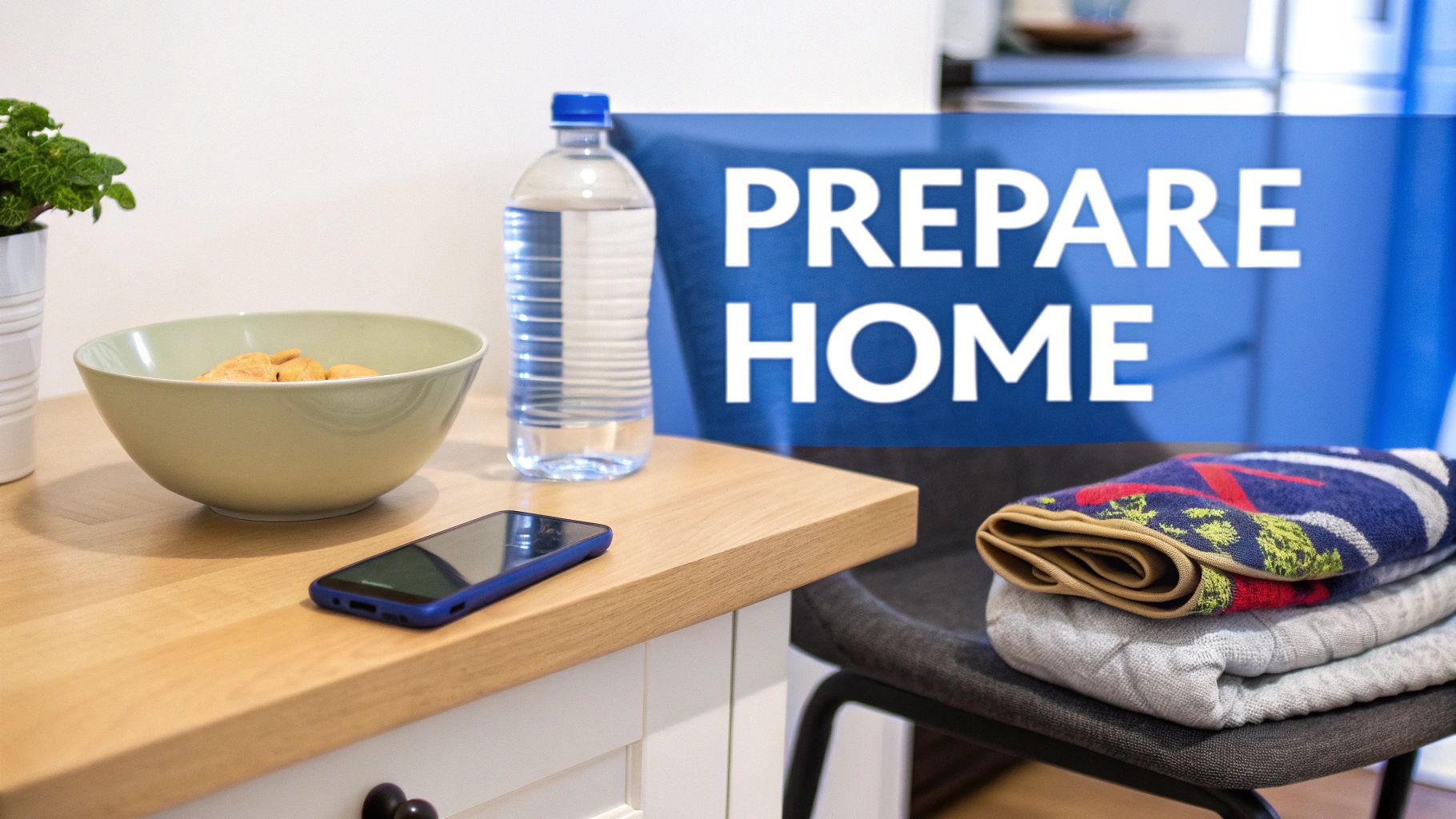
Starting a detox at home is a serious step, and what you do before day one is just as important as the detox itself. Think of it like preparing for a blizzard—you don’t wait for the snow to start falling to buy supplies and board up the windows. You need to create a fortress of safety and support beforehand.
This prep work really boils down to two critical areas: getting your physical space ready and lining up your human firewall of support. One without the other just won't cut it. A clean, trigger-free home minimizes temptation, while a solid support system keeps you accountable and pulls you through the moments you want to give up.
Create a Safe Haven in Your Home
Your home needs to become a sanctuary, a space 100% dedicated to your recovery. This isn't about just tidying up; it's about actively removing anything and everything that could derail your progress. The goal here is to make sticking with it the easiest possible choice.
Start with a top-to-bottom sweep of your entire home. Be ruthless. This is about more than just getting rid of your primary substance—it’s about eliminating any potential trigger.
- Purge All Substances: This is non-negotiable. Get rid of any leftover drugs or alcohol. And don't forget the paraphernalia. If it reminds you of using, it needs to go.
- Clear the Clutter: A messy, chaotic space often fuels stress and anxiety, which are the last things you need right now. A calm, organized environment can have a surprisingly powerful effect on your state of mind.
- Stock Your Shelves: Trust me, you will not feel like running to the store. Do a full grocery run before you start.
The first 72 hours are almost always the toughest, both physically and emotionally. You need to be able to focus entirely on rest and managing symptoms, not on what you’re going to eat.
What to Keep on Hand
When you're stocking up, think comfort, hydration, and easy-to-digest nutrition. Your body is going to be working overtime, and giving it the right fuel is essential.
Hydration Is Everything:
- Water is your new best friend. Keep a big water bottle within arm's reach at all times.
- Electrolyte drinks (like Pedialyte or sports drinks) and simple broths are perfect for replacing the vital minerals you’ll lose through sweat or vomiting.
- Herbal teas, especially chamomile or peppermint, can be incredibly soothing when you're feeling anxious or nauseous.
Keep Food Simple:
- Stick to the "BRAT" diet: Bananas, Rice, Applesauce, and Toast. These foods are famously easy on an upset stomach.
- Simple soups and broths are great for both hydration and gentle nutrition.
- Have some basic snacks around, like saltine crackers or plain yogurt.
By getting all of this ready ahead of time, you're removing the need to make decisions when you feel your worst. That’s a huge part of setting yourself up for a successful at-home detox.
Assembling Your Support Team
Let me be clear: you cannot and should not do this alone. A strong support system is the single most valuable tool you have. And this isn't just about having people around; it’s about having the right people who understand their role and are genuinely committed to helping you.
You need a primary support person—someone who is reliable, patient, and sober—who can be physically present, especially during those first three critical days. This person is your lifeline. They can help with meals, offer encouragement, and, most importantly, know when to call for medical help.
Sit down with your support team before you start. Have an honest, no-holds-barred conversation about what to expect and what you'll need from them. Set up a schedule for check-ins, whether it's a quick text every hour or a short phone call. For a more structured approach, you might want to look into what is involved with recovery coaching to see how a professional can provide this framework.
Finally, create an emergency contact list and stick it on the fridge or another highly visible spot. It should include:
- Your doctor's name and phone number.
- The number for emergency services (911 in the U.S.).
- Contact info for a trusted friend or family member who is not your primary support person.
Having this information ready to go takes the guesswork out of a crisis. When every second counts, you need to be able to get help fast.
Taking Care of Your Body: Nutrition, Hydration, and Comfort
When you're detoxing at home, your body is working overtime. It's in a state of high alert, trying to find its equilibrium again. The best thing you can do is support that process with the right fuel and comfort measures. This isn't just a nice-to-have; it's a core part of getting through this safely. What you eat, drink, and how you manage discomfort will make a huge difference in how you feel.
Think of it like this: your body is a high-performance engine going through a major tune-up. You wouldn't put cheap, dirty fuel in it during such a critical process. You need to give it simple, high-quality, and easily accessible energy to function at its best.
How to Eat When You Don't Feel Like Eating
Let's be real—when you're hit with nausea and have zero appetite, a big meal is the last thing you want. The trick is to focus on simple, gentle foods that won’t make your stomach churn. Your goal is nourishment, not a gourmet experience.
A body under stress from withdrawal can't handle complex, heavy foods. Stick with things that are easy to break down and packed with the good stuff.
- Simple Carbs are Your Friend: Think plain toast, rice, and saltine crackers. These help keep your blood sugar from crashing and give you a quick burst of energy without upsetting your system.
- Easy-to-Digest Proteins: If you can stomach it, a little chicken broth or some plain yogurt can provide the building blocks your body needs to repair itself.
- Go for Potassium: Bananas are a classic for a reason. They're gentle on the stomach and help replace potassium, an electrolyte you lose quickly during withdrawal.
The key here is to think in terms of small, frequent snacks, not big meals. A few crackers every hour is way more manageable than trying to force down a full plate of food.
Hydration Is Non-Negotiable
Dehydration is one of the biggest—and most dangerous—roadblocks you can hit during a detox. Sweating, vomiting, or diarrhea can drain your fluids and electrolytes fast, making you feel a thousand times worse. You absolutely have to stay on top of your fluids.
Water is your baseline, but it's not the whole picture. Your body is also screaming for electrolytes like sodium and potassium to keep everything firing correctly.
Your Go-To Hydration Toolkit:
- Water: Keep a big bottle of water within arm's reach at all times. Sip it constantly, even when you don't feel thirsty.
- Electrolyte-Rich Drinks: Sports drinks, coconut water, or those oral rehydration packets you find at the pharmacy are perfect for getting your minerals back in balance.
- Soothing Broths: Warm chicken, beef, or vegetable broth is a double-win—it gives you fluids and sodium, and it's incredibly comforting.
- Herbal Teas: Chamomile or ginger tea can be a lifesaver for an upset stomach and can help take the edge off your anxiety, all while adding to your fluid intake.
Being proactive with hydration helps you fend off the brutal headaches, fatigue, and dizziness that are so common during withdrawal.
Easing Aches and Pains Naturally
Beyond what you eat and drink, you have to manage the physical misery—the aches, the restlessness, the inability to sleep. You're going to feel uncomfortable, but there are simple, non-medical things you can do to get some real relief and hopefully get some rest. We know from research that with the right support, people can manage these symptoms well at home.
For example, one study that compared alcohol detox at home versus in a hospital setting found that a staggering 79% of the at-home group completed the detox successfully. They actually had fewer complications than the hospital group, which really shows how a well-prepared home environment can be a safe place for recovery. You can read the full alcohol detoxification study here to see the data for yourself.
Start by creating a calm space. Dim the lights, put on some white noise or gentle music, and get the room to a comfortable temperature. These small comforts can make a massive difference.
Try these simple techniques to soothe your body:
- Take a Warm Bath: A long soak in a warm tub, maybe with some Epsom salts, can do wonders for sore muscles and that awful, crawling-out-of-your-skin feeling.
- Stretch It Out (Gently): I'm not talking about a full yoga session. Just some simple stretches for your neck, back, and legs can work out the stiffness and aches.
- Get Comfortable: Pile up the pillows. Support your body so you can relax, whether you're in bed or on the couch. Sometimes, just propping your legs up can bring a surprising amount of relief.
By actively managing your nutrition, hydration, and physical comfort, you’re not just sitting back and taking the punches. You’re giving your body the essential tools it needs to heal, which makes the whole process safer and a lot more bearable.
Navigating Withdrawal Symptoms And Medical Red Flags
The heart of any detox is getting through the withdrawal. This is where the real work begins, and it can be physically and emotionally intense. Symptoms can be as mild as a bad headache or as serious as a life-threatening seizure. Your most critical job is to know the difference.
This isn't about being tough; it's about being smart and listening to your body. You need to know what's a normal part of the process and what’s a massive red flag telling you to get help, fast. While a systematic review on community detoxification found that many people can detox safely outside of a hospital with the right support, this is especially true when you're prepared for the risks. Remember, substances like alcohol, benzodiazepines, and opioids can have particularly dangerous withdrawals.
Common Symptoms You Can Manage At Home
The first few days will feel like a battle. Your body and brain are in full-on protest mode as they recalibrate. It’s normal to feel a whole cocktail of physical and psychological discomfort. These symptoms are rough, but they are generally manageable with the plan and support system you’ve put in place.
You can likely expect some of these:
- Anxiety and Irritability: Feeling jumpy, on edge, or just plain cranky is par for the course. Your nervous system is firing on all cylinders.
- Nausea and Stomach Issues: Your gut is often the first to feel it. Expect anything from queasiness to vomiting.
- Aches and Pains: Think of a really, really bad flu. Headaches and muscle aches are standard.
- Sleeplessness and Fatigue: This is a frustrating one. You’ll be exhausted but might find it impossible to actually sleep.
To get a better handle on the specifics, it's worth reading up on what withdrawal symptoms are and how they vary. The more you know, the less scary and overwhelming the process will feel.
The goal isn't to feel nothing. That's just not realistic. The goal is to manage the discomfort so you can stay hydrated, get some rest, and let your body do its healing work without putting yourself at risk.
This infographic provides a quick visual reference for how to handle physical symptoms as they pop up.
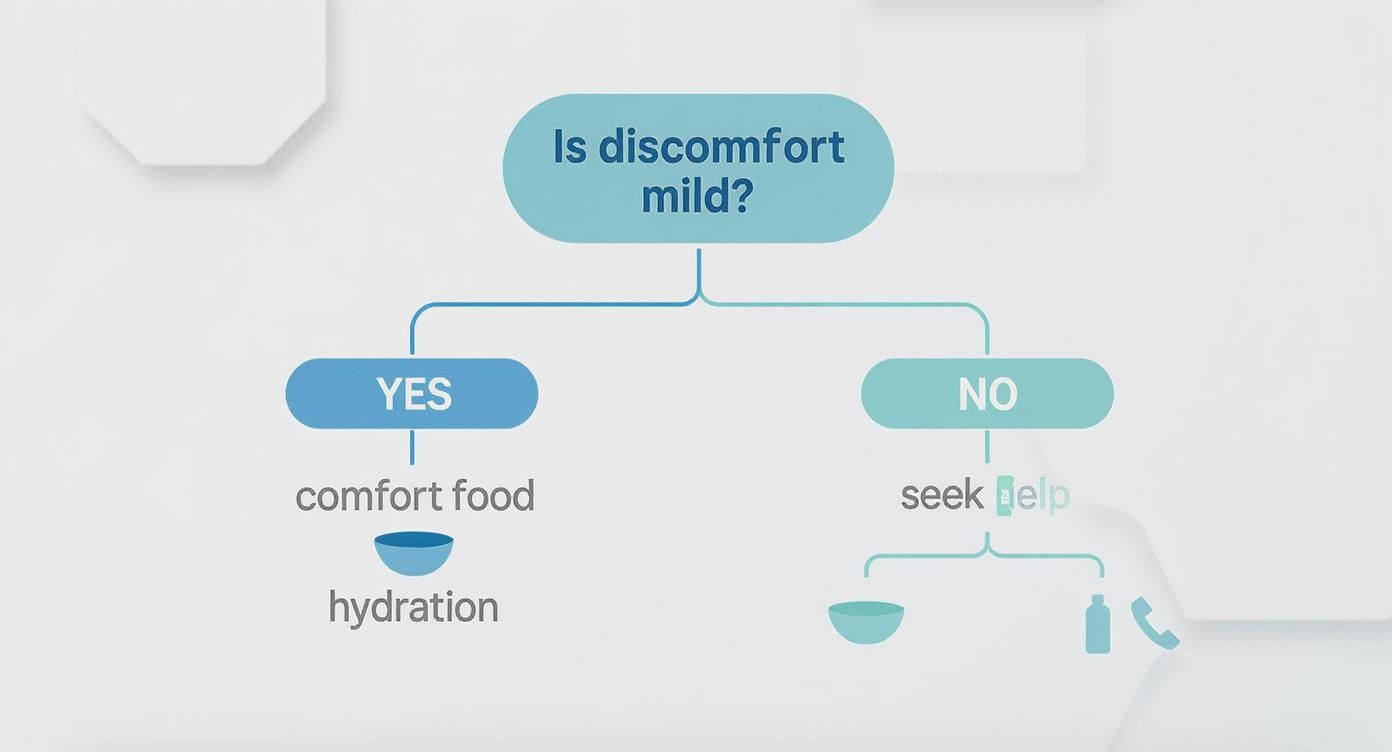
It’s a simple but effective reminder: mild issues can often be soothed with basics like water and a small meal, but more severe pain or distress is a clear signal to call in a professional.
When To Get Immediate Medical Help
Pay close attention here, because this is the most important part of your safety plan. Some symptoms are not just uncomfortable—they are medical emergencies. These are the hard-stop, no-questions-asked red flags that mean your home detox is no longer safe.
Your support person needs to know these signs inside and out and must be ready to call 911 without a second thought. There is no waiting to see if it gets better.
To make it crystal clear, here’s a breakdown of what you can likely manage versus what demands immediate medical intervention.
Withdrawal Symptoms When to Seek Medical Help
The following table distinguishes between common, manageable symptoms and severe signs that require an emergency response.
| Symptom Category | Manageable at Home (with support) | Requires Immediate Medical Help (Emergency) |
|---|---|---|
| Mental State | Mild anxiety, mood swings, irritability. | Extreme confusion, disorientation, severe agitation, or paranoia. |
| Perception | Feeling "off" or foggy. | Hallucinations (seeing, hearing, or feeling things that aren't there). |
| Physical Signs | Sweating, tremors in hands, nausea, headache. | Seizures of any kind, chest pain, difficulty breathing, or a very high fever. |
| Consciousness | Difficulty sleeping, feeling sluggish or fatigued. | Extreme drowsiness, inability to be woken up, or loss of consciousness. |
If you or your support person sees any single symptom from the right-hand column, the at-home part of this process is over. Get to an ER. This is especially true for alcohol and benzodiazepine withdrawal, where seizures can strike suddenly and can be fatal. Your safety is the only thing that matters.
Frequently Asked Questions
When you’re thinking about detoxing at home, a lot of questions pop up. It’s completely normal. Getting clear, practical answers is the best way to feel prepared and move forward safely. Let's tackle some of the most common things people ask.
What are the best foods to eat during a home detox?
Focus on simple, gentle, and nourishing foods. Your goal is to give your body easy-to-digest fuel. Stick with the BRAT diet (Bananas, Rice, Applesauce, Toast), hydrating broths, and simple proteins like plain yogurt. Small, frequent snacks are often easier to manage than large meals. Hydration is also critical; drink plenty of water and electrolyte-rich fluids.
How long do withdrawal symptoms usually last?
The timeline varies depending on the substance, duration of use, and your individual health. Generally, the most intense physical symptoms peak within the first 72 hours and begin to subside over 5 to 10 days. However, psychological symptoms like anxiety and cravings can last much longer, highlighting the need for ongoing support after detox.
Can I safely detox from alcohol or benzodiazepines at home?
It is extremely dangerous to detox from alcohol or benzodiazepines (like Xanax or Valium) at home without direct medical supervision. Withdrawal from these substances can cause life-threatening complications like seizures and delirium tremens (DTs). A medically supervised detox in a professional facility is the safest option for these substances.
What is the most important thing for my support person to know?
Your support person's most critical role is to get help in an emergency. They must know the medical red flags—seizures, hallucinations, severe confusion, chest pain, or difficulty breathing—and be prepared to call 911 immediately if any of them appear. They should not try to manage a medical crisis on their own.
Once you’re through the detox phase, the work isn't over. Building a solid plan for what comes next is crucial for staying sober. For a great resource on this, check out our comprehensive relapse prevention plan template to help you create a strong foundation for your recovery.
Navigating the path to recovery can feel overwhelming, but you don't have to do it alone. At StartDrugRehab.com, we provide trusted resources, expert guidance, and connections to treatment centers to help you or a loved one find the right support. Explore our tools and articles to build a strong foundation for lasting change. Visit us today at https://startdrugrehab.com.