Think of a relapse prevention plan as your personal roadmap for staying sober. It’s not a rigid set of rules, but a living, breathing guide you create for yourself. This plan helps you pinpoint your specific triggers, arm yourself with healthy coping skills, and map out your support system so you know exactly who to call when things get tough.
Key Takeaways
- Personalization is Crucial: A generic template is a starting point, but a truly effective relapse prevention plan must be tailored to your specific triggers, strengths, and support system.
- Identify Triggers and Warning Signs: Honesty is key. You must identify both external (people, places) and internal (emotions, thoughts) triggers to be prepared.
- Build a Toolbox of Coping Skills: Develop a mix of immediate distractions for quick cravings and deeper strategies like mindfulness and reality-checking for more intense urges.
- Your Support System is a Lifeline: Recovery is not a solo journey. Create a detailed contact list and a clear action plan for who to call and when.
- A Proactive Lifestyle is Your Best Defense: Structure your days with healthy habits like consistent sleep, nutrition, exercise, and meaningful hobbies to build a life that supports long-term recovery.
- It's a Living Document: Your plan is not static. Review and update it regularly, especially after major life changes or close calls, to ensure it remains effective.
Building Your Personal Recovery Roadmap
Making the decision to start recovery is huge, and having the right tools in your corner can change everything. A relapse prevention plan is one of the most powerful tools you can have. While you can start with a template, the real magic happens when you make it completely your own. A generic plan is okay, but a plan you build yourself is a game-changer.
When you customize it, the plan stops being a simple checklist and becomes a dynamic guide that grows with you. It’s all about being proactive—thinking ahead and preparing for challenges instead of just reacting when they pop up. This forward-thinking approach is what really builds a strong foundation for long-term recovery.
Why a Personalized Plan Matters
For a relapse prevention plan to actually work, it has to be about your life. Your triggers, your strengths, and your support network are unique to you. A plan built around your specific world leads to greater self-awareness and strategies that you'll actually use.
Here's why a custom plan is so effective:
- You'll know yourself better. The act of building the plan makes you get brutally honest about your personal triggers and the subtle warning signs that show up before a craving hits.
- You'll be more invested. When you put in the time and effort to create your own plan, you take ownership of it. You're far more likely to stick with something you built from the ground up.
- It’s actually practical. Your plan will be filled with coping strategies and contacts that are realistic for your life, not generic advice that doesn’t apply to your situation.
"To give up addiction is a strong test of how willing you are to give up your current story of what you feel life is like. Are you ready to live a different story? A plan helps you write that new story, one action at a time."
The Essential Components of Your Plan
A rock-solid relapse prevention plan is built on a few key sections. Each one plays a critical role in creating a safety net that supports you as you move through the different phases of recovery. Getting a handle on these elements is the first step to creating a roadmap that genuinely helps. You can get a clearer picture of this journey by understanding the stages of the recovery process in our detailed guide.
Think of your plan as the central command for all your recovery tools. It should be easy to grab and use, especially when you're feeling stressed or overwhelmed.
Core Sections to Include
- Triggers and Warning Signs: Get specific. List the people, places, emotions, and situations that make you feel vulnerable.
- Coping Strategies: This is your toolbox. What healthy, concrete actions can you take when a craving hits or you’re in a tough spot?
- Support Network: Write down the names and numbers of your go-to people—your sponsor, therapist, trusted friends, or family members. Note why you'd call each one.
- Emergency Action Steps: If you feel like a relapse is about to happen, what’s the plan? Create a simple, step-by-step list of what to do immediately.
In the end, this plan isn't about living in fear of relapse. It’s about building confidence. It's proof that you have the strength and the strategy to navigate life’s ups and downs without falling back on old habits. Taking the time to build a thoughtful, personal plan is an incredible act of self-care and a powerful statement about your commitment to a better future.
Pinpointing Your Triggers and Early Warning Signs
A relapse prevention plan that actually works has to start with some serious, unflinching honesty. Before you can build up your defenses, you have to know exactly what you're defending against. This means getting real about the specific people, places, emotions, and situations that put your recovery on shaky ground.
This isn’t about making a list of things to be afraid of. It’s about arming yourself with knowledge. When you know your triggers, you can see them coming a mile away and put your coping skills into action before a craving has a chance to take hold. The entire goal is to shift from being reactive to being proactive.
Getting to Know Your Triggers: The Inside vs. The Outside
Triggers aren't a one-size-fits-all problem. They typically fall into two buckets, and understanding the difference is crucial for developing strategies that will actually work for you.
External triggers are the tangible things out in the world. You can see them, hear them, and physically run into them. Think of them as the environment’s way of pushing your buttons.
- People: This could be running into old friends you used with or even just being around certain family members who crank up your stress levels.
- Places: Driving past that one specific bar, a certain neighborhood, or an old apartment complex linked to past use.
- Things: It can be anything from seeing paraphernalia or watching substance use in a movie to something as simple as a particular smell.
Internal triggers, on the other hand, well, they come from inside you. These are your own feelings, thoughts, and even physical states. They can be much harder to pin down because nobody else can see them, but they often pack a much bigger punch than external cues.
- Emotions: Feeling intense anger, loneliness, anxiety, or boredom. Even big, happy emotions can be a trigger if your old habit was to "celebrate" with a substance.
- Thoughts: This is that little voice in your head—negative self-talk, romanticizing the past ("it wasn't that bad"), or the dangerous thought that you can handle "just one."
- Physical Sensations: Things like chronic pain, exhaustion, or even just being really hungry can lower your defenses and make you feel much more vulnerable to a craving.
Mapping Your Personal Warning Signs
A relapse almost never happens out of the blue. It’s a process, often preceded by subtle shifts in your thinking and behavior. We call these early warning signs. Recognizing them is like seeing smoke before the fire; it gives you that critical window of time to do something about it.
Your warning signs are completely unique to you. The best way to find them is to reflect on past relapses or even just close calls. What was going on in the days or weeks leading up to that moment?
Here’s the thing: A relapse doesn't start the moment you use. It starts when you stop using your recovery tools. Your plan is your #1 tool, and spotting your warning signs is the alarm that tells you to pick it up and use it.
Practical Ways to Dig Deep
To make this real, you can't just think about it—you have to get it down on paper. A huge part of filling out your relapse prevention plan is creating a detailed, honest inventory of these personal tripwires.
Here are a few ways to get started:
-
Create a Trigger Inventory: Grab a piece of paper and make two columns: External and Internal. Take your time and brainstorm everything you can think of that belongs in each column. Be specific. Don't just write "stress." Write "that feeling when I get a stressful email from my boss after 5 PM."
-
Journal About Past Cravings: Think back to a time you felt a really strong urge. What was happening right before it hit? Where were you? Who was with you? How were you feeling, both physically and emotionally? Write the whole scene out. You'll start to see patterns you never noticed before.
-
Ask for an Outside Opinion: Let's be honest, we all have blind spots. Sometimes, other people can see our patterns more clearly than we can. Talk to a trusted friend, your therapist, a sponsor, or a family member. Ask them if they’ve ever noticed certain situations or moods that seem to pop up before you start struggling.
For instance, a classic warning sign for many people is isolation. You might start turning down invitations, ignoring calls from your support people, or skipping meetings. Another one is a subtle change in attitude—maybe you start feeling more irritable or resentful about being in recovery.
By listing these very specific behaviors in your plan, you're essentially building a personalized alarm system. When you or someone who cares about you notices one of these signs, it's a clear signal: time to open the plan and reconnect with your support system, immediately. This self-awareness is the bedrock of a strong, resilient recovery.
Developing Powerful Coping and Distraction Skills
Knowing your triggers is one half of the equation. The other, arguably more important half, is having a concrete plan for what to do the moment they surface. A truly effective relapse prevention plan isn't just a list of what to avoid; it's a personal arsenal of healthy, immediate responses you can rely on. This is where you build your toolkit.
Think of it as creating a layered defense. Some strategies are for quick, in-the-moment distractions when an urge is just starting to bubble up. Others are deeper, more grounding practices for when you're facing a high-risk situation head-on. Having a mix of both means you’re ready for anything.
Immediate Distractions for In-the-Moment Cravings
When a craving hits, the first few minutes are everything. The goal isn't to solve a deep-seated issue right then and there—it's simply to create enough mental space between you and the urge to let it pass. These are your first-responder actions.
If a trigger is like a spark, these distractions are a quick splash of water. They're designed to interrupt a dangerous thought pattern before it can catch fire.
Here are a few practical examples to plug into your plan:
- Change your scenery. Seriously, just get up and move. If you're on the couch, go to the kitchen. If you're inside, step out onto the porch for five minutes. A simple physical shift can completely reset your mental state.
- Shock your senses. Pop a super-sour candy in your mouth, splash your face with icy water, or crank up a loud, fast-paced song. A powerful sensory input can hijack your brain's attention, pulling it away from the craving.
- Make a "five-minute call." Designate someone on your support list for this. You don't need a heavy conversation. Just say, "Hey, I'm having a tough moment and just needed to hear a friendly voice for a few minutes."
This infographic shows how this process works in a cycle: you identify the stressor, use your strategies, and then reflect on what worked.
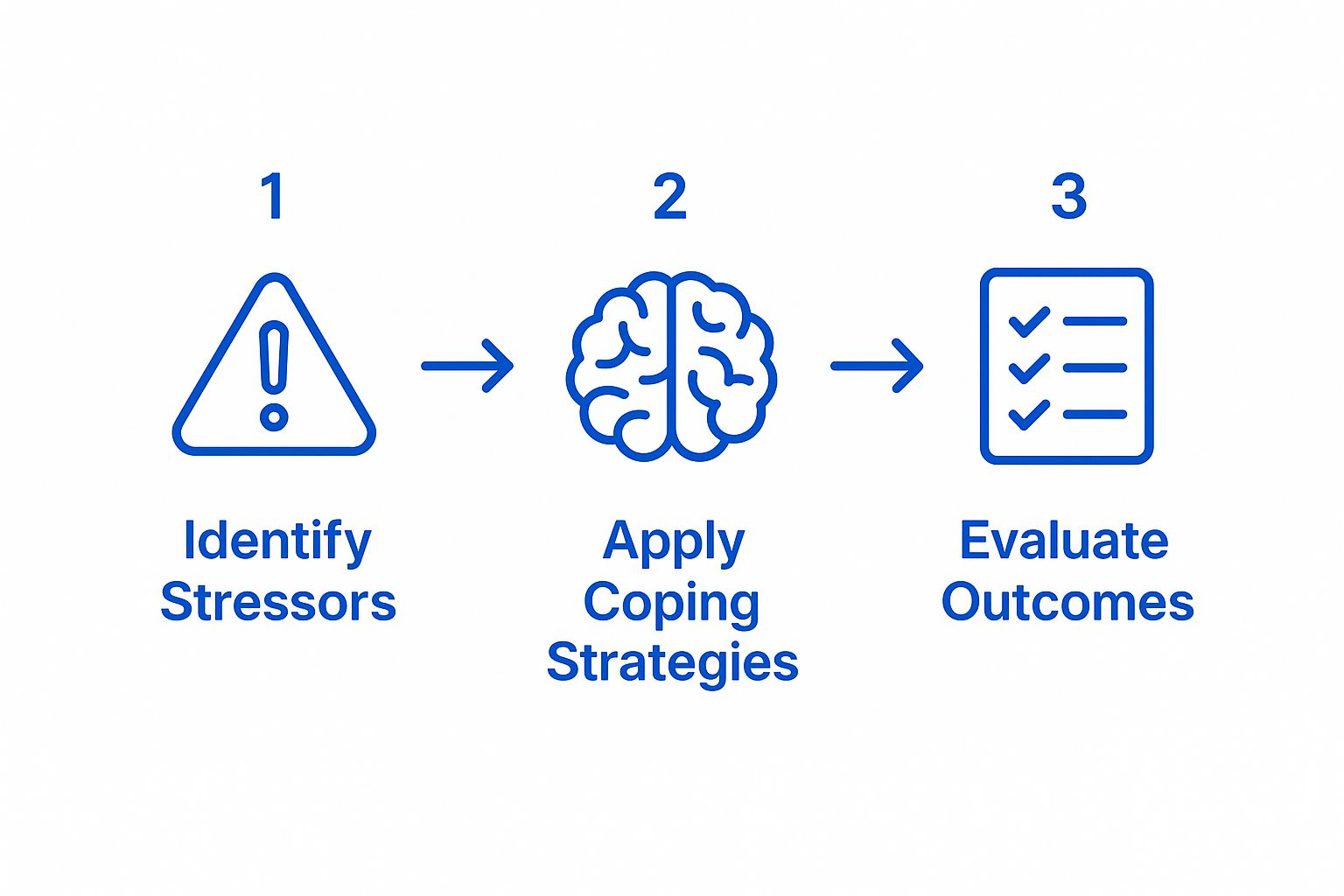
Recovery isn't just about having skills; it’s about actively using and refining them.
Deeper Strategies for Managing Intense Urges
Sometimes, a quick distraction just won't cut it. For those more persistent or overwhelming triggers, you need strategies that go deeper to address the thoughts and emotions fueling the urge. These techniques help you get to the root of what's happening.
These aren't just tricks to get you through the next five minutes; they are skills that build genuine emotional resilience over the long haul. Think of it as strengthening your mental and emotional core so that future cravings have less and less power over you.
A relapse doesn't start the moment you use. It starts when you stop using your recovery tools. Your plan is your #1 tool, and spotting your warning signs is the alarm that tells you to pick it up and use it.
Here are a few powerful, deeper strategies to master:
- Mindful Breathing: When you feel that wave of panic or anxiety, just stop. Focus entirely on your breath. Inhale slowly for a count of four, hold it for four, and then exhale slowly for a count of six. This simple act activates your body's natural relaxation response, giving you a sense of calm and control.
- Reality-Check Your Thoughts: Cravings are liars. They whisper things like, "You can handle just one," or "This awful feeling will never end." You have to challenge those thoughts head-on. Ask yourself, "Is that really true? What happened the last time I listened to that thought?" This is a core part of techniques like motivational interviewing for substance abuse, and it helps you separate the craving from the false promises it makes.
- "Play the Tape Through": Your mind wants to stop the movie at the moment of relief. Don't let it. Force yourself to play the entire tape through to the end. What really happens next? The guilt, the shame, the next-day consequences, the disappointment from loved ones. This mental rehearsal connects the craving to its real-world costs and robs it of its appeal.
To help you connect the dots between your personal triggers and the right coping skills, here's a simple framework.
Matching Coping Strategies to Common Triggers
| Trigger Category | Specific Example | Immediate Coping Strategy | Long-Term Strategy |
|---|---|---|---|
| Emotional | Feeling lonely or bored on a Friday night | Call a friend, watch a comedy, go for a walk | Join a hobby group, schedule regular social activities |
| Environmental | Driving past a bar you used to frequent | Take a different route home, listen to a podcast | Permanently change your commute, remove triggering apps |
| Social | A friend invites you to a party with drinking | Have a pre-written "no, thank you" text ready | Talk with friends about your recovery and set boundaries |
| Situational | A stressful argument with a family member | Step away, practice 4-4-6 breathing | Work on communication skills, attend family therapy |
This table is just a starting point. The goal is to fill your own plan with strategies that feel authentic and accessible to you.
Building Your Lifeline: Support Systems and Action Plans
Recovery is a team sport. You can't do it alone, and you shouldn't have to. While identifying your triggers and developing coping skills are your personal groundwork, the next, absolutely critical layer of your relapse prevention plan is your support system. This isn't just a list of names and numbers; it's your pre-planned, hand-picked crew of people you can rely on when things get tough.
Having a solid action plan in place removes the panic and indecision that can creep in during a crisis, making it so much easier to pick up the phone.

This isn't just a nice idea—it's a proven strategy. We know that substance use often goes hand-in-hand with anxiety and depression. Studies show that relapse rates for these conditions can be as high as 57% within four years after remission. This stark reality underscores why a proactive support system is non-negotiable for long-term well-being. As research on relapse prevention in mental health confirms, having a team ready to help you spot early warning signs is a cornerstone of staying well.
Who's On Your Team? Identifying Key Supporters
Your support network should be a mix of different people who can help in different ways. It’s all about quality, not quantity. A really strong network usually includes a blend of professional guidance, peer understanding, and personal connection.
Think about who you can slot into these roles:
- Professional Support: This is your therapist, counselor, or doctor. They're the experts who provide clinical guidance, help you untangle complex feelings, and keep you accountable.
- Peer Support: This is your sponsor, a recovery group, or a sober friend who just gets it. They've walked a similar path and can offer encouragement and wisdom that only comes from firsthand experience.
- Family and Friends: These are the people in your life who provide love and a sense of normalcy. The key here is to choose individuals who truly respect your journey and your boundaries.
- Recovery Coaches: Think of them as a guide for navigating the day-to-day challenges of sobriety. They provide practical, real-world support to help you build a life you don't want to escape from. If you're unfamiliar with this role, you can learn more about what recovery coaching is and see how it might fit your needs.
When you're putting this list together in your plan, go beyond just their names. Jot down a quick note about why you'd call that specific person. For instance, you might call your sponsor for blunt, direct advice when a craving hits, but you’d call your best friend when you just need a distraction to talk about anything but recovery.
Your Go-To Plan: Creating a Communication Strategy
When you’re in a moment of crisis, your brain isn't wired for complex decision-making. That's why your plan needs a dead-simple, step-by-step communication protocol. This is your emergency action plan, designed to be followed without a second thought when you're under stress.
A support system isn't just a list of people. It's knowing exactly who to call first, what you'll say, and giving them what they need to help you. Planning this out beforehand smashes through the fear or shame that might otherwise stop you from reaching out.
Your action plan should be a clear hierarchy. Who's the first call? The second? The backup? This eliminates the "who should I bother?" paralysis that can happen when you feel vulnerable.
Example Action Plan
- First Call (The Anchor): My sponsor, Jane D. (555-123-4567). I'll call her immediately if a craving doesn't subside after 10 minutes. I’ll say, "I'm having a hard time and need to talk this through."
- Second Call (The Distraction): My friend, Mark S. (555-987-6543). If I can't reach Jane or just need to get out of my own head, I'll call Mark to chat about the latest movie or our fantasy football league.
- Third Call (The Professional): Dr. Evans' office (555-222-3333). If I feel like my plan isn't working or I'm in a truly high-risk situation, I will call to set up an urgent appointment.
A simple structure like this gives you a clear path to follow. It turns the vague idea of "calling someone" into a concrete set of instructions you can execute on autopilot. By assembling your team and defining their roles ahead of time, you're not just hoping for the best—you're building a powerful safety net for your recovery.
Designing a Proactive and Recovery-Focused Lifestyle
A great relapse prevention plan isn't just a fire extinguisher for emergencies. It's a blueprint for building a life so full and stable that recovery becomes second nature. It's about shifting your mindset from a defensive one—always braced for the next trigger—to actively striding forward into a life you genuinely enjoy. This is where you intentionally design your days to support your long-term well-being.
Instead of letting free time become a danger zone, you learn to fill it with purpose, connection, and joy. It’s all about creating positive momentum that makes recovery not just sustainable, but something you actually look forward to living.
Building the Pillars of a Strong Recovery
A recovery-focused lifestyle is built on a foundation of consistent, healthy habits. These are the daily practices that keep your mind and body resilient, making you far less susceptible to internal triggers like stress, fatigue, or anxiety.
Think of these as the essential maintenance that keeps your recovery engine running smoothly.
- Consistent Sleep: Don't underestimate this one. Aim for 7-9 hours of quality sleep a night. A solid sleep routine is a game-changer for stabilizing your mood, sharpening your decision-making skills, and cutting down on the irritability that can make cravings feel overwhelming.
- Balanced Nutrition: The food you eat has a direct line to your mood. Focusing on whole foods provides steady, reliable energy. This helps you avoid the blood sugar rollercoasters from processed foods, which can easily mimic or amplify feelings of anxiety.
- Regular Physical Activity: You don’t need to train for a marathon. Even a brisk 20-30 minute walk can work wonders. It releases endorphins, melts away stress, and gives you a healthy, productive outlet for that restless energy.
- Meaningful Hobbies: Recovery often frees up a significant amount of time once occupied by substance use. It's crucial to fill that void with activities that actually engage you. Pick up that guitar, join a local hiking club, or find a volunteer opportunity. Hobbies provide a real sense of purpose and accomplishment.
These aren't just nice-to-haves; they are fundamental parts of a proactive lifestyle that actively protects your recovery.
Structuring Your Day for Success
One of the sneakiest risks in early recovery is unstructured time. Big, empty blocks in your schedule can quickly become a breeding ground for boredom, isolation, and a wandering mind—the perfect storm for cravings. Creating a loose daily routine is a simple way to head this off at the pass.
A structured day doesn't mean a rigid, boot-camp-style schedule. It's more of a gentle framework that makes sure your foundational pillars are in place and your time is spent in a way that serves you.
Here’s what a recovery-focused daily flow might look like:
- Morning (7 AM – 9 AM): Try waking up around the same time each day. Before reaching for your phone, hydrate and do something grounding, like a 5-minute meditation or jotting down a few thoughts in a journal.
- Mid-Day (12 PM – 2 PM): Take a real lunch break, preferably away from your desk or workspace. Getting outside for even a short walk can completely reset your headspace.
- Evening (6 PM – 9 PM): Have a planned activity to look forward to. This could be anything from attending a meeting to calling a supportive friend or spending an hour on a hobby. It helps eliminate that "what now?" feeling that can creep in after a long day.
A proactive lifestyle is the ultimate form of relapse prevention. When your days are filled with purpose, connection, and self-care, there's simply less room for old, destructive habits to find a foothold.
There’s solid science to back this up. Psychological relapse prevention programs that focus on building these lifestyle skills have been shown to be incredibly effective. A major analysis covering 1,720 participants found that these types of interventions can reduce the risk of relapse by a staggering 40%. The data revealed a clear link between proactive lifestyle planning and long-term stability. You can dig into the findings on these powerful psychological interventions at nature.com.
Ultimately, designing this new lifestyle is about writing a new chapter for yourself. It’s a powerful statement that you’re not just surviving sobriety—you're actively building a life worth protecting.
Putting It All Together for a Stronger Recovery
Think of your relapse prevention plan template as a personal roadmap, not just a document you fill out once. Its real power isn't in the paper itself, but in how you use it every day through honest self-reflection and consistent effort. As you move forward, keep a few core ideas front and center.

Core Principles for Lasting Change
Every recovery journey looks different, but the foundations of lasting change are remarkably similar.
-
Radical Honesty is Everything: Your plan is only as good as the truth you put into it. Be brutally honest with yourself about your real triggers and the subtle warning signs that pop up long before a crisis.
-
Play Offense, Not Defense: A great plan helps you get ahead of challenges instead of just reacting to them. It’s about building a life that naturally supports your recovery, making it your best defense against relapse.
-
Connection is Your Lifeline: Isolation is the enemy of recovery. Don't wait until you're struggling to reach out. Actively engage with your support network—your friends, family, sponsor, or therapist—when things are going well, too.
Your relapse prevention plan is a living document, not a static assignment. It should change and grow right along with you. Revisit it often, tweak what isn't working, and celebrate the strategies that are.
In the end, this plan isn't just about preventing a return to old behaviors. It’s about intentionally building a meaningful life that you’re excited to live, a life you don't feel the need to escape from. The small, daily choices you make are what build that life. Stay committed to them.
Frequently Asked Questions
Putting together a relapse prevention plan is a significant step, and it's normal to have questions. Here are answers to some of the most common ones.
How often should I review my relapse prevention plan?
Your plan is a living document, not something you set and forget. In early recovery, reviewing it weekly is a good idea to keep strategies top of mind. As you become more stable, a monthly check-in might suffice. However, you should always revisit and update your plan after a major life change (new job, move, breakup), a close call with relapse, or when you notice a coping strategy is no longer effective.
Which part of the plan is the most important?
While every section is vital, the Triggers and Early Warning Signs section is the foundation. If you don't have a clear, honest understanding of what puts you at risk, your coping strategies and support network can't be used effectively. Self-awareness is the first line of defense.
Can I create this plan on my own?
You can certainly start it on your own, but it's highly recommended to work on it with a professional, such as a therapist, counselor, or recovery coach. They can offer an objective perspective, help you identify blind spots, and introduce you to new, evidence-based strategies. Sharing it with a sponsor or trusted peer is also crucial for building accountability.
What should I do if I relapse?
A relapse is a setback, not a failure. The first step is to ensure your safety and reach out to your support network immediately for help. Once you are in a safe and clear headspace, use the experience as a learning opportunity. Analyze what happened: What triggers were involved? Did you ignore warning signs? Did your action plan have a weak spot? This honest review is crucial for strengthening your plan and preventing future setbacks.
Navigating the path to recovery can feel overwhelming, but you don’t have to do it alone. At StartDrugRehab.com, we provide the resources, guidance, and connections you need to build a stronger, healthier future. Find treatment options and support near you by visiting https://startdrugrehab.com.
Article created using Outrank