The road to recovery doesn’t usually start with a dramatic rock-bottom moment you see in the movies. More often, it begins with a quiet, nagging thought—a growing realization that things can’t continue this way. That first flicker of awareness, that decision to even consider change, is the bravest step you’ll ever take. It's the real beginning of taking your life back.
Key Takeaways
- Recovery is a Process, Not a Single Event: The journey begins with the decision to change and unfolds through distinct stages, including detox, therapy, and long-term maintenance.
- Professional Help is Crucial: Medically supervised detox is essential for safety, and therapeutic approaches like CBT and DBT are vital for addressing the root causes of addiction.
- Connection is the Antidote to Isolation: Building a strong support system through peer groups (like AA or SMART Recovery) and mending family relationships are fundamental to long-term success.
- A Proactive Plan Prevents Relapse: Creating a detailed aftercare and relapse prevention plan—identifying triggers, coping skills, and a support network—is key to navigating life after treatment.
The First Step: Realizing It's Time for a Change
Let's be honest: admitting you've lost control is incredibly difficult. It's so much easier to stay stuck in denial, to tell yourself you can stop whenever you want, or to downplay how much your substance use is affecting your life. Moving past that is a genuine act of courage.
When you finally face it, a tidal wave of emotions can hit you—fear, shame, confusion. It's crucial to see this moment for what it is: not an admission of failure, but a powerful declaration that you're ready to fight for a better future.
Early Signs It Might Be Time to Seek Help
The signs that you need help can be subtle at first, slowly building until they’re impossible to ignore. Sometimes a single, jarring event is the wake-up call. More often, it’s the steady pile-up of negative consequences.
Recognizing these signs is the key to breaking through denial. Before you can ask for help, you have to see the problem clearly. Here are some of the most common red flags people experience.
| Category | Common Signs and Symptoms |
|---|---|
| Behavioral | Isolating from friends and family, neglecting work or school responsibilities, losing interest in hobbies, lying or being secretive about substance use, getting into legal or financial trouble. |
| Physical | Significant changes in sleep patterns or appetite, unexplained weight loss or gain, poor hygiene, visible signs of intoxication (slurred speech, unsteady gait), withdrawal symptoms when not using. |
| Psychological | Increased anxiety or paranoia, sudden mood swings or irritability, depression or hopelessness, difficulty concentrating or remembering things, feeling defensive when asked about your use. |
If several of these feel familiar, it doesn’t mean you’ve failed. It just means it's time to let someone in. The journey gets a lot less lonely from here.
"The opposite of addiction is not sobriety. The opposite of addiction is connection." – Johann Hari
This quote really gets to the heart of it. Addiction thrives in isolation, but recovery blossoms when we reconnect with others. Admitting you need help is the first step toward rebuilding those vital connections.
How to Have That First Conversation
Saying the words "I need help" out loud can feel terrifying. The fear of being judged can keep you silent for a long time. But finding the right person to talk to can change everything. Think about who you trust most—a close friend, a parent, a partner, or even your doctor.
When you feel ready to open up, a few simple things can make it easier:
- Find the right time and place. Choose a moment where you can speak privately without being rushed or interrupted.
- Keep it simple and honest. You don't need a perfectly rehearsed speech. A straightforward "I'm struggling with my drinking, and I think I need help" is more than enough.
- Talk about how you feel. Using "I" statements can help you express what's happening without feeling like you're making excuses. For example, "I feel scared about what's happening," or "I'm worried about my health."
The point of this first conversation isn't to have all the answers. It’s simply to break the silence and let someone else in.
Overcoming the Treatment Gap
Once you've made the decision to get help, the next step is figuring out what your options are. Unfortunately, there’s a massive gap between the number of people who need help and those who actually receive it.
The data is sobering. In 2023, only about 8.1% of people with drug use disorders worldwide got any kind of treatment. This is happening at a time when these disorders have increased by 13% in the last decade alone. You can learn more about this in the 2025 World Drug Report. By actively looking for a program, you’re not just taking a personal step—you’re overcoming a huge global barrier to care.
Finding Your Path Through Detox and Early Treatment
So, you’ve made the incredibly difficult decision to get help. That's a huge first step. The very next hurdle, though, is a physical one: detoxification. This is simply the process of your body clearing out the substance it's come to depend on. It’s absolutely essential, but it can be a rough ride and, for many, dangerous to do alone.
This is exactly why medically supervised detox isn't just a suggestion—it's a necessity. When your body goes into withdrawal, it can unleash a storm of symptoms, from debilitating discomfort to life-threatening issues like seizures. Having medical professionals on hand to monitor your vitals, manage symptoms, and provide 24/7 support creates a safe harbor where your body can start to heal. To really grasp what this looks like, you can read our guide on withdrawal symptoms and see why going it alone is a risk not worth taking.
This infographic gives a great visual of that initial fork in the road when you're weighing the steps to addiction recovery.
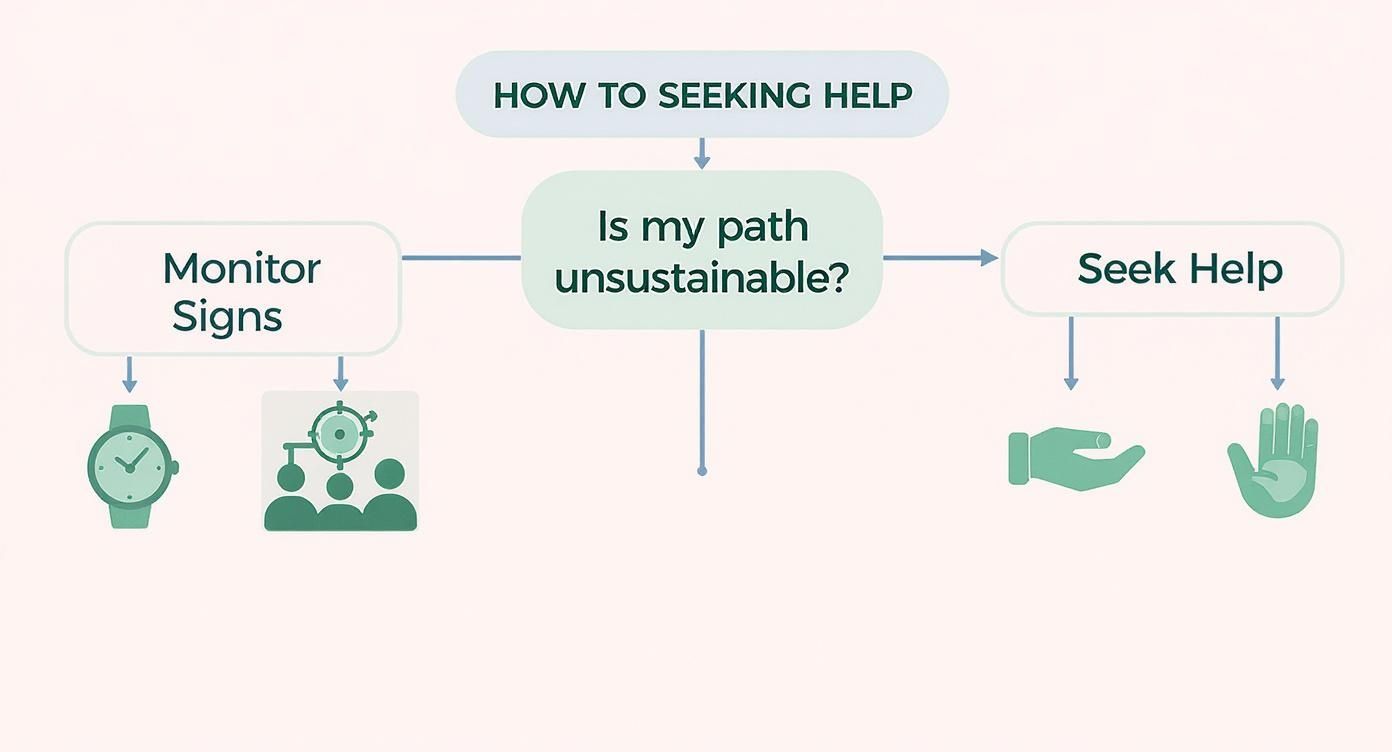
What it really boils down to is a simple, powerful truth: the journey begins the moment you admit your current path isn't working and make the conscious choice to ask for help.
Choosing the Right Level of Care
Once detox is complete, you move into the heart of the work: active treatment. The key here is finding a program that actually fits you. Recovery isn’t one-size-fits-all, and the right level of care will give you the structure and support needed to build a solid foundation for a sober life.
You’ll generally find a few main options, each offering a different intensity of support:
- Inpatient or Residential Treatment: This is the deep end of the pool. You live right at the facility, usually for 30 to 90 days. It’s a completely structured, trigger-free environment, which is perfect if you’re dealing with a severe addiction, co-occurring mental health conditions, or just don't have a stable, supportive home to return to.
- Partial Hospitalization Program (PHP): Think of PHP as a step down from living there. You'll spend a significant chunk of your day at the facility, maybe five to seven days a week, but head home or to a sober living house at night. It offers a ton of structure while letting you dip your toes back into daily life.
- Intensive Outpatient Program (IOP): An IOP gives you the most flexibility. Treatment sessions are just a few hours a day, maybe three to five days a week. It’s a great fit if you have a strong support system at home and need to keep up with work or school while getting help.
For example, someone with a long history of opioid use who just survived an overdose would almost certainly need the immersive, 24/7 care of an inpatient program. On the other hand, a professional who manages to hold down a job but struggles with weekend binge drinking might find an IOP offers the right balance of therapy and accountability without upending their entire life.
The Importance of Making an Informed Choice
The urgency here can't be overstated. The global numbers paint a grim picture. While the number of new drug addiction cases has dipped slightly, the health outcomes for those already struggling are getting worse. Between 1990 and 2021, drug-related deaths more than doubled, climbing by a staggering 122% to over 137,000 deaths annually worldwide. This isn't just a statistic; it's a stark reminder that just starting treatment isn't enough. Finding effective, long-term care is what truly separates recovery from tragedy.
Making the Decision with Your Family
This isn't a decision you have to make alone; in fact, it's often one made with family. The best way to approach this conversation is with good information and a clear head.
Here’s a practical way to choose the right program together:
- Get a Professional Assessment: Before you do anything else, get an evaluation from an addiction specialist. They can determine the severity of the problem, screen for other mental health issues, and give a professional recommendation on the right level of care.
- Talk Through the Logistics: Get into the nitty-gritty. What does insurance cover? Where is the facility located? What’s their core philosophy on treatment, and does it resonate with you? Is it something you can afford?
- Visit if You Can: If you're looking at local options, go for a tour. Getting a feel for the environment and meeting some of the staff can make the entire process feel less abstract and a lot less scary.
Making this choice is one of the most critical steps to addiction recovery. It’s all about setting yourself up for success by making sure the place you land is a place where you can genuinely start to heal.
Building Your Toolkit with Therapy and New Skills
Getting sober is a monumental first step, but it’s just that—a first step. The real, life-changing work begins when you start to heal the reasons you started using in the first place. This is where therapy becomes your most crucial tool, helping you build a life you don't feel the need to escape from.
Think of addiction as a symptom. The root causes are often buried deeper—unresolved trauma, chronic stress, anxiety, or depression. Therapy offers a safe, judgment-free space to explore these issues with a professional who can guide you toward healthier ways of thinking and coping.
It’s not just about talking, either. It’s an active process of learning new skills. These skills will become your new defense system against cravings and life's inevitable curveballs, empowering you to handle tough situations without falling back on old habits.
Practical Therapeutic Approaches
In the world of addiction treatment, you’ll hear a lot of acronyms, but two of the most powerful and common approaches are Cognitive Behavioral Therapy (CBT) and Dialectical Behavior Therapy (DBT). These aren't just clinical terms; they're practical roadmaps for changing your life.
CBT is all about learning to identify and challenge the destructive thought patterns that fuel addiction. For example, your brain might automatically jump to, "I've had a horrible day, so I deserve a drink." CBT teaches you to press pause on that thought, recognize it for what it is, and reframe it: "I've had a horrible day, and a drink will only make tomorrow worse. I'll call my sponsor instead."
DBT, on the other hand, is a game-changer for managing overwhelming emotions and navigating difficult relationships. It gives you concrete, in-the-moment skills for mindfulness, tolerating distress, regulating emotions, and communicating effectively.
A classic DBT skill for getting through a crisis is the "TIPP" technique. When a craving feels unbearable, you can use it to calm your nervous system right away: Temperature (splash cold water on your face), Intense Exercise, Paced Breathing, and Paired Muscle Relaxation. These are real tools you can use the second you need them.
Addressing Co-Occurring Conditions
It's incredibly common for addiction to be tangled up with other mental health challenges like anxiety, depression, or PTSD. We call this a dual diagnosis or a co-occurring disorder. Trying to treat the addiction without addressing the mental health side is like mopping up a flooded floor without fixing the leaky pipe. It just doesn't work long-term.
A solid treatment plan has to tackle both issues at the same time. If substances have been your go-to coping mechanism for social anxiety, you need new, healthy ways to manage that anxiety before you can confidently stay sober. This integrated approach ensures you’re not left raw and vulnerable once the substance is gone.
A client-centered approach like Motivational Interviewing is often used here, as it helps you tap into your own reasons for wanting to change. If you're curious about the specifics, you can learn more about what is motivational interviewing and see how it builds a foundation for lasting commitment.
Building Healthy Coping Skills
This is where the rubber meets the road. In therapy, you will actively build a whole new arsenal of coping mechanisms—healthy, productive actions you can turn to when you feel stressed, angry, bored, or lonely.
Your therapist will work with you to find what works for you, but here are a few real-world examples:
- Stress Management: Instead of pouring a drink after a brutal day at work, you could try a 5-minute guided meditation on your phone, go for a walk around the block, or put on a specific playlist that calms you down.
- Emotional Regulation: When a wave of sadness hits, instead of numbing it, you learn to name it ("I am feeling sad"), sit with it without judgment, and express it safely by journaling or talking it out.
- Craving Management: A powerful technique for cravings is called "urge surfing." You learn to visualize the craving as a wave that builds, crests, and then fades away on its own—you just have to ride it out without giving in.
This journey is about proactive, sustained effort. The statistics are a sobering reminder of why this is so important. In 2021, a year when nearly 110,000 people died from drug overdoses, only 6.3% of individuals with a substance use disorder received any form of treatment. This tragic gap highlights just how critical it is to engage with therapy and stick with it.
Ultimately, therapy empowers you to become the architect of your own recovery. It gives you the insight, skills, and resilience to not just survive sobriety, but to build a rich, meaningful life you're truly proud to live.
Creating a Resilient Support System
There’s a dangerous myth that addiction is a battle you have to fight alone. In reality, that’s the worst thing you can do. Isolation is where addiction thrives, but connection is where recovery truly begins to take root. Building a strong, reliable support system isn’t just a nice-to-have—it’s one of the most vital steps you’ll take on this entire journey.
Think of this network as your safety net, your sounding board, and your personal team of cheerleaders. It’s made up of people who just get it. They hold you accountable without judgment and remind you of your own strength when you’ve forgotten it yourself.
Finding Your People in Peer Support
There is an almost indescribable power in walking into a room and realizing you aren’t alone. That feeling is what peer support groups are all about. They offer a unique sense of belonging that is incredibly hard to find anywhere else. These are communities built on the foundation of shared experience, where people can be brutally honest about their struggles and celebrate their victories.
This shared understanding chips away at the shame and isolation that addiction builds up. When you hear stories from people who are further down the road, it provides tangible proof that long-term recovery isn't just a fantasy—it’s possible.
You've got a few well-established options, each with a different flavor:
- Alcoholics Anonymous (AA) and Narcotics Anonymous (NA): These are the 12-step programs most people have heard of. They are grounded in spiritual principles focused on surrender, deep self-reflection, and helping others.
- SMART Recovery: If you're looking for a science-backed approach, this is it. It uses tools from cognitive behavioral therapy to help you manage your thoughts and behaviors, focusing on self-empowerment.
- Refuge Recovery: This is a mindfulness-based path that draws from Buddhist principles and meditation to help you heal from the suffering that addiction causes.
The goal here is to find a community where you feel like you can finally exhale. Don't be afraid to shop around. Try a few different meetings and groups until you find one that just clicks. The right fit makes all the difference in the world.
Mending Fences with Loved Ones
Addiction doesn’t just harm you; it often leaves a trail of broken trust and strained relationships. Rebuilding those connections with family and friends is a delicate but crucial part of your own healing. It’s a slow process that demands patience, honesty, and a whole lot of consistent effort from everyone.
The starting line is almost always taking real accountability for your past actions. This isn’t about groveling or making excuses. It’s about genuinely acknowledging the hurt you caused and then showing your commitment to change through your actions, not just your words.
Family therapy can be an absolute game-changer here. A good therapist acts as a neutral referee, facilitating tough conversations, teaching healthy ways to communicate, and creating a safe space for everyone to get their feelings out on the table.
Drawing Lines in the Sand: Boundaries to Protect Your Sobriety
As you start to repair those relationships, you also have to get really good at setting firm boundaries. These aren’t walls to push people away; they are guardrails to protect your sobriety, which has to become your top priority. No exceptions.
This will likely mean making some tough calls. You might have to:
- Ask friends not to drink or use around you.
- Politely decline invitations to places that feel risky, like bars or certain parties.
- Limit contact with people who are unsupportive or, worse, actively try to sabotage your recovery.
Communicating these boundaries feels awkward at first, but it doesn't have to be a big confrontation. A simple, direct statement like, "I really value our friendship, but to protect my recovery, I can't be around alcohol right now," is all it takes. True friends will get it. Those who don’t might not be healthy for you to be around right now. This is you taking control of your environment and setting yourself up for success.
Designing Your Life After Treatment
Leaving the protective bubble of a treatment program is a huge moment. It's liberating, sure, but it's also where the real work begins—taking everything you’ve learned and applying it to the chaos of everyday life. To navigate this crucial transition, you need a solid, intentional plan.
Think of it like building a house. You wouldn't start without a blueprint, and you shouldn't start your new, sober life without one either. This aftercare plan isn't about restriction; it's about building a foundation strong enough to handle whatever the world throws at you. It’s your personal roadmap to staying on track.
Continuing Your Therapeutic Journey
Let's be clear: recovery isn't "done" the day you walk out of a facility. Sticking with therapy is one of the single most important things you can do to stay grounded. Those regular sessions with a counselor provide a safe, confidential space to unpack the real-world highs and lows of early sobriety.
This ongoing support helps you troubleshoot problems in real-time. Facing stress at a new job? Navigating a tricky family get-together? Just having a rough day and feeling that old pull? Your therapist is a critical ally in your corner. These consistent check-ins are a non-negotiable part of the long-term steps to addiction recovery.
Finding a Safe and Sober Living Environment
Where you lay your head at night has a massive impact on your recovery. Heading straight back to an environment full of old triggers or people who don't support your sobriety can derail your progress in a heartbeat. For many people, a sober living home is the perfect bridge between inpatient care and full independence.
These homes aren't just a place to live; they're a community built on a shared commitment to recovery. You're surrounded by peers who genuinely get it, which fosters a powerful sense of accountability and friendship. It’s a structured setting that gives you the space and support to rebuild your life on solid ground.
A proactive aftercare plan is your personal strategy for turning the skills learned in treatment into a sustainable, fulfilling life. It addresses potential challenges before they become crises, empowering you to navigate sobriety with confidence and purpose.
Rediscovering Purpose Through Healthy Activities
Addiction has a way of hijacking your entire life, pushing hobbies, passions, and interests to the side. A huge, and frankly exciting, part of recovery is figuring out who you are without drugs or alcohol. It’s about intentionally filling the void with things that bring you actual joy.
This is your chance to build a life you don't want to escape from. Here are a few ideas to get you started:
- Get Your Body Moving: Physical activity is a game-changer for mood and stress. It doesn't have to be intense—join a gym, find some local hiking trails, try a yoga class, or even sign up for a rec sports league.
- Learn Something New: Firing up dormant parts of your brain is incredibly empowering. Take a class at a community college, finally learn to play that guitar in the corner, or try your hand at painting or writing.
- Give Back: Volunteering connects you to your community and provides a deep sense of purpose that's hard to find elsewhere. Find a cause that matters to you and jump in.
Building a Proactive Relapse Prevention Plan
A relapse rarely comes out of nowhere. It's almost always the final step in a chain of small compromises, ignored warning signs, and unmanaged triggers. Your relapse prevention plan is your personal early-warning system—a tool to help you spot trouble long before it escalates.
This isn't just a mental checklist; it should be a written document you can pull out when you feel vulnerable. It's your personalized playbook, detailing your specific triggers, go-to coping skills, and the people you can call for backup. For a deeper dive, our guide on how to stay sober has a ton of practical strategies you can build right into your plan.
To bring this all together, here’s a look at the essential elements that should go into your own relapse prevention plan.
Core Components of Your Relapse Prevention Plan
| Strategy Area | Actionable Steps and Examples |
|---|---|
| Trigger Identification | List specific people, places, feelings (boredom, stress), and situations that make you vulnerable. Be brutally honest. |
| Coping Strategies | Write down at least 5 healthy things you can do immediately when a craving hits (e.g., call a sponsor, go for a run, practice a 10-minute meditation). |
| Support Network | Create a physical list of names and phone numbers of at least 3 people you can call 24/7, no questions asked. Include your sponsor, therapist, and a trusted friend or family member. |
| Lifestyle Adjustments | Outline changes to your daily routine that support sobriety—consistent sleep schedule, healthy diet, regular exercise, and setting boundaries with unsupportive people. |
| Emergency Action Plan | What is your "break glass in case of emergency" plan if you feel you are on the verge of relapse? Example: "I will immediately leave the situation and call my sponsor. If I can't reach them, I will go to the nearest 12-step meeting." |
Remember, a setback isn't a failure—it's just data. It’s a chance to see what didn’t work, adjust your strategy, and double down on your commitment. Adopting that mindset is the key to building real, long-term resilience and creating a life you are genuinely proud of.
Frequently Asked Questions (FAQ)
How long does addiction recovery take?
Recovery is a lifelong journey, not a destination with a finish line. The most intensive phase, such as detox and residential treatment, might last 30 to 90 days. However, maintaining sobriety is an ongoing process of growth, learning, and applying coping skills for the rest of your life. The focus should always be on progress, not perfection.
What is the difference between a lapse and a relapse?
A lapse is a brief, one-time slip-up in substance use. A relapse is a return to old, destructive patterns of using. It's crucial to view a lapse not as a total failure but as a warning sign—an opportunity to identify a weakness in your recovery plan and strengthen it before the situation escalates.
Can I get sober without going to a treatment center?
While some individuals achieve sobriety through support groups and outpatient therapy alone, it is a much more challenging path. For moderate to severe substance use disorders, professional treatment, including medically supervised detox and structured therapy, offers the safest and most effective foundation for recovery. An assessment from an addiction specialist can help determine the right level of care for your specific needs.
How can I support a loved one in recovery?
Effective support involves education, patience, and setting healthy boundaries. Learn about the disease of addiction, participate in family therapy if possible, and offer consistent encouragement. It's also vital to avoid enabling behaviors and to take care of your own mental and emotional well-being. Groups like Al-Anon can provide support for families and friends of those with addiction.
At StartDrugRehab.com, we're here to give you the resources and guidance you need to move forward. Whether it's finding the right treatment program or figuring out how to build a new life in recovery, we're with you. Dive into our guides and find the support you need today at https://startdrugRehab.com.