When people hear the term Medication Assisted Treatment, or MAT, it can sound clinical and maybe a little intimidating. But at its heart, it’s a compassionate, evidence-based way to help people overcome substance use disorders. It’s a "whole-patient" approach that combines FDA-approved medications with essential counseling and behavioral therapies.
The idea is to treat the entire person—not just the addiction—by addressing both the overwhelming physical symptoms and the deep-seated psychological drivers of substance use.
Key Takeaways
- Holistic Approach: MAT is a "whole-patient" treatment that combines FDA-approved medications with counseling and behavioral therapies to address both the physical and psychological aspects of addiction.
- Scientifically Backed: It works by normalizing brain chemistry altered by substance use, which helps to reduce cravings, relieve withdrawal symptoms, and block the euphoric effects of drugs and alcohol.
- Not a Substitution: A common myth is that MAT is "trading one drug for another." In reality, it is a prescribed medical treatment that stabilizes the brain without producing a high, allowing individuals to fully engage in therapy.
- Personalized Care: Treatment plans are tailored to each individual's needs, using medications like buprenorphine, methadone, or naltrexone. The duration and type of treatment are clinical decisions made between a patient and their doctor.
What is Medication Assisted Treatment, Really?
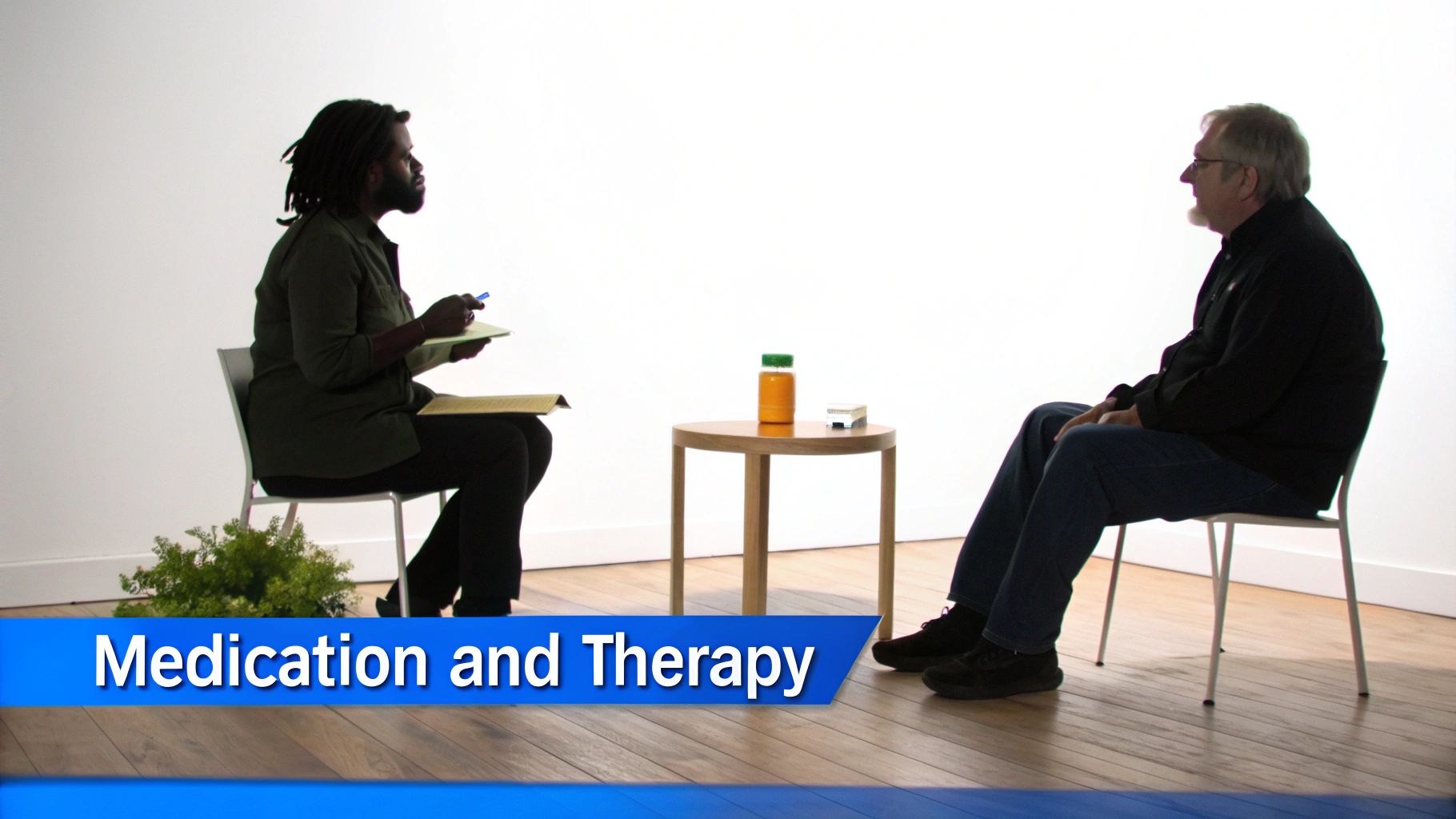
Trying to recover from a substance use disorder can feel like an impossible uphill battle. The physical withdrawal can be grueling, and the psychological cravings are relentless. These hurdles are often why early recovery attempts fail. This is precisely where MAT steps in.
I often explain it like this: MAT is like giving a diabetic person insulin. You wouldn't expect someone to manage a complex biological condition with willpower alone, right? The medication helps stabilize the body's chemistry, quieting the intense withdrawal and cravings. This stability creates the space needed for the real work of recovery—therapy and counseling—to take root and flourish.
The Pillars of a Strong MAT Program
MAT isn't just about handing someone a prescription. It’s a carefully constructed treatment plan built on several key pillars working in sync. The goal is to lay a solid foundation for lasting, sustainable recovery, with a program that’s tailored to each person’s journey.
Here’s what a comprehensive MAT program looks like:
- FDA-Approved Medications: A doctor prescribes specific medications to help rebalance brain chemistry. These can relieve cravings, ease withdrawal, and even block the euphoric effects of opioids or alcohol.
- Counseling & Behavioral Therapies: This is the cornerstone of recovery. Therapy helps people dig into the why behind their addiction, learn to cope with triggers, and develop healthier life skills.
- Personalized Support: No two people are the same. A good MAT program is customized, taking into account a person's history, any co-occurring mental health conditions, and their own goals for the future.
"It is important to recognize that effective MAT is more than dispensing medications to people in recovery. It is a comprehensive approach to treating substance use disorder… It incorporates medications along with therapy to address the physical, emotional, and psychological aspects of recovery."
Let's Clear Up Some Common Myths
One of the biggest obstacles to MAT is stigma, often fueled by misinformation. The most damaging myth is that MAT is just "trading one drug for another." That couldn't be further from the truth.
The medications used in MAT are carefully prescribed and monitored by a medical team to treat a diagnosed disease. When taken as directed, they don't produce a "high." Instead, they work behind the scenes to restore balance to the brain circuits that addiction has hijacked.
This gives the individual a fighting chance. By dialing down the constant noise of cravings and withdrawal, MAT frees up a person's energy and focus so they can fully engage in therapy and start rebuilding their life. It's a proven, life-saving medical intervention that dramatically improves the odds of a successful recovery.
How MAT Restores Balance to the Brain
https://www.youtube.com/embed/SbR0uujcyeM
To really understand why Medication-Assisted Treatment (MAT) works so well, we have to look at what addiction actually does to the brain. Addiction isn't a moral failing or a lack of willpower. It's a chronic disease that physically changes the brain's wiring, especially in the parts that control rewards, pleasure, and decision-making.
When someone uses a drug like an opioid, it unleashes a massive, unnatural flood of "feel-good" chemicals like dopamine. The brain is wired for balance, so it tries to adapt. It becomes less sensitive to everyday pleasures and starts to depend on the drug just to feel normal. This kicks off a brutal cycle of intense cravings and withdrawal that is incredibly hard to stop on your own.
The Brain Hijacked by Addiction
Think of your brain's opioid receptors like locks on a door. Your body’s natural endorphins are the keys that fit perfectly, opening those locks to regulate pain, pleasure, and your overall sense of well-being. Opioids are like master keys—they force the locks open, creating a powerful euphoric rush the brain simply isn't designed to handle.
After a while, the brain begins to rely entirely on these powerful master keys. It reduces its own production of natural keys (endorphins) and can even alter the locks themselves, making it nearly impossible for anything but the drug to bring relief. When the drug is taken away, the person is left in a state of intense physical and emotional pain, leading to severe what are withdrawal symptoms. This is exactly where MAT medications step in—not as new master keys, but as highly specialized tools designed to help reset the entire system.
How Medications Act as Brain Balancers
MAT medications are designed to cleverly interact with these hijacked brain circuits. They work to restore chemical balance without creating the same damaging high. Their goal is to stabilize brain chemistry, dial down the cravings, and block the euphoric effects of opioids and alcohol.
Let’s break down the two main ways they work using our lock and key analogy:
-
Partial Keys (Agonists/Partial Agonists): Medications like buprenorphine (a key ingredient in Suboxone) act like a "partial key." It fits into the opioid receptor's lock and turns it just enough to relieve withdrawal symptoms and quiet the noise of cravings. But because it doesn't turn the lock all the way, it doesn't produce a euphoric high. It effectively sits in the lock, preventing other, more dangerous keys from getting in.
-
Blockers (Antagonists): Medications like naltrexone (Vivitrol) act as a "blocker." This key slides perfectly into the lock but is designed not to turn it at all. Instead, it securely blocks the keyhole. If someone then uses an opioid, the drug has nowhere to bind and can't produce any effect. This takes away the incentive to use and helps break the relapse cycle.
By normalizing brain functions, these medications give individuals the mental and physical stability needed to engage fully in counseling and therapy—the cornerstones of lasting recovery.
The use of MAT is growing, driven by both public health needs and evolving science. The global market for treating opioid use disorder is projected to hit USD 856.9 million in 2025, with major pharmaceutical companies holding over 43% of the market. New developments, like long-acting and oral medications, are making it easier for patients to stick with treatment, while behavioral therapies remain crucial for addressing the psychological side of addiction.
When you understand the science, it becomes clear that MAT is a powerful medical intervention. It’s not about "substituting one drug for another." It's about using precisely engineered medicine to heal a brain that has been physically altered by a chronic disease, giving people a stable foundation to rebuild a healthy, meaningful life.
Exploring Common MAT Medications
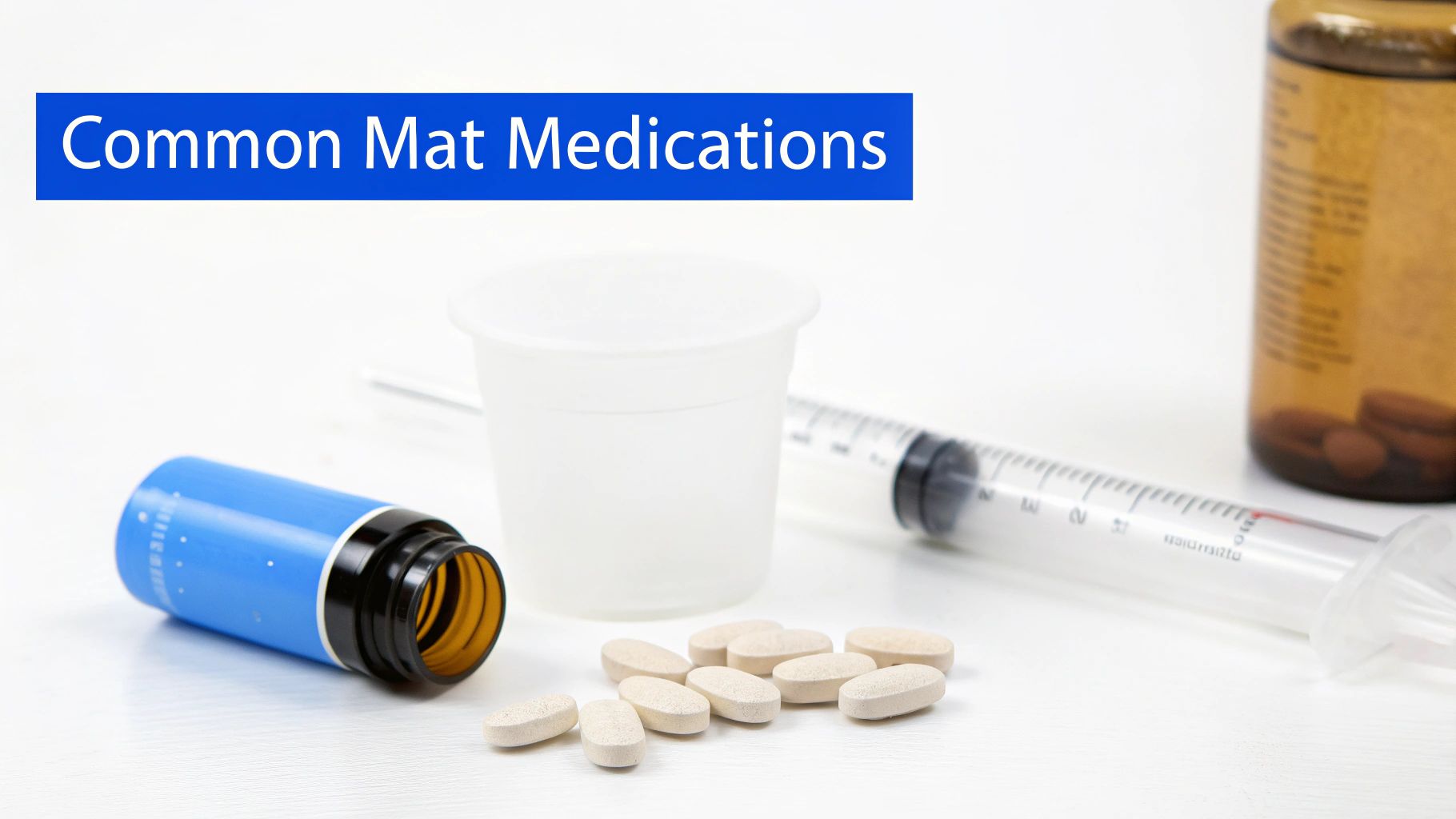
When it comes to medication assisted treatment, the first thing to understand is that there’s no magic bullet. Everyone’s journey, biology, and recovery goals are unique. For that reason, MAT uses several different FDA-approved medications, each working in a distinct way to support the body and brain through recovery.
Finding the right fit is a conversation, not a command. You and your healthcare provider will work together to choose a medication based on a careful look at your specific needs, the substance you’ve been using, and your overall health.
Let's break down the three main players in treating opioid and alcohol use disorders.
Buprenorphine for Opioid Use Disorder
Buprenorphine is a cornerstone of modern treatment for opioid use disorder (OUD). It’s what we call a partial opioid agonist. Think of it like a key that fits the lock (the brain's opioid receptors) but doesn't turn it all the way.
This partial activation is its superpower. It’s just enough to stop withdrawal symptoms in their tracks and quiet the roar of cravings, giving you the stability to focus on recovery. But because it only partially activates those receptors, it has a "ceiling effect." This means that beyond a certain dose, its effects don't increase, which drastically lowers the risk of misuse and overdose compared to full agonists like heroin.
You'll often see buprenorphine combined with naloxone in medications like Suboxone. Naloxone is an opioid blocker that stays dormant when you take the medication as directed. But if someone tries to inject it, the naloxone activates, preventing any high and discouraging misuse. To get a clearer picture of these formulations, you can explore the difference between Suboxone and Subutex in our guide.
Methadone: A Time-Tested Option
Methadone has been a gold standard in treating OUD for decades, and for good reason. It’s a highly effective option, especially for those with a long and severe history of opioid use. Unlike buprenorphine, methadone is a full opioid agonist—it fully activates the opioid receptors to eliminate withdrawal and cravings completely.
Because of its strength, methadone is tightly regulated. It can only be dispensed through licensed Opioid Treatment Programs (OTPs), where patients usually go daily for their dose. This structure provides a crucial layer of accountability and support, particularly in the fragile early days of recovery.
Methadone has a long track record of success. It’s proven to reduce illicit opioid use, prevent overdose deaths, and even lower the transmission of infectious diseases by providing the stability people need to rebuild their lives with counseling and therapy.
Naltrexone for Opioids and Alcohol
Naltrexone takes a completely different approach. It’s an opioid antagonist, which means it’s a pure blocker. Instead of activating the opioid receptors, it sits on them and prevents any other opioids from attaching. It's like putting a shield over the receptor—if you use opioids while on naltrexone, you won't feel anything.
By blocking the euphoric effects, naltrexone effectively removes the "reward" from using, which helps break the psychological cycle of addiction. It’s non-addictive, creates no physical dependence, and is used for both opioid and alcohol use disorders. You can find it as a daily pill (ReVia) or, more commonly, as a once-a-month injection called Vivitrol.
The monthly shot is often a game-changer, as it removes the burden of a daily pill and ensures you're protected for a full 30 days. It's an excellent tool, but it comes with a critical requirement: you must be completely opioid-free for 7 to 10 days before your first dose to avoid triggering immediate, severe withdrawal.
A Quick Comparison of Key MAT Medications
Getting a handle on the key differences between these medications will help you have a much more productive conversation with your doctor. Each has a specific way of working, a different method of delivery, and is suited for different situations. This table breaks it all down.
| Medication | Target Substance | How It Works | Common Brand Names | Administration |
|---|---|---|---|---|
| Buprenorphine | Opioid Use Disorder | Partial Opioid Agonist | Suboxone, Subutex | Sublingual film, tablet, or monthly injection |
| Methadone | Opioid Use Disorder | Full Opioid Agonist | Dolophine, Methadose | Daily liquid or tablet from a licensed clinic |
| Naltrexone | Opioid & Alcohol Use | Opioid Antagonist | Vivitrol, ReVia | Monthly injection or daily oral pill |
Ultimately, the goal is to find the medication that gives you the best possible foundation for long-term recovery. No single path is right for everyone, and the flexibility of MAT is one of its greatest strengths.
Why Access to MAT Is More Urgent Than Ever
The substance use crisis in America is often told through staggering statistics. But we can't forget that behind every number is a person, a family, and a community feeling the impact. Understanding what medication-assisted treatment is is crucial, but grasping the sheer scale of the need shows why it's such a vital, life-saving intervention.
Right now, there's a massive gap between the number of people who need help for a substance use disorder and the number who actually get it. This isn't just a data point; it's a public health crisis with devastating, real-world consequences. The opioid epidemic, for instance, continues to claim lives at a heartbreaking rate, leaving a wake of grief and trauma. Every overdose is a preventable tragedy and a stark reminder of why we need accessible, evidence-based care.
The Overwhelming Treatment Gap
The numbers paint a clear and deeply concerning picture. In 2023, an estimated 54.2 million Americans aged 12 or older needed treatment for a substance use disorder. Yet, only 12.8 million received any form of care. The reasons for this gap are complex, from stigma and cost to a simple lack of available programs. You can explore the data further in this report on substance abuse trends from drugabusestatistics.org.
This problem is especially critical for younger people, who are often the most vulnerable.
- Adolescents: Roughly 1 in 10 adolescents (2.9 million) needed treatment, but less than 40% actually received it.
- Young Adults: An alarming 1 in 4 young adults (9.8 million) required help, with a shocking 16.6% getting the care they needed.
These aren't just statistics. They represent millions of young people trying to navigate a critical time in their lives without the medical support necessary to manage a chronic brain disease.
The reality is that millions of Americans feel trapped. They want to break free from substance use but face barriers that feel insurmountable. Among those who didn't get help, over 2 million individuals knew they needed treatment but simply couldn't get it.
MAT as a Bridge to Healing
This is precisely why expanding access to MAT is so critical. It’s more than just another treatment option—it's a lifeline. By stabilizing brain chemistry and quieting the intense physical cravings and withdrawal symptoms, MAT gives people the solid ground they need to fully engage in therapy and begin the hard work of rebuilding their lives.
For a family watching a loved one struggle, the availability of MAT can mean the difference between hope and despair. For communities fractured by the opioid crisis, it offers a tangible path toward healing. Making this evidence-based care more widely available is a direct, powerful response to the overdose epidemic. It's an investment in saving lives, restoring families, and strengthening the health of our entire society.
Your Step-by-Step Journey Through MAT
Thinking about starting a new treatment program can be a lot to handle, especially when you’re not sure what the process even looks like. But medication assisted treatment isn't a mysterious or rigid system. It’s a structured, supportive journey designed to meet you right where you are.
Walking through the steps can make the whole idea feel more manageable and a lot less intimidating. Think of it less like a strict checklist and more like a flexible path that adapts to you, built on a partnership between you and your healthcare team.
The First Step: A Comprehensive Assessment
Everything starts with a conversation. Your first step is a thorough and compassionate assessment, but don't let the word "assessment" worry you. This isn't a test or an interrogation. It's a confidential discussion to help your medical team get a full picture of your life—your history with substance use, your physical and mental health, and what you hope to achieve.
This initial evaluation is the cornerstone of your entire treatment plan. It's what ensures your care is safe, effective, and actually fits your specific situation. Being open and honest here is the best way to help your team build a plan that will genuinely work for you.
The goal of the assessment is to create a complete picture of your health. This allows the clinical team to recommend the right medication, determine the appropriate level of care, and identify any co-occurring conditions that also need attention.
Based on this conversation, you and your provider will map out an individualized treatment plan. This roadmap will outline which medication is recommended, what your therapy schedule might look like, and the goals you'll work toward together. You are an active part of this process from day one.
The Induction and Stabilization Phase
With a plan in hand, it's time for induction. This is simply the carefully managed process of starting your medication. If you're starting a medication like buprenorphine, this phase begins once you're in mild to moderate withdrawal, which is crucial for making sure the medication works as it should without causing a bad reaction.
Your medical team will be right there with you, monitoring you closely and fine-tuning the dosage. The goal is to get you to a stable point where withdrawal symptoms fade away and cravings are dramatically reduced. Reaching this stability is a huge milestone. It brings a sense of calm that allows you to really dive into the other parts of your treatment.
This infographic shows just how big the gap is between people who need treatment and those who actually get it, which is why a clear, structured process like MAT is so critical.
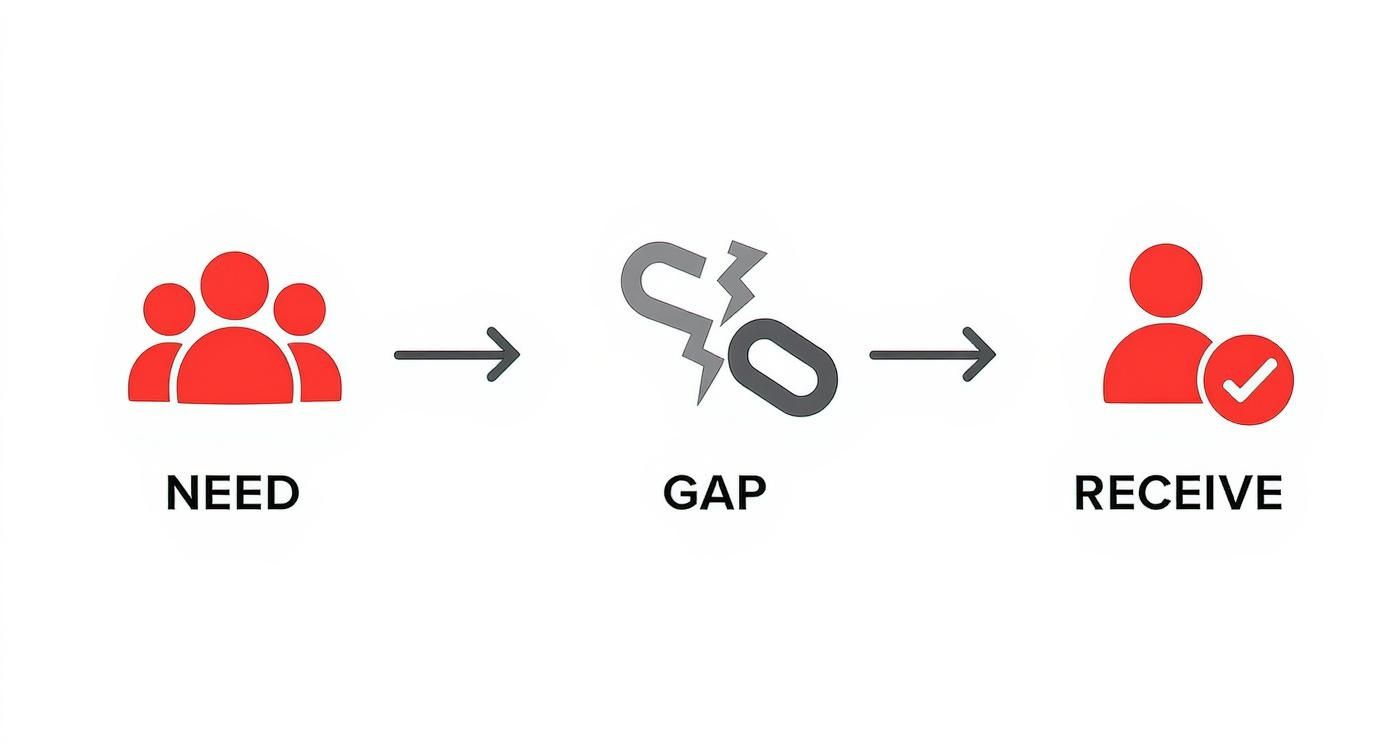
As you can see, the need is massive, but far too few people successfully find their way to the help they deserve.
Maintenance and Ongoing Recovery
Once your body is stabilized, you move into the maintenance phase. This is where the real work of recovery happens. The medication provides the steady support system, clearing the way for counseling and behavioral therapies to help you address the root causes of addiction. This is where you build new, healthy coping skills for the long haul.
You'll have regular check-ins with your medical team to see how you're doing and make any tweaks to your plan. The focus slowly shifts from managing the immediate, acute symptoms to building a strong, fulfilling life in recovery. Understanding the first steps to recovery can be incredibly helpful as you begin to lay this new foundation.
Your journey is your own, and it will change as you heal and grow. How long the maintenance phase lasts is different for everyone. For many people, MAT becomes a long-term tool for supporting their well-being, just like taking medication for any other chronic health condition.
Debunking Common Myths About MAT
Unfortunately, a lot of stigma and misunderstanding still surrounds medication-assisted treatment. This misinformation acts as a real barrier, often stopping people from getting the help they desperately need. To truly grasp what MAT is, we have to cut through the noise and separate the evidence-based facts from these damaging myths.
These false ideas can make people feel ashamed or hesitant to even consider MAT, even though it's a life-saving treatment endorsed by medical professionals. Let's tackle these myths head-on with clear, factual information so individuals and their families can make the best possible choices for their health and recovery.
Myth 1: It’s Just Trading One Drug for Another
This is probably the most common and harmful myth out there. The reality is that MAT medications are prescribed by a doctor to treat a diagnosed medical condition—it’s no different than a doctor prescribing insulin to manage diabetes. When taken as directed by a medical professional, these medications do not produce a euphoric high.
Instead, they go to work on a neurochemical level to bring the brain back into balance. They help normalize the brain circuits that substance use has thrown out of whack, which is what effectively tamps down cravings and eases withdrawal symptoms. This allows a person to stop living in survival mode and actually start doing the meaningful work of recovery in therapy.
Myth 2: It’s a Crutch That Prevents Real Recovery
This is another damaging idea—that MAT is some kind of shortcut or a "crutch" that keeps people from achieving "true" sobriety. This completely misunderstands the nature of addiction as a chronic disease of the brain. For most people, willpower alone simply isn't enough to overcome the profound physical changes that substance use creates.
MAT provides the physiological support the brain needs to start healing. Think of it like a cast for a broken arm; the cast doesn't heal the bone itself, but it creates the stable environment required for the bone to mend properly. In the same way, MAT provides the stability a person needs to build new coping skills and dig into the root causes of their addiction with a counselor.
It's worth noting that leading medical organizations, including the Substance Abuse and Mental Health Services Administration (SAMHSA), consider MAT a gold-standard, evidence-based treatment. It is a legitimate medical intervention for a chronic disease.
Myth 3: It’s Only a Short-Term Fix
Some people mistakenly believe MAT is just for getting through the first painful days of detox. While it’s incredibly effective for managing acute withdrawal, its benefits can and often do extend far beyond that initial phase. For many, addiction is a long-term condition that requires ongoing management, not a quick fix.
The length of treatment is always a clinical decision made between a patient and their doctor. There's no one-size-fits-all timeline. Many people find that staying on MAT for months, or even years, is a critical part of their long-term recovery plan. This kind of sustained support has been proven to significantly reduce the risk of relapse and fatal overdose.
You can see the global significance of MAT reflected in its market growth. In 2025, the global MAT market is valued at around USD 11.2 billion and is projected to skyrocket to USD 31.19 billion by 2037. This expansion is a direct response to the rising prevalence of substance use disorders, with an estimated 286 million people using drugs globally in 2020. You can learn more about the growth and impact of the MAT market on researchnester.com.
Frequently Asked Questions About MAT
What is the main goal of medication-assisted treatment?
The primary goal of MAT is to help individuals achieve and sustain recovery. It uses FDA-approved medications to stabilize brain chemistry, reduce cravings, and ease withdrawal symptoms. This creates a foundation that allows a person to fully engage in counseling and behavioral therapies to address the psychological roots of their addiction.
How long does medication-assisted treatment last?
There is no one-size-fits-all answer. The duration of MAT is a clinical decision made between a patient and their healthcare provider, tailored to individual needs. For many, addiction is a chronic condition, and MAT can be a safe and effective long-term treatment that supports sustained recovery for months or even years.
Is MAT safe during pregnancy?
Yes. MAT is considered the gold standard of care for pregnant individuals with an opioid use disorder. It is a safer approach than unmanaged withdrawal or continued illicit substance use. Treatment helps stabilize the mother and fetus, reducing risks and leading to better health outcomes for both.
Why is therapy a necessary part of MAT?
Medication addresses the physical and neurological aspects of addiction, but it doesn't address the underlying psychological drivers. Therapy and counseling are essential for learning new coping mechanisms, processing trauma, identifying triggers, and developing the life skills needed to build a fulfilling, long-term recovery.
Finding your way to recovery starts with trusted information and support from people who care. At StartDrugRehab.com, we're here to give you the resources you need to make the best decisions for yourself or someone you love. You can explore our guides and find the right help today at https://startdrugrehab.com.