Walking into a rehab facility for the first time is a huge step, and I know it can feel overwhelming. A lot of that anxiety comes from the unknown. The intake process is your first real interaction inside the facility, but it's not an interrogation. Think of it as a compassionate conversation—a chance for the team to get to know you so they can build a personalized roadmap for your recovery. It’s where your journey truly begins.
Key Takeaways
- Intake is Personalized: The initial assessment is a confidential conversation to create a treatment plan tailored to your specific history, needs, and goals. Honesty is key.
- Detox is Medically Supervised: You will not go through withdrawal alone. The detoxification process is managed 24/7 by a clinical team to ensure your safety and comfort.
- Daily Life is Structured: Rehab follows a predictable daily routine of therapy, educational workshops, and holistic activities. This structure replaces the chaos of addiction with a stable environment for healing.
- Aftercare Planning is a Priority: A significant part of rehab involves creating a detailed plan for life after treatment, including relapse prevention strategies and connections to ongoing support systems.
Your First Step: The Intake and Assessment Process
The intake and assessment process is the bedrock of your entire treatment plan. It’s like a detailed consultation with a surgeon before an operation; every single piece of information you share helps them make sure your treatment is safe, effective, and perfectly suited to you. This initial meeting is always confidential and led by a trained admissions counselor or therapist who knows how to make you feel comfortable.
The most important thing you can do during this phase is to be open and honest. I know that can be tough, but the information you provide is absolutely essential for the clinical team to see the full picture. This isn't about judgment—it's about accuracy. The more the team understands, the better they can design a program that tackles not just the substance use, but also any of the underlying issues that got you here.
The infographic below gives you a good sense of what this first step looks like. It’s designed to be welcoming and structured, so you feel supported from the moment you walk through the door.
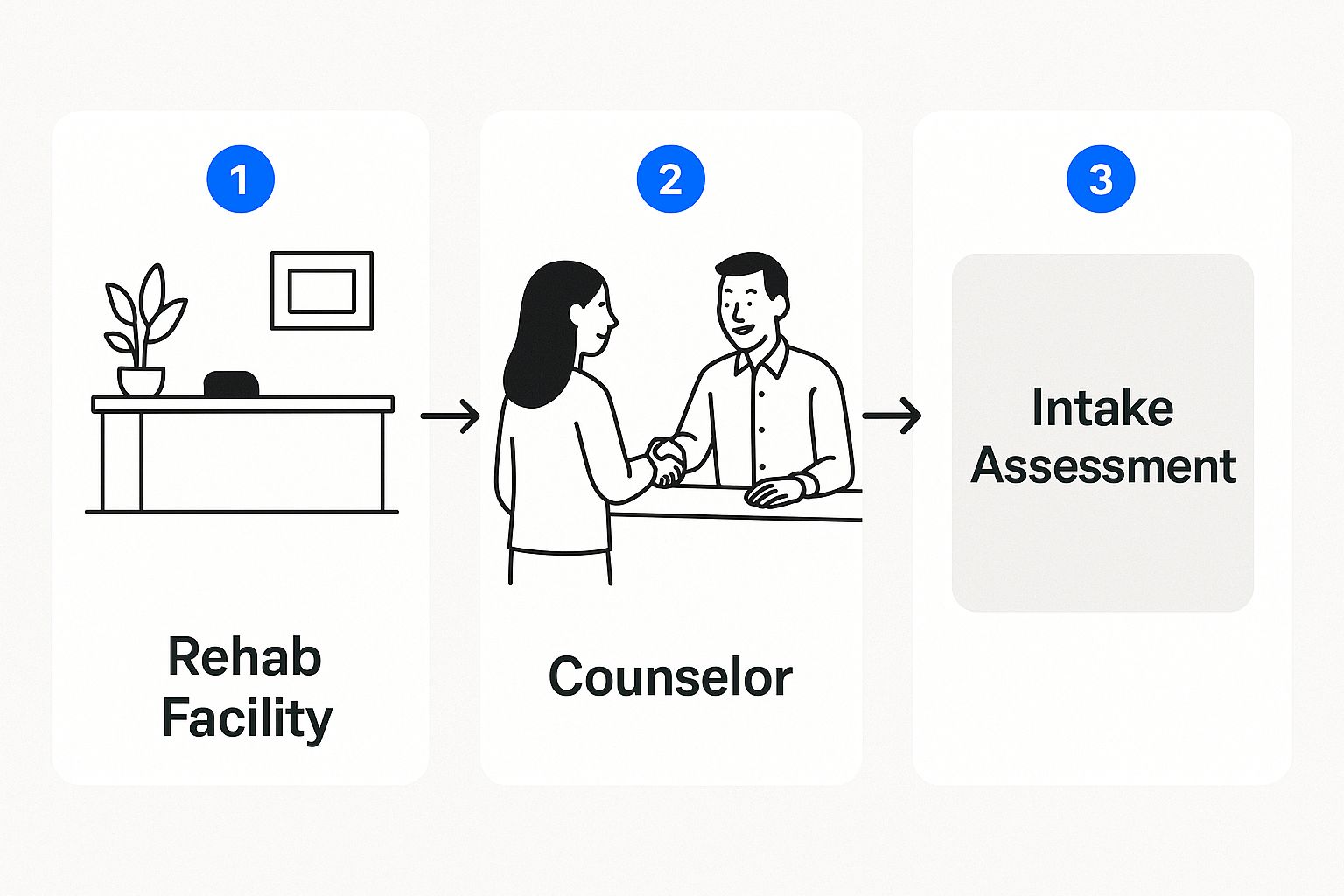
As you can see, this process is meant to be a supportive first contact, setting a positive and hopeful tone for everything that comes next.
What Information Will They Ask For?
During the assessment, the conversation will cover a few key areas of your life. This isn't just being nosy; it’s a comprehensive approach to make sure every part of your well-being is considered.
- Substance Use History: You’ll talk about what substances you've used, how often, for how long, and if you’ve tried to quit before.
- Medical History: They'll need to know about any physical health conditions, allergies, or medications you're taking. This is especially vital for a safe detox.
- Mental Health Background: The team will ask about any history of depression, anxiety, PTSD, or other mental health conditions. It's incredibly common for these to go hand-in-hand with substance use, so they need to be treated together. In fact, the National Institute on Drug Abuse states that about half of people with a mental illness will also experience a substance use disorder at some point, and vice versa.
- Family and Social Situation: Understanding your home life and support system helps the team build a realistic and effective aftercare plan for when you leave.
The goal of a thorough assessment is to see the whole person, not just the addiction. It ensures that the treatment plan addresses the unique biological, psychological, and social factors that influence your recovery.
The Purpose Behind the Questions
Every single question asked during intake has a specific purpose tied directly to your care. For example, talking about your substance use patterns helps the medical team figure out what level of supervision you'll need during detox to be safe and comfortable. Sharing your mental health history lets them integrate therapies like Cognitive Behavioral Therapy (CBT) right from the start.
This is also where you start setting goals. You'll get to talk about what you hope to get out of this experience, which is incredibly empowering and gives the clinical team a clear direction. If you're curious about the specific types of questions and formats used, you can learn more about the various substance abuse assessment tools that professionals use.
Ultimately, this whole conversation is a collaboration. It ensures your recovery journey is built on a solid, personalized foundation designed for your success.
Safely Navigating the Detoxification Phase
Once we've figured out where you're starting from with the initial assessment, the next step for most people is detox. This is one of the most misunderstood and intimidating parts of the whole process, but it’s really all about one thing: safety.
Think of medically supervised detox as a controlled landing. It’s a carefully managed process that helps your body clear out substances while a dedicated clinical team works around the clock to keep you as stable and comfortable as possible. Trying to do this on your own is unpredictable and can be genuinely dangerous.
Why 24/7 Medical Supervision is a Game-Changer
When you stop using a substance, your body has to readjust, and this process can trigger a wide range of withdrawal symptoms. Having a medical team on hand 24/7 is what makes this process safe. These are professionals trained to watch your vital signs, manage your discomfort, and step in immediately if any serious issues pop up.
This isn't about being watched; it's about being protected. It means there's always someone there to help you through everything from nagging muscle aches to more severe complications. To get a better handle on this, it's worth understanding what withdrawal symptoms are and why having an expert team manage them is so critical.
Using Medication to Ease the Transition
One of the biggest advancements in modern detox is the use of medication to help people through withdrawal. These aren't a crutch or a replacement for recovery—they're simply tools to take the edge off the physical and psychological stress so you can focus on getting well.
Based on your initial assessment, the medical staff will figure out what, if anything, might help you.
These medications can:
- Dial down cravings: Some medications can quiet that intense, nagging urge to use, which frees up a lot of mental energy.
- Soothe physical pain: Things like muscle aches, nausea, and sleeplessness can be managed with specific medications.
- Prevent dangerous complications: For withdrawal from alcohol or benzodiazepines, the risks are very real. Medically supervised detox uses medications to prevent life-threatening events like seizures.
Medically assisted treatment (MAT) is a proven strategy that combines specific medications with therapy and counseling. It's been shown to not only help people stay in treatment longer but also to significantly improve their chances of long-term success.
A Glimpse at the Day-to-Day Experience
Everyone's detox timeline is different. It really depends on what substance you were using, for how long, and your own personal health. That said, there's a pretty common pattern. The first 24-48 hours are usually the most intense as the substance fully leaves your system.
After that initial peak, the physical symptoms usually start to ease up over the next few days. While the toughest part of detox typically lasts about five to ten days, the support doesn't just stop there. The entire goal is to get you physically stable enough to dive into the therapy and counseling that comes next.
This stage is tough, there’s no sugarcoating it. But it's also the first real, tangible step you take toward getting your life back. It’s a necessary bridge from where you are to where you want to be, creating a solid foundation for the real healing to begin.
A Glimpse into a Typical Day in Rehab
If your only picture of rehab comes from movies, you might be imagining something dramatic or chaotic. The reality is quite the opposite. Life in rehab is built around a highly structured, predictable daily routine. This isn't about being controlling; it's about creating a safe, stable environment where the noise of the outside world fades away, allowing you to focus completely on healing.
Think of it this way: active addiction is often pure chaos. The structure of rehab removes that unpredictability, giving your mind and body a chance to reset. It provides a reliable framework, so you don't have to constantly worry about what's next. Instead, you can pour all your energy into building new, healthy habits.

A Structured Morning for a Clear Mind
Your day will probably start early. After a gentle wake-up call and a healthy breakfast, the morning routine is all about setting a positive, mindful tone for the day. You won't be thrown into intense therapy right away. The goal is to get grounded first.
These morning sessions are designed to gently ease you into the day's work and often include:
- Mindfulness or Meditation: These aren't just buzzwords. Guided practices help you tune into the present moment, which can dramatically lower anxiety and give you a sense of calm before things get busy.
- Goal-Setting Groups: This is usually a quick, informal check-in with your peers and a counselor. You’ll talk about your goals for the day, mention any struggles, and get on the same page as a group. It builds a real sense of shared purpose.
- Light Physical Activity: Simple stretching or a yoga session does wonders for releasing the physical tension that addiction and stress build up in the body. It helps reconnect your mind and body, a key part of learning to manage your emotions.
This kind of start helps you build a new rhythm, replacing old, destructive habits with ones that actually support your recovery.
The Heart of the Day: Therapy and Education
Once the morning routine is done, the core of your day begins. This is when you'll do the deep therapeutic work—digging into the root causes of your addiction and learning the skills you need to stay sober for good. The schedule is usually broken up into different types of sessions to keep you engaged.
You’ll have individual counseling, which is your private time to work one-on-one with a therapist. This is a safe space to talk about anything from past trauma to co-occurring issues like anxiety or depression. It's where you can be completely honest without fear of judgment.
Research consistently shows that combining different therapy models, like individual and group sessions, leads to much better outcomes. This approach addresses your personal psychological needs while also tapping into the powerful human need for community.
You'll also spend a lot of time in group therapy. For many people, this is the most powerful part of the rehab experience. You're in a room with people who just get it. Sharing your story and hearing from others helps dissolve the shame and isolation that addiction thrives on, creating a support network that feels like family.
Skill-Building and Holistic Well-Being
Afternoons often shift gears, focusing on practical education and activities that heal the whole person—mind, body, and spirit. It's all about giving you real-world tools for life after treatment.
Educational workshops might cover topics like:
- Relapse Prevention: This is crucial. You’ll learn to spot your personal triggers and develop a solid plan for what to do when cravings hit or you're in a high-risk situation.
- Coping Skills: You'll build a "toolbox" of healthy ways to deal with stress, anger, and sadness that don't involve turning to a substance.
- Family Dynamics: Addiction impacts the entire family. These sessions help you understand those dynamics and learn how to communicate better and start rebuilding trust.
Beyond these workshops, most modern treatment centers incorporate holistic therapies. These are activities designed to reduce stress and help you find new, healthy passions. You might find yourself in an art therapy session, working with horses in equine therapy, or expressing yourself through music. These creative outlets give you a way to process emotions that are sometimes too difficult to put into words.
Evenings tend to be quieter. It's a time for reflection, journaling, or attending 12-step meetings like Alcoholics Anonymous (AA) or Narcotics Anonymous (NA). This entire daily cycle—structured yet varied—is designed to keep you focused and engaged as you build a strong foundation for a new life.
A Look at Different Therapy and Treatment Models
Addiction treatment isn't a "one-size-fits-all" kind of deal. Far from it. Everyone's path into addiction is different, so the path out needs to be just as personal. Think of your treatment plan like a custom-built toolkit—each therapy is a specific tool designed to fix a different part of the problem.
Getting a handle on these different approaches is a huge part of understanding what to expect in rehab. Your program will likely be a mix of proven, evidence-based addiction treatment methods, all chosen to help you heal mentally, emotionally, and even spiritually. The goal isn't just to get you to stop using; it's to help you build a completely new foundation for a better life.
Rewiring Your Thoughts with Core Therapies
At the very heart of most treatment programs, you'll find a couple of powerhouse therapies designed to fundamentally change how you think and react to the world. Two of the most common are Cognitive Behavioral Therapy (CBT) and Dialectical Behavior Therapy (DBT). They might sound a bit clinical, but what they do is actually pretty straightforward.
Cognitive Behavioral Therapy (CBT) is all about helping you spot and challenge the negative thought patterns that fuel your addiction. It's like becoming a detective of your own mind. You learn to catch those automatic, destructive thoughts that trigger cravings and swap them out for healthier, more realistic ones. So instead of thinking, "I can't get through this stress without a drink," CBT helps you reframe it to, "This is really tough, but I have other ways to cope."
Dialectical Behavior Therapy (DBT), on the other hand, is a lifesaver for people who struggle with intense, overwhelming emotions and messy relationships. It focuses on teaching you four key skills:
- Mindfulness: Learning how to stay present and grounded in the moment, without judging yourself.
- Distress Tolerance: Building skills to survive painful situations without making them worse.
- Emotion Regulation: Gaining more control over wild emotional swings.
- Interpersonal Effectiveness: Figuring out how to ask for what you need and set healthy boundaries with people.
The Power of Group Therapy
While individual counseling is where you'll do some of your deepest personal work, group therapy is often where the real magic happens. Addiction loves to isolate you, whispering that you're the only one going through this. Group therapy shatters that illusion.
In a group, you're sharing your raw, honest experiences with people who just get it. That shared vulnerability chips away at shame and creates an incredible sense of belonging. Hearing other people's stories gives you a fresh perspective on your own, and supporting them in their journey actually reinforces your own commitment to getting better.
Group therapy creates a mini-world where you can practice new ways of communicating, learn to trust again, and build empathy—all in a safe space before you have to do it out in the real world.
Healing the Whole Person with Holistic Care
Good rehab programs today know that recovery is about more than just what's happening in your head. Holistic therapies are brought in to heal the mind, body, and spirit as one connected system. These activities give you new, healthy ways to process difficult feelings, manage stress, and find passions that can replace substance use.
You might find yourself trying things like:
- Mindfulness and Meditation: Practices designed to calm your nervous system and help you become more self-aware.
- Yoga and Fitness: Getting your body moving to release tension and rebuild that mind-body connection.
- Art or Music Therapy: Using creativity to express emotions that are too big or complicated for words.
- Equine Therapy: Building trust and non-verbal communication skills by working with horses.
These aren't just fluffy extras; they're essential parts of a comprehensive treatment plan. This focus on well-rounded care is a big reason why the global medical rehabilitation services market was valued at around $254.8 billion in 2023 and is expected to climb to nearly $386 billion by 2030. It's all driven by the growing understanding that people need complete care for their mental health and addiction struggles. By weaving together these different models, a quality rehab program gives you a rich, layered experience and a diverse set of tools for lasting recovery.
The Power of Community and Peer Support in Recovery
If there's one thing I've learned from years in this field, it's that recovery is a journey you shouldn't—and can't—walk alone. In fact, trying to go it alone often works against you. One of the most powerful aspects of rehab, and something that often surprises people, is the incredible sense of community you'll find.
Addiction thrives in isolation. It whispers that you're the only one, that no one could possibly understand. Rehab shatters that illusion. Suddenly, you're surrounded by people who get it. They've walked in your shoes, felt the same despair, and are now fighting the same fight.

Sharing your story with people who nod in understanding, not judgment, is incredibly healing. In those moments of shared vulnerability, the shame and guilt that have weighed you down for so long start to lose their grip. You see yourself in their stories, and they see themselves in yours. That connection is immediate and powerful.
This need for supportive community is a global issue. An estimated 2.41 billion people worldwide are living with conditions that could benefit from rehabilitation. The demand for these services has skyrocketed, jumping 63% since 1990. You can explore the global estimates of the need for rehabilitation to see just how widespread this challenge is.
Building Connections Through Shared Experience
A good rehab program is intentionally designed to build these connections. It’s not just an accident. From formal group therapy to casual chats over coffee, every part of the day is an opportunity to strengthen your support network.
- Group Therapy Sessions: Think of this as a safe laboratory for connection. It’s where you’ll hear different perspectives, practice expressing yourself honestly, and learn to support others. You start to rebuild the trust that addiction so often breaks.
- Informal Peer Interactions: The "in-between" moments are just as crucial. Sharing a laugh at dinner, going for a walk, or just talking in the evening—these are the interactions that build real friendships based on who you are now, not who you were.
These relationships also create a natural, positive form of accountability. It's a lot easier to stay on track when you know people are rooting for you, counting on you to show up, and ready to listen if you're having a tough day.
Why Sober Relationships Matter
For many, the friendships formed in rehab are the first genuinely sober relationships they've had in years. These connections aren't built around using substances; they're built on honesty, a shared desire for growth, and mutual support. That’s a game-changer.
The peer support network you build in treatment acts as a crucial bridge back to everyday life. These individuals become your allies, providing a safety net of understanding that can help you navigate challenges long after you’ve left the facility.
Learning how to build and maintain these healthy relationships is a fundamental skill for lasting recovery. It gives you a blueprint for creating a strong, sober support system when you return home. The community you find isn't just a temporary comfort—it's the foundation for a whole new way of life.
Planning for Life After Rehab
Leaving a residential treatment program feels like a huge milestone, and it is. But it’s not the finish line. Think of it more as the starting line for the rest of your life in recovery.
A good rehab facility knows this. They aren't just focused on the 30, 60, or 90 days you spend with them. From the moment you walk in, the clinical team is already thinking about how to set you up for success when you walk back out. This is what aftercare planning is all about—creating a solid, practical plan to help you transition back to your daily life.
Building Your Relapse Prevention Strategy
One of the most important parts of your aftercare plan is learning how to prevent a relapse. This isn't about having superhuman willpower. It’s about having a smart, practiced strategy for dealing with the real world.
You'll work one-on-one with your therapist to identify your personal triggers. What people, places, or even feelings make you want to use? Once you know what they are, you can build a game plan.
- Social Triggers: You might practice how to say "no thanks" at a party or figure out how to set clear boundaries with friends who don't support your sobriety.
- Emotional Triggers: You'll build a personal "toolbox" of healthy coping skills. Maybe that's calling your sponsor, hitting the gym when you feel stressed, or just getting your thoughts out in a journal.
The goal is to feel prepared, not panicked, when you face these situations.
The Components of a Strong Aftercare Plan
Everyone's aftercare plan looks a little different because everyone's life is different. But a solid plan usually has a few key pieces that work together to create a safety net for you. It's all about continuing the hard work you started in rehab. The focus on ongoing support is huge, and it's reflected in the industry itself; the market for rehabilitation products and equipment was valued at around $16.96 billion in 2024 and is expected to grow to $27.29 billion by 2030. You can read more about the growth of the rehabilitation products market to see how the field is expanding.
An effective aftercare plan is your roadmap for early recovery. It provides the structure and support you need to bridge the gap between the sheltered environment of rehab and the freedom—and challenges—of everyday life.
Most strong aftercare plans include a mix of the following:
- Continued Therapy: Keeping up with regular appointments with a therapist or counselor is crucial.
- Support Groups: Getting involved in groups like Alcoholics Anonymous (AA), Narcotics Anonymous (NA), or other peer-led communities provides daily encouragement.
- Sober Living Options: Sometimes, moving into a structured sober living home can provide an extra layer of accountability as you transition.
- Alumni Programs: Staying connected to your treatment center and the people you went through the program with can be a powerful source of ongoing support.
Wrapping It Up: The Key Pieces of Your Rehab Journey
Walking into rehab can feel like stepping into the unknown, which is completely understandable. But the whole process is less mysterious than you might think. It's a highly structured experience, carefully designed by people who've dedicated their lives to helping others recover. It’s built on a foundation of safety, intensive therapy, and practical planning for your future.
Think of it as a partnership. You bring the courage and willingness to do the work, and the clinical team brings the expertise and support. Your honesty is the fuel for this process. Remember, this isn't a punishment; it's a brave step you're taking to build a life you truly want to live. Every single part of the program is there to help you do just that.
Recovery isn’t just about putting down the substance. It's about building a new life where you don’t need it anymore. Every part of the rehab process, from your first therapy session to your final aftercare plan, is designed to help you build that life.
Frequently Asked Questions About Rehab
How long does rehab last?
The length of a rehab stay varies depending on individual needs. Common program lengths are 30, 60, or 90 days, but the ideal duration is determined by your initial assessment, the substances used, and your progress in treatment. The goal is to ensure you have enough time to build a solid foundation for recovery.
Can I have visitors or use my phone?
Yes, but typically after an initial stabilization period. Most facilities have a "blackout" period (usually the first week) to help you acclimate without outside distractions. Afterward, scheduled times for phone calls and family visits are common. Many centers also integrate family therapy sessions into the visitation schedule.
What should I pack for rehab?
You'll receive a specific packing list, but the general advice is to pack for comfort and simplicity. This includes about a week's worth of comfortable clothing, essential alcohol-free toiletries, your ID and insurance information, and a few personal comfort items like a journal or photos. It's best to leave valuables and electronics like laptops at home.
Will my job be safe while I'm in treatment?
Many people are protected by laws like the Family and Medical Leave Act (FMLA), which allows eligible employees to take unpaid, job-protected leave for specified family and medical reasons. It's best to speak with your company's HR department to understand your specific rights and options for taking medical leave for treatment.
At StartDrugRehab.com, we are dedicated to providing the resources and support you need to navigate every step of the recovery process. Find compassionate guidance and connect with the right care by visiting StartDrugRehab.com.