Most people picture addiction recovery as one big step where you quit and never look back. Yet, what surprises many is that there are five distinct stages in the recovery process, with each stage shaping your mindset in a completely different way. The real shocker is that these stages are not just milestones but actually trigger neurological changes in your brain, rewiring old habits as you move forward.
Table of Contents
- What Are The Stages Of Recovery Process?
- Why Understanding The Recovery Stages Is Important
- How Each Stage Contributes To Successful Recovery
- Key Concepts In The Recovery Process Framework
Quick Summary
| Takeaway | Explanation |
|---|---|
| Recovery involves distinct stages. | The recovery process consists of precontemplation, contemplation, preparation, action, and maintenance, each representing different phases of change. |
| Personalization of treatment is crucial. | Understanding an individual’s stage of recovery allows for tailored interventions that align with their readiness and motivation for change. |
| Setbacks are part of the journey. | Recognizing that setbacks are natural and integral to recovery encourages resilience and continuous personal growth. |
| Holistic support is essential. | Effective recovery strategies involve addressing health, home, purpose, and community dimensions to support comprehensive lifestyle transformation. |
| Self-awareness promotes empowerment. | Developing self-awareness throughout the recovery stages helps individuals identify triggers and build effective coping mechanisms. |
What are the Stages of Recovery Process?
The stages of recovery process represent a comprehensive framework that helps individuals understand and navigate their journey through addiction rehabilitation. This nuanced approach recognizes that recovery is not a linear path but a complex, personal transformation involving multiple psychological and behavioral shifts.
Theoretical Foundation of Recovery Stages
Recovery stages emerge from the Transtheoretical Model of Change, a groundbreaking psychological framework developed to explain how individuals modify problematic behaviors. According to research from the National Institute on Drug Abuse, these stages are not rigid steps but fluid transitions that reflect an individual’s readiness and commitment to change.
The core stages typically include:
- Precontemplation: Where an individual might not recognize their addiction as a problem
- Contemplation: Beginning to acknowledge the need for change
- Preparation: Planning and getting ready to take action
- Action: Actively implementing strategies to overcome addiction
- Maintenance: Sustaining long-term behavioral changes
Psychological Dynamics of Recovery
Understanding recovery stages requires recognizing that each phase involves complex psychological adaptations. Individuals move through these stages at different speeds, with personal motivations, support systems, and underlying mental health factors significantly influencing their progression.
The recovery process is not about achieving perfection but about continuous personal growth. Setbacks are normal and should be viewed as opportunities for learning rather than failures. Each stage represents a critical moment of self-reflection, where individuals develop increased self-awareness, rebuild coping mechanisms, and gradually reconstruct their personal narrative beyond substance dependency.
For those seeking more comprehensive insights into treatment approaches, our guide on addiction rehabilitation strategies offers deeper exploration of support mechanisms and therapeutic interventions that complement these recovery stages.
Why Understanding the Recovery Stages is Important
Understanding the recovery stages is crucial because it transforms addiction treatment from a one-size-fits-all approach to a personalized, dynamic journey of healing. By recognizing the nuanced psychological progression individuals experience, treatment professionals and support networks can provide more targeted, compassionate interventions.
Personalized Treatment Strategies
The significance of understanding recovery stages lies in their ability to customize treatment approaches. According to research from the National Institutes of Health, knowing an individual’s current stage allows healthcare providers to develop precise, stage-appropriate interventions that align with the person’s psychological readiness and motivation for change.
Key benefits of stage-based understanding include:
- More accurate assessment of an individual’s current mental and emotional state
- Targeted interventions that match the person’s readiness for change
- Reduced likelihood of treatment resistance or premature dropout
- Enhanced personal engagement in the recovery process
Psychological Empowerment and Self-Awareness
Recovery stages provide a critical framework for psychological empowerment. By understanding that recovery is a complex, non-linear process, individuals can develop realistic expectations and cultivate self-compassion. This perspective helps reduce feelings of failure during setbacks, reframing them as natural parts of a transformative journey.
The stages offer a roadmap that validates individual experiences, acknowledging that progression is not about perfection but about consistent effort and personal growth. Each stage represents an opportunity for deeper self-understanding, helping individuals recognize their strengths, identify potential triggers, and develop more effective coping mechanisms.
For a comprehensive exploration of supportive strategies that complement stage-based recovery, discover our detailed guide on addiction rehabilitation approaches, which provides in-depth insights into holistic recovery methodologies.
How Each Stage Contributes to Successful Recovery
Addiction recovery is a complex journey where each stage plays a pivotal role in transforming an individual’s relationship with substance use. Understanding how these stages interconnect helps individuals recognize their progress and maintain motivation throughout their healing process.
Progression Through Psychological Transformation
According to research from the National Institute on Drug Abuse, recovery stages are not merely sequential steps but intricate psychological transitions that build upon each other. Each stage contributes uniquely to overall recovery by addressing specific mental, emotional, and behavioral challenges.
Key contributions of each recovery stage include:
- Building self-awareness and recognizing problematic patterns
- Developing emotional regulation skills
- Creating sustainable behavioral alternatives
- Strengthening personal resilience and coping mechanisms
Neurological and Behavioral Reconstruction
Recovery stages represent more than psychological milestones they are critical periods of neurological rewiring. As individuals progress through different stages, they gradually reconstruct neural pathways, replacing destructive addiction-driven behaviors with healthier cognitive responses.
Each stage demands specific psychological work: acknowledging the problem, building motivation, planning change, taking action, and maintaining new behaviors. The cumulative effect of these stages helps individuals not just overcome addiction but fundamentally redesign their approach to personal challenges and emotional management.

For individuals seeking comprehensive support tailored to their unique recovery journey, explore our personalized rehabilitation strategies that align with these transformative stages.
Key Concepts in the Recovery Process Framework
The recovery process framework represents a comprehensive approach to understanding addiction as a complex, multidimensional challenge that extends far beyond substance cessation. It provides a holistic perspective that acknowledges the intricate psychological, social, and neurological aspects of healing.
Foundational Theoretical Components
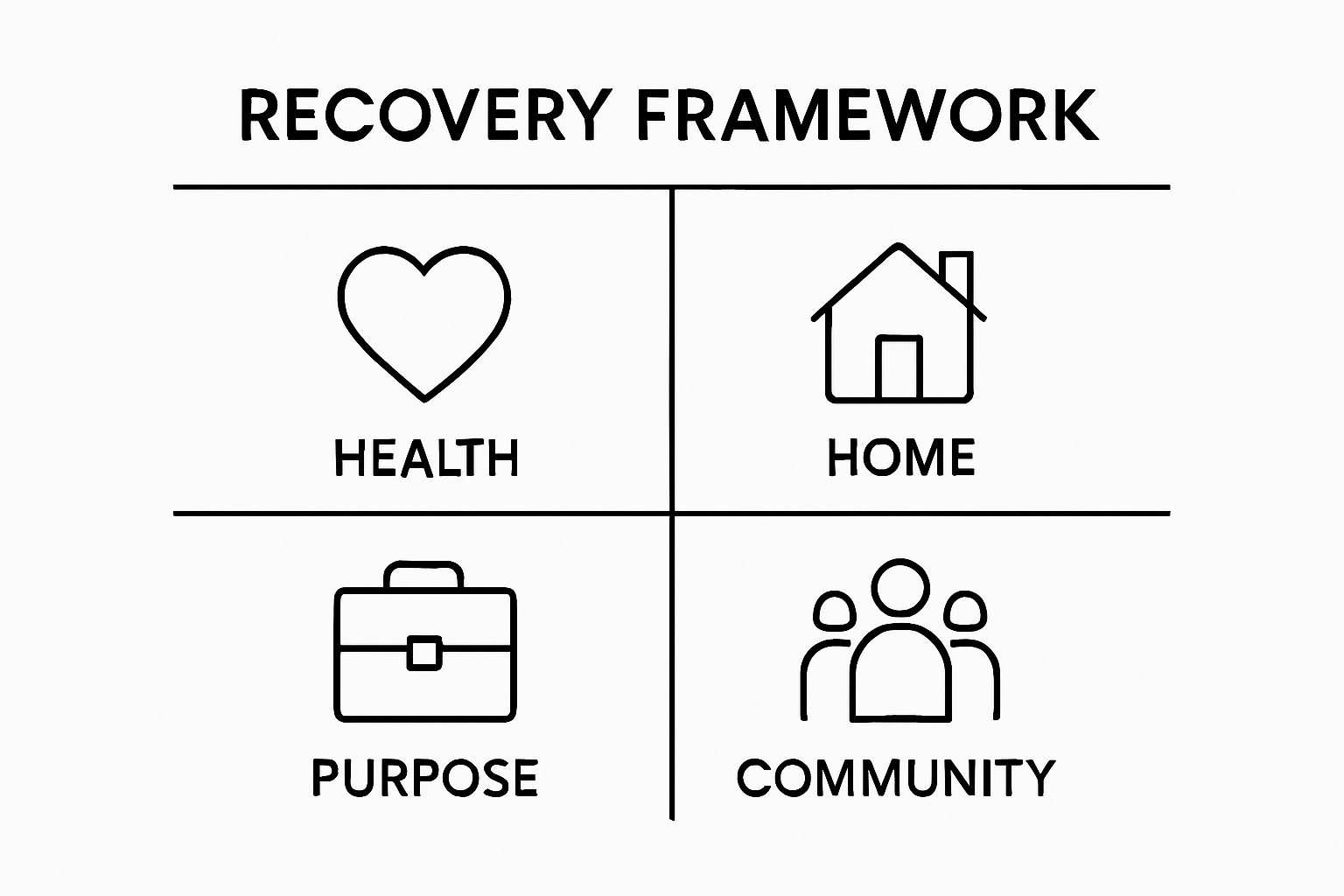
According to research from the Substance Abuse and Mental Health Services Administration, the recovery framework is built upon four critical dimensions that support sustainable life transformation:
- Health: Managing and overcoming disease symptoms
- Home: Establishing a stable and safe living environment
- Purpose: Engaging in meaningful daily activities
- Community: Developing supportive social networks
These dimensions demonstrate that recovery is not just about abstaining from substances but about comprehensive personal reconstruction. Each component interconnects to create a robust support system that addresses the multifaceted nature of addiction recovery.
Psychological and Neurological Reconstruction
The recovery framework recognizes addiction as a chronic but manageable condition requiring ongoing attention and adaptive strategies. Neuroplasticity plays a crucial role, as individuals gradually rewire neural pathways, replacing addiction-driven behaviors with healthier cognitive responses.
Key psychological mechanisms involve developing emotional regulation skills, building resilience, and creating sustainable behavioral alternatives. This process is deeply personal and nonlinear, acknowledging that setbacks are not failures but opportunities for learning and growth.
For individuals seeking a deeper understanding of personalized recovery approaches, learn about our comprehensive rehabilitation philosophy that supports holistic healing and individual empowerment.
Move Through the Recovery Stages With Expert Support
Understanding the stages of recovery is more than just learning about a process. It is about making sense of where you are right now and what comes next. Many people struggle with setbacks or confusion as they transition from one stage to another, especially when facing challenges such as building self-awareness or sustaining motivation. If you want evidence-based guidance tailored to your unique path, our Treatment Resource Library helps you find targeted answers and step-by-step support for each milestone and mental shift described in your recovery journey.
Your journey to recovery does not have to be faced alone. Connect with an experienced team and a community that understands every stage you are moving through. Visit StartDrugRehab.com today to access expert advice, proven tools, and real stories from people who understand what you are experiencing. With the right support, you can transform knowledge into real progress. Start your healing now by exploring the resources and guidance designed just for you.
Frequently Asked Questions
What are the stages of the recovery process in addiction?
The stages of the recovery process typically include Precontemplation, Contemplation, Preparation, Action, and Maintenance. Each stage represents a unique phase in an individual’s journey toward overcoming addiction.
How can understanding the stages of recovery help in addiction treatment?
Understanding the stages of recovery allows treatment providers to customize interventions for individuals based on their current psychological readiness and motivation. This tailored approach can enhance engagement and improve treatment outcomes.
Why is personal growth important in the recovery process?
Personal growth is vital in the recovery process as it encourages continuous self-reflection and the development of coping mechanisms. Recognizing that setbacks are a normal part of recovery can empower individuals to learn from their experiences and evolve personally.
How does neuroplasticity relate to recovery stages?
Neuroplasticity refers to the brain’s ability to reorganize itself by forming new neural connections. As individuals progress through the stages of recovery, they gradually replace addictive behaviors with healthier responses, reinforcing positive changes in brain function.