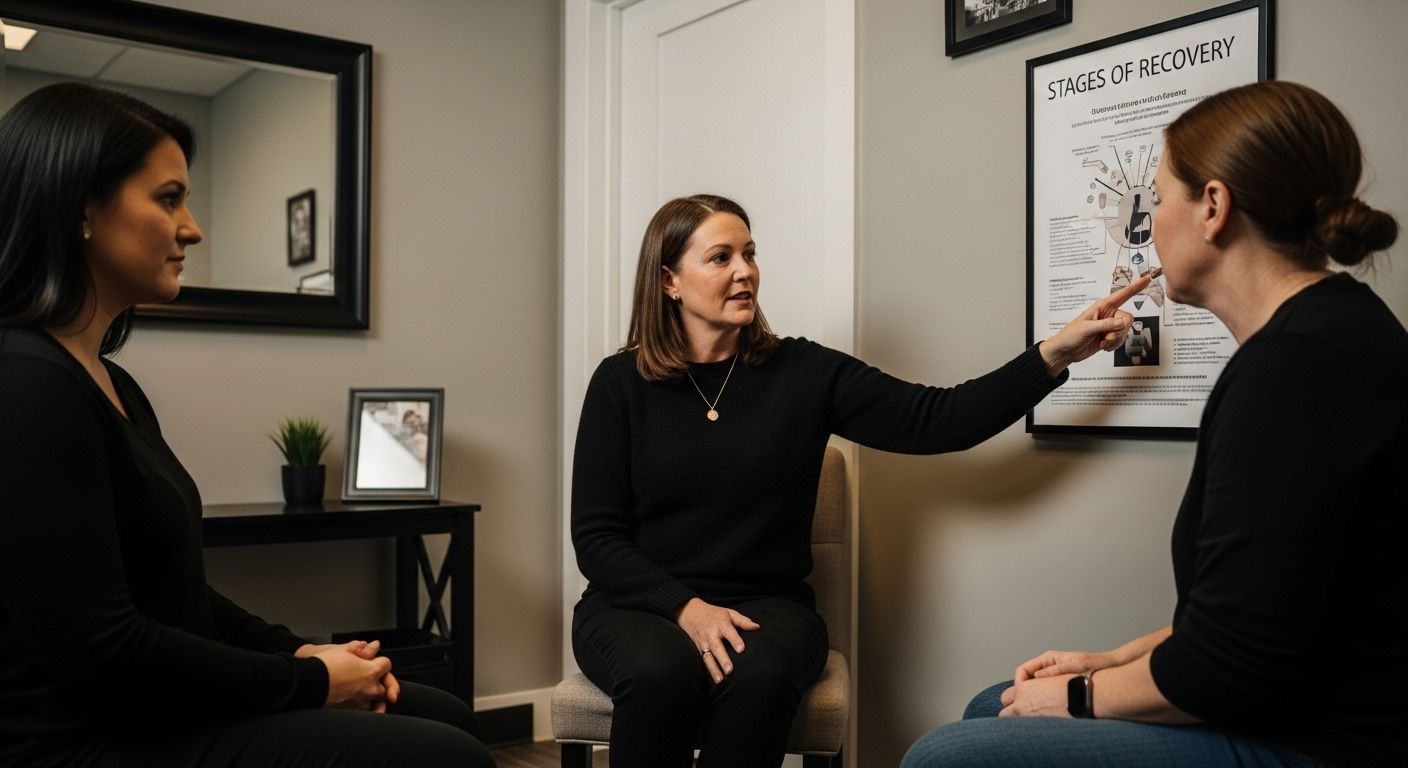
People recovering from addiction now have a new type of support that goes far beyond what traditional therapy offers. Recovery coaching is making a huge impact, and studies show that peer recovery coaching can actually increase treatment retention and reduce substance use. Most assume the magic happens only during therapy sessions, but real transformation is often sparked outside the clinic by coaches who share their own journeys and support clients where it matters most.
Table of Contents
- Defining Recovery Coaching: Key Concepts and Principles
- The Importance of Recovery Coaching in Addiction Recovery
- How Recovery Coaching Works: The Support Process
- Comparing Recovery Coaching to Traditional Counseling
- Real-World Impact: Success Stories and Outcomes
Quick Summary
| Takeaway | Explanation |
|---|---|
| Recovery coaching promotes personal empowerment. | It emphasizes client-driven goals, encouraging individuals to take charge of their recovery journey. |
| Peer support enhances recovery outcomes. | Recovery coaches with lived experience provide empathy and relatable strategies, improving treatment retention and reducing relapse. |
| Holistic wellness is a core focus. | Recovery coaching addresses emotional, mental, physical, and social aspects of life, ensuring comprehensive personal transformation. |
| Ongoing accountability is crucial for success. | Regular check-ins and support from coaches help clients maintain their recovery plans and develop essential coping skills. |
| Success stories demonstrate real-world impacts. | Concrete examples reveal how recovery coaching facilitates significant life changes, illustrating the transformative power of personalized support. |
Defining Recovery Coaching: Key Concepts and Principles
Recovery coaching represents a specialized professional support approach designed to assist individuals navigating substance use disorder recovery and overall wellness transformation. Unlike traditional clinical treatment models, recovery coaching focuses on empowering individuals through personalized guidance, practical support, and a strengths-based perspective.
What Exactly is Recovery Coaching?
Recovery coaching is a collaborative partnership between a trained professional and an individual seeking sustainable recovery from addiction. The primary objective is to help clients develop actionable strategies, strengthen personal resilience, and create meaningful life changes beyond substance abstinence. Recovery coaches serve as supportive guides who bring lived experience, professional training, and a non-judgmental approach to supporting individuals through complex recovery journeys.
Key characteristics of recovery coaching include:
- Focusing on client-driven goals and personal empowerment
- Providing practical support and accountability
- Offering guidance without clinical therapeutic interventions
- Supporting long-term wellness and holistic life transformation
The Principles Underlying Recovery Coaching
Recovery coaching operates on several fundamental principles that distinguish it from traditional therapeutic approaches. These principles emphasize personal agency, hope, and comprehensive wellness. Recovery coaches recognize that recovery extends far beyond substance abstinence and involves rebuilding personal identity, relationships, and life purpose.
Critical principles include:
- Honoring individual autonomy and self-determination
- Maintaining a strength-based and non-pathologizing perspective
- Supporting holistic wellness across mental, emotional, physical, and social domains
- Acknowledging recovery as a unique, personal journey
By integrating professional expertise with compassionate support, recovery coaching provides individuals with a dynamic, forward-looking approach to sustainable personal transformation. National Alliance for Recovery Coaching emphasizes that this approach bridges professional guidance with lived experience, creating a powerful support mechanism for individuals seeking lasting recovery.
The Importance of Recovery Coaching in Addiction Recovery
Recovery coaching has emerged as a critical component in addressing the complex challenges of substance use disorder, offering a unique and personalized approach to supporting individuals through their recovery journey. Unlike traditional treatment models, recovery coaching provides comprehensive support that extends beyond clinical interventions, focusing on holistic personal transformation and sustainable wellness.
Bridging Treatment and Long-Term Recovery
Recovery coaches play a pivotal role in connecting individuals with critical resources and developing practical strategies for maintaining sobriety. They serve as a critical bridge between formal treatment programs and real-world challenges, helping clients navigate the complex emotional and practical landscape of recovery. This support is particularly crucial during the transition periods when individuals are most vulnerable to relapse.
Key ways recovery coaches support long-term recovery include:
- Providing ongoing emotional support and accountability
- Helping clients develop coping mechanisms and life skills
- Assisting in creating structured personal recovery plans
- Supporting connection with community resources and support networks
Empowerment Through Lived Experience
One of the most powerful aspects of recovery coaching is the emphasis on peer support and lived experience. Recovery coaches often bring personal journeys of addiction and recovery, which allows them to offer genuine, empathetic guidance. This approach creates a unique support dynamic where clients feel understood, validated, and inspired by someone who has successfully navigated similar challenges.
The transformative potential of recovery coaching lies in its ability to:
- Normalize the recovery experience
- Reduce feelings of isolation and shame
- Provide hope through real-world examples of successful recovery
- Offer practical, actionable strategies based on personal insights
Research from the National Center for Biotechnology Information highlights that peer recovery coaching significantly improves treatment retention and reduces substance use, demonstrating its critical role in comprehensive addiction recovery support. Learn more about addiction recovery strategies and discover how personalized coaching can make a profound difference in sustainable wellness and personal transformation.
How Recovery Coaching Works: The Support Process
Recovery coaching operates through a dynamic, personalized approach that goes beyond traditional treatment models. The support process is fundamentally client-driven, focusing on creating individualized strategies that address the unique challenges and goals of each person seeking recovery.
Initial Assessment and Goal Setting
The recovery coaching journey begins with a comprehensive, collaborative assessment that explores the client’s current situation, strengths, challenges, and aspirations. Unlike clinical interventions, this process is non-diagnostic and emphasizes personal empowerment. Recovery coaches work closely with clients to develop realistic, actionable goals that extend beyond substance abstinence and encompass overall life transformation.
Key elements of the initial assessment include:
- Exploring personal motivations and recovery objectives
- Identifying potential barriers and support needs
- Mapping existing personal and community resources
- Establishing a collaborative, trust-based relationship
Ongoing Support and Strategy Development
Recovery coaches provide continuous, flexible support that adapts to the client’s evolving needs. This involves regular check-ins, strategic planning, and practical guidance designed to build resilience and self-efficacy. Coaches utilize motivational interviewing techniques and strength-based approaches to help clients develop effective coping mechanisms and life skills.
Critical components of ongoing support include:
- Regular accountability meetings
- Skill-building and resource connection
- Emotional support and encouragement
- Adaptive strategy refinement
Research from the Substance Abuse and Rehabilitation journal confirms that this individualized, peer-supported approach significantly enhances recovery outcomes by fostering personal agency and providing practical, real-world guidance. Explore our comprehensive recovery support resources to understand how personalized coaching can transform your recovery journey.
Comparing Recovery Coaching to Traditional Counseling
While recovery coaching and traditional counseling both aim to support individuals through challenging life experiences, they differ significantly in approach, methodology, and fundamental philosophical frameworks. Understanding these distinctions is crucial for individuals seeking the most appropriate support for their recovery journey.
Fundamental Approach and Orientation
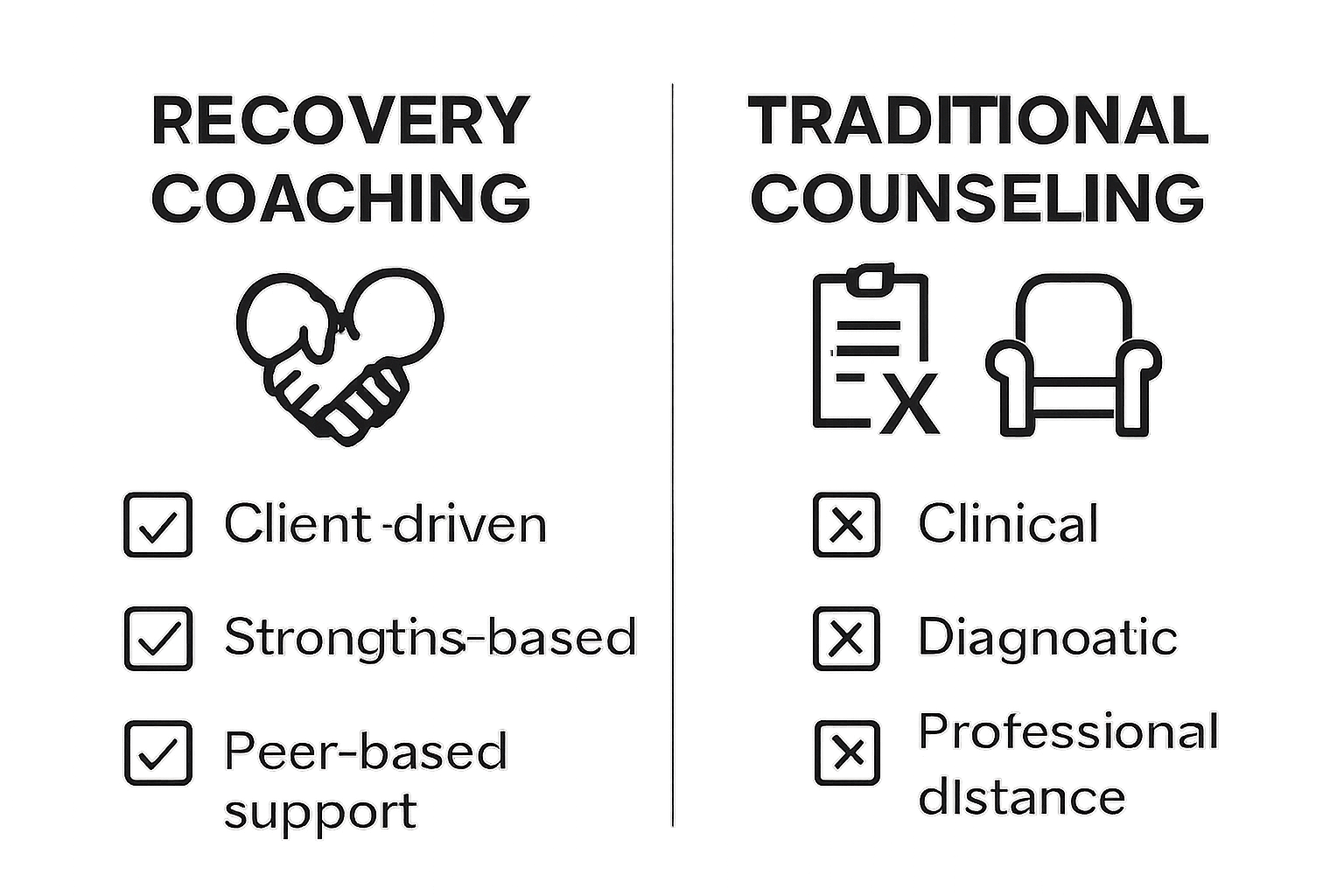
Traditional counseling typically follows a clinical, diagnostic model focused on treating mental health conditions through structured therapeutic interventions. Recovery coaches, by contrast, adopt a peer-driven, strengths-based perspective that emphasizes personal empowerment and holistic life transformation. The counseling approach centers on identifying and treating underlying psychological issues, while recovery coaching concentrates on practical strategies, goal achievement, and personal agency.
Key differences in approach include:
- Clinical diagnosis versus personal empowerment
- Therapeutic treatment versus practical skill development
- Problem-focused perspective versus strengths-based orientation
- Structured sessions versus flexible, adaptive support
Professional Role and Relationship Dynamics
Traditional counselors maintain a professional distance, operating within a structured therapeutic relationship defined by clinical boundaries. Recovery coaches, often drawing from personal lived experiences with addiction and recovery, create a more collaborative and relatable support dynamic. This peer-based approach allows for more authentic, empathetic connections that can feel less intimidating and more approachable for individuals navigating recovery.
Critical distinctions in professional roles encompass:
- Hierarchical clinical relationship versus collaborative partnership
- Professional expertise versus shared experiential knowledge
- Diagnostic assessment versus personal goal exploration
- Symptom management versus comprehensive life transformation
To clarify the differences between recovery coaching and traditional counseling, the following table summarizes their key distinctions in approach, methodology, and relationship dynamics.
| Aspect | Recovery Coaching | Traditional Counseling |
|---|---|---|
| Fundamental Approach | Peer-driven, strengths-based perspective | Clinical, diagnostic, problem-focused model |
| Focus | Personal empowerment, practical strategies | Therapeutic treatment of mental health conditions |
| Relationship | Collaborative partnership, shared experiential knowledge | Hierarchical clinical relationship, professional expertise |
| Role of Provider | Supportive guide, accountability partner | Professional therapist, maintains clinical boundaries |
| Session Structure | Flexible, adaptive, ongoing support | Structured, scheduled sessions with defined goals |
| Main Goals | Holistic life transformation, sustainable wellness | Symptom management, psychological improvement |
| Use of Lived Experience | Coaches often share personal recovery experience | Counselors rely on professional training and expertise |
Research from Cambridge University highlights that recovery coaching represents an innovative approach bridging professional support with personal empowerment. Explore our comprehensive addiction recovery services to discover how personalized coaching can complement traditional treatment models and support your unique recovery path.
Real-World Impact: Success Stories and Outcomes
Recovery coaching has demonstrated significant potential in transforming addiction recovery experiences, offering tangible improvements in individuals’ lives through personalized, comprehensive support. Beyond theoretical frameworks, the real-world impact of recovery coaching is measured through concrete behavioral changes and sustained personal growth.
Measurable Recovery Outcomes
Research consistently reveals that recovery coaching contributes to substantial positive changes in individuals’ recovery trajectories. These outcomes extend far beyond substance abstinence, encompassing holistic improvements in mental health, social functioning, and overall life quality. Recovery coaches help clients develop critical life skills, rebuild relationships, and create sustainable strategies for long-term wellness.
Key measurable outcomes include:
- Increased treatment engagement and retention rates
- Reduced frequency of substance use and relapse
- Improved mental health and emotional regulation
- Enhanced social support and community connection
- Higher rates of employment and educational achievement
The following table organizes key measurable outcomes of recovery coaching, making it easier to see the broad range of benefits that have been identified through research and personal transformation stories.
| Measurable Outcome | Description |
|---|---|
| Increased Engagement | Greater participation and retention in treatment programs |
| Reduced Relapse Rates | Lower frequency of substance use and relapse |
| Improved Mental Health | Enhanced emotional regulation and stress management |
| Enhanced Social Support | Stronger community ties and peer network connections |
| Higher Employment/Education | Improved rates of job acquisition and educational achievement |
| Improved Life Skills | Development of coping mechanisms and real-world strategies |
| Rebuilt Relationships | Renewal of family and professional connections |
Personal Transformation Stories
Individual success stories powerfully illustrate the transformative potential of recovery coaching. These narratives demonstrate how personalized support can help individuals overcome seemingly insurmountable challenges.

Recovery coaches serve as living proof that sustainable recovery is possible, offering hope and practical guidance through their own lived experiences.
Common themes in personal transformation include:
- Rebuilding self-confidence and personal identity
- Developing healthy coping mechanisms
- Reconnecting with family and professional networks
- Creating meaningful life goals beyond addiction
- Establishing sustainable personal wellness strategies
Research from the National Institutes of Health confirms that peer recovery support services significantly enhance recovery outcomes by improving treatment engagement and reducing relapse rates. Discover more about our comprehensive recovery support programs and see how personalized coaching can create meaningful, lasting change in your recovery journey.
Ready to Experience the Power of Recovery Coaching?
Feeling lost as you try to move forward after addiction? Many people struggle with staying motivated, building new life skills, or finding real support once formal treatment ends. This article highlighted how recovery coaching offers practical guidance, strong accountability, and ongoing encouragement—especially when you feel overwhelmed by relapse risks or uncertain about your next steps. At StartDrugRehab.com, we understand how important it is to have individualized support on your recovery path. Our treatment resources connect you with experienced professionals and proven recovery strategies tailored to your needs.
Why wait another day to take control of your future? Visit StartDrugRehab.com to access powerful support, expert guidance, and a caring community dedicated to long-term wellness. Explore our treatment options or start your journey today. Your new chapter is just a click away.
Frequently Asked Questions
What is recovery coaching?
Recovery coaching is a collaborative partnership between a trained professional and an individual seeking sustainable recovery from addiction. It focuses on empowering individuals through personalized guidance, practical support, and a strengths-based perspective.
How does recovery coaching differ from traditional counseling?
Unlike traditional counseling, which follows a clinical model, recovery coaching is peer-driven and emphasizes personal empowerment, practical strategies, and holistic life transformation, rather than clinical diagnosis and structured therapeutic interventions.
What are the key principles of recovery coaching?
The key principles of recovery coaching include honoring individual autonomy, maintaining a strengths-based perspective, supporting holistic wellness, and recognizing recovery as a unique journey for each person.
How can recovery coaching support long-term recovery?
Recovery coaching supports long-term recovery by providing ongoing emotional support, helping clients develop coping mechanisms and life skills, creating structured personal recovery plans, and connecting individuals to community resources and support networks.