Yes, you can absolutely take Suboxone while pregnant. In fact, it's widely considered the safest and most effective way to manage Opioid Use Disorder (OUD) during pregnancy.
This isn't just an opinion—it's the standard of care recommended by leading medical organizations like the American College of Obstetricians and Gynecologists (ACOG). For both you and your baby, a carefully managed Suboxone treatment plan is far safer than the unpredictable dangers of untreated opioid use.
Key Takeaways
- Safety First: Suboxone is endorsed by major medical bodies like ACOG as a first-line treatment for Opioid Use Disorder during pregnancy.
- Stability is Key: The primary benefit of Suboxone is preventing the cycle of opioid use and withdrawal, creating a stable and safe environment for the fetus to grow.
- NOWS is Manageable: Neonatal Opioid Withdrawal Syndrome (NOWS) is an expected and treatable condition. Babies exposed to Suboxone often experience milder symptoms compared to other opioids.
- Team-Based Care is Crucial: A coordinated effort between your OB/GYN, MAT provider, and pediatrician is essential for the health of both you and your baby.
Why Suboxone Is a Safe Choice During Pregnancy
When you're pregnant and struggling with OUD, the biggest threat is instability. The cycle of using opioids and then going into withdrawal creates a chaotic internal environment that can be incredibly harmful to a developing baby. This cycle is linked to serious risks, including preterm birth, poor fetal growth, and even maternal death.
Suboxone, a key part of Medication-Assisted Treatment (MAT), provides a crucial layer of protection against these dangers. It's a harm-reduction strategy that works by:
- Preventing Withdrawal: It stops the harsh physical and emotional symptoms of withdrawal, which can put immense stress on both you and the fetus.
- Reducing Cravings: By keeping cravings at bay, it significantly lowers the risk of returning to illicit opioid use.
- Creating Stability: It offers a steady, medically supervised foundation, allowing you to focus on a healthy pregnancy.
Understanding the Treatment Approach
It's a common misconception that Suboxone is just "replacing one drug with another." That's not the case at all. It's a therapeutic intervention designed to bring stability to a situation that is otherwise dangerously unstable.
Think of it this way: Suboxone gives you the solid ground you need to focus on everything else that’s important—like prenatal care, good nutrition, and getting ready for your new baby. The primary goal is always the health and well-being of both mother and child.
The infographic below breaks down the relationship between Suboxone treatment, professional medical guidance, and a healthy pregnancy.
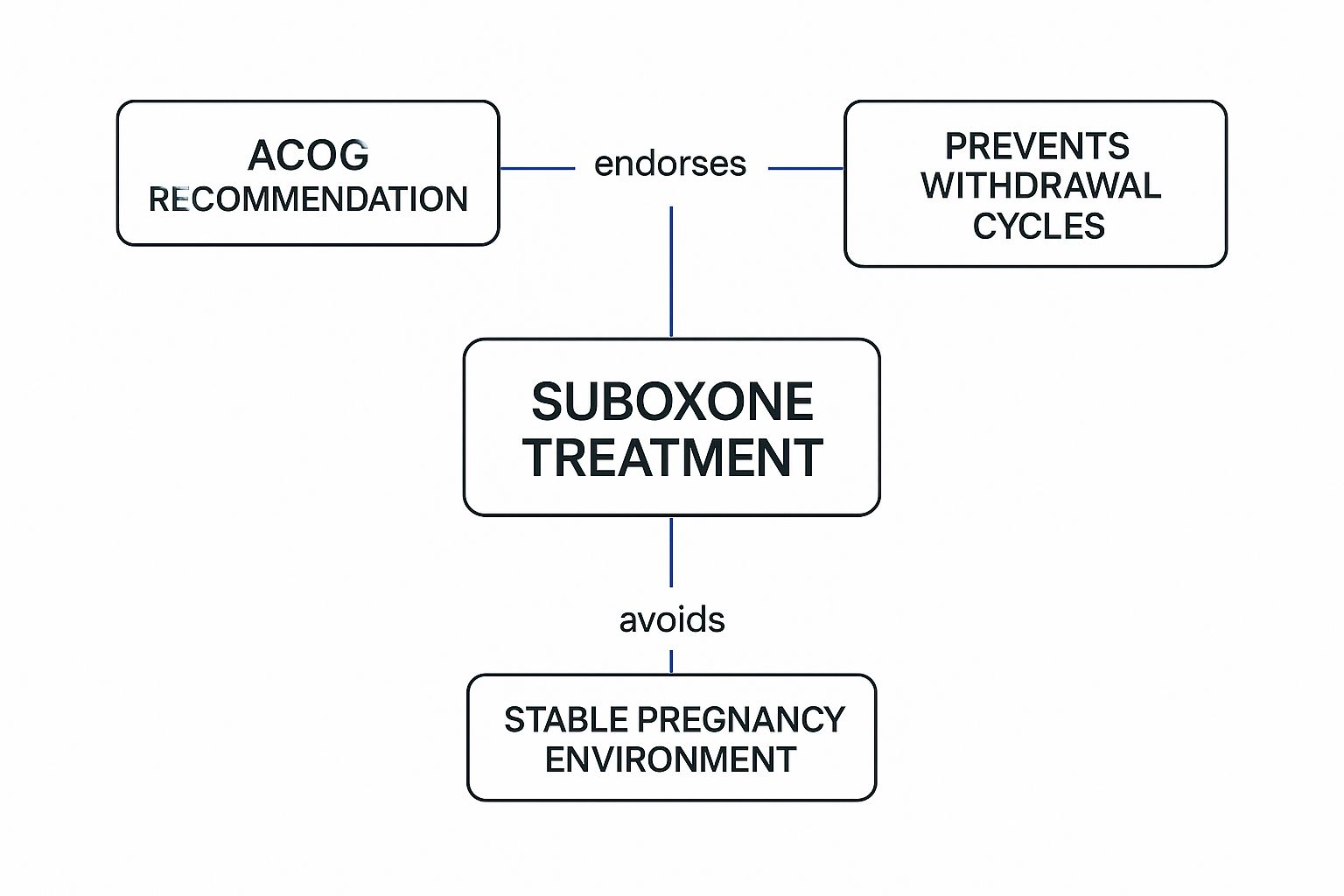
As the visual shows, ACOG’s endorsement is based on solid evidence. Using Suboxone helps prevent withdrawal and fosters the stable environment your baby needs to thrive. Choosing this path is a proactive, powerful step toward protecting your health and giving your child the best possible start in life.
To make this information even clearer, here’s a quick summary of the key points.
Suboxone in Pregnancy Quick Facts
| Aspect | Key Takeaway |
|---|---|
| Official Recommendation | Recommended by the American College of Obstetricians and Gynecologists (ACOG) as a first-line treatment. |
| Primary Goal | To create a stable environment for the fetus by preventing maternal withdrawal and relapse. |
| Risk vs. Benefit | The benefits of a stable, medically supervised pregnancy far outweigh the risks of untreated OUD. |
| Common Misconception | It is not simply "trading one addiction for another" but a therapeutic intervention to ensure safety. |
Ultimately, the consensus among medical experts is clear: Suboxone is a vital tool for achieving a healthier pregnancy and a safer outcome for both you and your baby.
How Suboxone Creates a Safer Pregnancy
To really grasp why clinicians recommend Suboxone during pregnancy, it helps to look at how it works. The medication creates a safe, stable environment for a developing baby by using two active ingredients: buprenorphine and naloxone.
Think of your brain's opioid receptors as locks. Drugs like heroin or fentanyl are like master keys that turn the lock completely, creating a powerful high. Buprenorphine is different. It's a key that fits but only turns the lock part-way—just enough to keep the receptor satisfied. This clever action is what stops the agonizing withdrawal symptoms and silences the overwhelming cravings.
A Stable Environment for Mother and Baby
This stability is everything when you're pregnant and dealing with Opioid Use Disorder (OUD). Active opioid use forces your body onto a dangerous rollercoaster, swinging between intoxication and withdrawal. That stressful cycle is directly passed on to the fetus.
Suboxone brings that rollercoaster to a halt. By keeping you on a steady, even keel, it provides a consistent and predictable environment inside the womb. That steadiness is what allows both you and your baby to thrive.
The greatest gift Suboxone gives during pregnancy is consistency. It shields the developing baby from the toxic stress of the withdrawal cycle, which is absolutely crucial for healthy growth.
With that stability in place, you can finally focus on what matters: getting good prenatal care, eating well, and preparing for your baby's arrival without the constant, exhausting fight against OUD. It clears the path for a much healthier nine months.
The Role of Naloxone: An Added Safeguard
What about the second ingredient, naloxone? It’s essentially a built-in safety feature. When you take Suboxone the right way—dissolving it under your tongue—the naloxone doesn't do anything. It just passes through your system.
Its real job is to discourage misuse. If someone were to inject the medication to try and get high, the naloxone would activate immediately and trigger severe withdrawal symptoms.
For years, doctors wondered if this naloxone component posed any risk to the baby. We now have solid evidence that it doesn't. In fact, a landmark study showed that newborns whose mothers took the buprenorphine-naloxone combination had lower rates of neonatal abstinence syndrome (NAS). The rate was just 37.4% for Suboxone, compared to 55.8% for those who took buprenorphine alone. You can read more about the findings from the JAMA Network study.
These results confirm Suboxone isn't just safe—it might even be the better option. This is a big reason why many providers choose it over Subutex, which only contains buprenorphine. To learn more, you can explore the key differences between Suboxone and Subutex explained in our guide. It all comes down to choosing the treatment that offers the most safety and support for both mother and child.
The Benefits for Both Mother and Baby
When you're pregnant, every choice feels monumental. Deciding to use Suboxone is a powerful, proactive step that benefits both you and your developing baby in incredibly important ways. For an expecting mother, the stability that Medication-Assisted Treatment (MAT) offers can completely change the pregnancy experience for the better.
By getting cravings and withdrawal symptoms under control, Suboxone frees you up to focus on what truly matters. This newfound stability often means you're better able to keep up with prenatal appointments, focus on good nutrition, and dramatically reduce the risk of relapse—one of the biggest dangers during this critical time.
Suboxone treatment isn't just about managing a substance use disorder; it's about building a foundation of stability. This consistency is one of the most powerful gifts you can give your child before they are even born.
This steady environment lets you concentrate on preparing for your baby’s arrival with peace of mind. And the positive effects? They extend directly to your baby's health right from the start.
A Healthier Start for Your Baby
For a developing fetus, the impact of a mother's stable Suboxone treatment is profound. The single biggest benefit is protecting the baby from the intense stress of withdrawal, which can cause serious, even life-threatening, complications in the womb.
It's simple: consistent, medically supervised treatment leads to better birth outcomes. Time and again, research shows that babies whose mothers are on Suboxone have a much lower risk of facing serious issues.
- Preterm Birth: This means being born too early, which often comes with a cascade of developmental challenges.
- Low Birth Weight: This is a major risk factor for health problems in infancy and beyond.
- Poor Fetal Growth: Treatment helps ensure the baby grows at a healthy, steady rate throughout the pregnancy.
These aren't just abstract ideas; the data is compelling. A major U.S. study looked at 14,463 mothers and their newborns. It found that the rate of adverse pregnancy outcomes plummeted from 30.8% in untreated mothers to just 25.4% in those on buprenorphine. That included a 5.3 percentage point lower risk of preterm birth, a clear and direct benefit of treatment. You can discover more insights about these pregnancy outcomes in the full study.
In the end, choosing Suboxone during pregnancy is a life-affirming decision. It's a way to actively protect your own health while giving your baby the stable, nurturing environment they need to thrive from day one.
Understanding Neonatal Opioid Withdrawal Syndrome
One of the most important parts of deciding to take Suboxone while pregnant is having an open and honest conversation about the potential risks. For most expecting mothers, the main concern is a condition called Neonatal Opioid Withdrawal Syndrome (NOWS).
It's completely understandable to feel a jolt of fear at the word "withdrawal." But it’s so important to shift your perspective on what NOWS actually means in this situation. It isn't a failure or a sign something went wrong; it's an expected—and very manageable—part of a successful, life-saving treatment plan.
NOWS happens simply because the baby, who was exposed to Suboxone in the womb, is no longer receiving it after birth. Their little body needs time to adjust, just like an adult's would. This adjustment period can bring on symptoms like fussiness, trouble feeding, and sometimes tremors. You can learn more about the different kinds of withdrawal symptoms in our detailed guide.
How We Manage NOWS in Newborns
Your delivery team will be ready for this. They'll be watching your baby closely for any signs of NOWS, following well-established protocols to keep your little one comfortable and safe.
The great news? Studies consistently show that when NOWS is connected to Suboxone, the symptoms are usually less severe and require shorter hospital stays compared to withdrawal from other opioids like heroin, or even methadone.
Think of NOWS not as a problem, but as the final, manageable step in a healthy pregnancy journey. Your choice to be on Suboxone has already protected your baby from far greater risks.
Doctors and nurses will always start with gentle, non-medical care. This includes things like swaddling, keeping the environment calm and quiet, and encouraging plenty of skin-to-skin contact. If these comforting measures aren't quite enough, they can provide small doses of medication to ease your baby's symptoms until their system has fully adjusted.
Suboxone and Birth Defect Concerns
It’s a common fear for any expecting parent: could this medication harm my baby? When it comes to Suboxone, extensive research provides a reassuring answer.
Suboxone does not increase the risk of birth defects.
Multiple studies have found that the rate of birth defects in babies exposed to Suboxone is between 3.2% and 3.5%. This is exactly the same as the rate seen in the general population. The data also confirms that other key health markers—like birth weight, length, and head circumference—are all well within the normal range.
This powerful evidence shows that using Suboxone as prescribed is a safe and effective way to manage opioid use disorder during pregnancy. You can read the full research about these safety findings to get a deeper understanding.
Ultimately, keeping an open line of communication with your doctor is the most important thing you can do. Talk about any side effects you're feeling and make sure you understand their plan for managing NOWS after birth. This teamwork ensures both you and your baby get the best possible care, every step of the way.
Building Your Pregnancy Care Team

Managing a healthy pregnancy while on Suboxone is absolutely a team sport. Think of it as assembling a personal board of directors for your health and your baby’s well-being. Each expert brings a unique and crucial perspective to the table, and together, they ensure you have a strong, stable foundation for the months ahead.
This collaborative approach isn't just a nice idea—it's your safety net. With a solid team in place, you can focus on your health with confidence, knowing that every detail is being looked after by professionals who get it.
Your Core Medical Trio
At the heart of your support system, you'll want three key specialists. The real magic happens when these professionals are in regular communication with one another, creating a seamless experience for you.
- Your OB/GYN: This is your go-to expert for all things pregnancy. They'll track your baby's growth and your health, handling everything from routine ultrasounds to planning your delivery.
- Your MAT Provider: This is the specialist who manages your Suboxone treatment. Their job is to keep your dosage stable and effective, making any necessary tweaks as your body changes throughout pregnancy, all while supporting your recovery journey.
- Your Baby's Pediatrician: It’s incredibly helpful to choose a pediatrician before the baby arrives. This gives them a chance to connect with your hospital team and be ready to carefully monitor your newborn for Neonatal Opioid Withdrawal Syndrome (NOWS) right from the start.
Assembling a strong, communicative care team is the single most empowering step you can take. It transforms your journey from a solo effort into a supported partnership focused on a healthy outcome.
Creating a Coordinated Birth Plan
With your team assembled, it's time to create a birth plan. This goes way beyond your preferences for music or lighting in the delivery room. It's a vital communication tool that maps out how your Suboxone treatment will be handled during and after birth.
Your plan should clearly answer a few key questions:
- How will labor pain be managed effectively, taking your Suboxone dose into account?
- Which staff members at the hospital will be responsible for monitoring the baby for NOWS?
- What is the hospital's protocol for promoting skin-to-skin contact and supporting breastfeeding?
Having this plan ensures everyone—from the delivery nurses to the pediatric specialists—is on the same page. It’s how you advocate for yourself and your baby, setting the stage for a smooth and compassionate hospital experience. Family support is also a huge part of this process; learn more by understanding recovery resources for families and discovering how they can be involved.
Frequently Asked Questions
When you're expecting and also dealing with Opioid Use Disorder, it's natural to have a lot of questions. Let's tackle some of the most common concerns head-on, giving you the clear, straightforward answers you need to feel confident about your treatment path.
Will Taking Suboxone Hurt My Unborn Baby?
No. When taken exactly as your doctor prescribes, Suboxone is not only safe but highly recommended. The real harm to a developing baby comes from untreated OUD—the rollercoaster of withdrawal and the constant, life-threatening risk of overdose. Time and again, studies have shown that Suboxone does not increase the risk of birth defects. In fact, by stabilizing your body and avoiding the stress of withdrawal, it creates a much healthier environment for your baby, leading to better outcomes like a lower chance of premature birth and better fetal growth.
Can I Start Suboxone After I Find Out I’m Pregnant?
Yes, absolutely. Starting Medication-Assisted Treatment (MAT) as soon as you can is one of the best things you can do for both yourself and your baby. Getting on a stable dose of Suboxone right away provides the safe, consistent environment your baby needs to thrive. Of course, this has to be managed by a qualified doctor. They will start you on the right dose and carefully monitor you and your baby throughout the pregnancy to ensure everything is going smoothly.
Is Suboxone a Better Choice Than Methadone During Pregnancy?
Both Suboxone and methadone are considered the gold standard for treating OUD in pregnancy. The "better" option really depends on your personal health history and situation, which is a conversation to have with your doctor. That said, some studies suggest that Suboxone might have a slight edge. Babies whose mothers used Suboxone often seem to have a milder form of Neonatal Opioid Withdrawal Syndrome (NOWS) and may need less time in the hospital compared to those whose mothers used methadone. The most critical decision is simply choosing to start and stick with a treatment program.
Can I Breastfeed While Taking Suboxone?
Yes, breastfeeding is generally encouraged if you are stable in your recovery on Suboxone. A tiny, almost insignificant amount of the medication finds its way into breast milk. Medical experts are in agreement: the incredible benefits of breastfeeding for your baby—from nutrition to bonding—far outweigh any minimal risk. It can even help soothe a baby going through NOWS. Just make sure your doctor and your baby's pediatrician are in the loop and working together.
This journey takes incredible strength, but you don’t have to walk it by yourself. For expert guidance and a network of support, StartDrugRehab.com offers trusted information and connections to caring professionals who can help. Find the right path for you and your baby at https://startdrugrehab.com.