Walking into rehab for the first time is a huge deal. It’s a moment packed with a mix of fear, anxiety, and a sliver of hope. That first day isn't about jumping straight into intense therapy; it’s about setting the stage for everything that comes next. The team’s main goal is to get to know you—your story, your health, and your reasons for being there—so they can build a treatment plan that actually works for you.
Think of it as creating a safe and stable launchpad for your recovery.
Key Takeaways
- Structure is Healing: Rehab replaces the chaos of addiction with a highly structured daily routine. This predictable schedule helps create a stable environment where you can focus entirely on healing.
- Therapy is the Core: The heart of rehab is a combination of individual therapy (like CBT) to address personal issues and group therapy to build community and reduce feelings of isolation.
- Community is Key: Living alongside peers who understand your struggle is a powerful part of recovery. This shared experience breaks down shame and builds a vital support network.
- Rehab is a Starting Point: Completing a rehab program isn't the end of recovery; it's the beginning. A good program provides you with the tools, skills, and an aftercare plan to build a lasting sober life.
Your First Day: A Courageous Step Into Recovery
Taking that first step through the doors is, for many, the single hardest part of the entire process. The unknown is terrifying, but knowing what’s coming can replace a lot of that anxiety with a sense of purpose. Your arrival kicks off a structured, supportive experience designed from the ground up to help you heal.
When you get there, staff will welcome you and walk you through the first few steps. There's some paperwork, of course, and a chat about your medical history. Being open and honest here is incredibly important—it’s how the team makes sure they can keep you safe and comfortable. This isn't an interrogation; it's a completely confidential conversation.
What To Expect During Intake
The intake process is very thorough but also very respectful. It’s designed to make your transition into the program as smooth as possible and usually involves a few key steps:
- Medical Evaluation: A doctor or nurse will give you a health assessment. This helps them get a handle on your physical health and prepare to manage any withdrawal symptoms safely. You can get a better sense of what this initial period can feel like by reading our guide on what withdrawal symptoms are.
- Psychological Assessment: You’ll sit down with a counselor or therapist to talk about your mental health, your history with substance use, and the personal struggles you’re facing. This conversation is the foundation for your individual therapy plan.
- Baggage Check: To maintain a safe, trigger-free space for everyone, your bags will be checked for any prohibited items. It’s a standard procedure that helps protect the whole community.
"The first day of rehab isn't about diving into your deepest traumas. It's about safety, assessment, and building a foundation of trust. It's the 'welcome home' to a new way of living."
Once the paperwork and medical checks are done, you’ll usually get a tour of the place. You'll see where you’ll be sleeping, the common areas, and the rooms where therapy sessions happen. You'll also meet some of the staff and other residents—people who know exactly what you're feeling because they’re walking the same path.
These first connections are where that powerful sense of community, so crucial for recovery, begins to form. Day one is your brave first step toward a whole new life.
The Rhythm of Recovery: A Typical Day in Rehab
If you're wondering what rehab is really like, the best way to understand it is to look at the daily schedule. The chaotic, unpredictable life of active addiction is intentionally replaced by a structured, supportive routine. This isn't about being controlled; it's about creating a stable, predictable environment where your mind and body can finally begin to heal.
Every day is carefully planned out, creating a healthy balance between intensive therapy, personal reflection, skill-building, and connecting with others. This structure is a fundamental part of the treatment itself, allowing you to focus completely on getting well without the constant distractions and triggers of your old environment.
Early Mornings and Mindful Starts
Your day will almost always start early, usually around 6:30 AM or 7:00 AM. After waking up, the first order of business is a healthy, nourishing breakfast to fuel your body for the work ahead. Many programs then immediately transition into a mindfulness practice, like a guided meditation session or some gentle yoga.
This quiet, intentional time helps you get centered, manage stress, and set a positive tone for the rest of the day. It’s a chance to check in with your thoughts and emotions in a safe, calm space—a skill that becomes incredibly valuable in long-term recovery.
Soon after, you’ll likely head to your first group therapy session of the day. This is a cornerstone of rehab, where you share your experiences and listen to others who truly understand what you're going through. These sessions break down the feelings of isolation that addiction thrives on and build a powerful sense of community.
The infographic below shows how the first day sets the stage for this new routine, making the transition feel simple and welcoming.
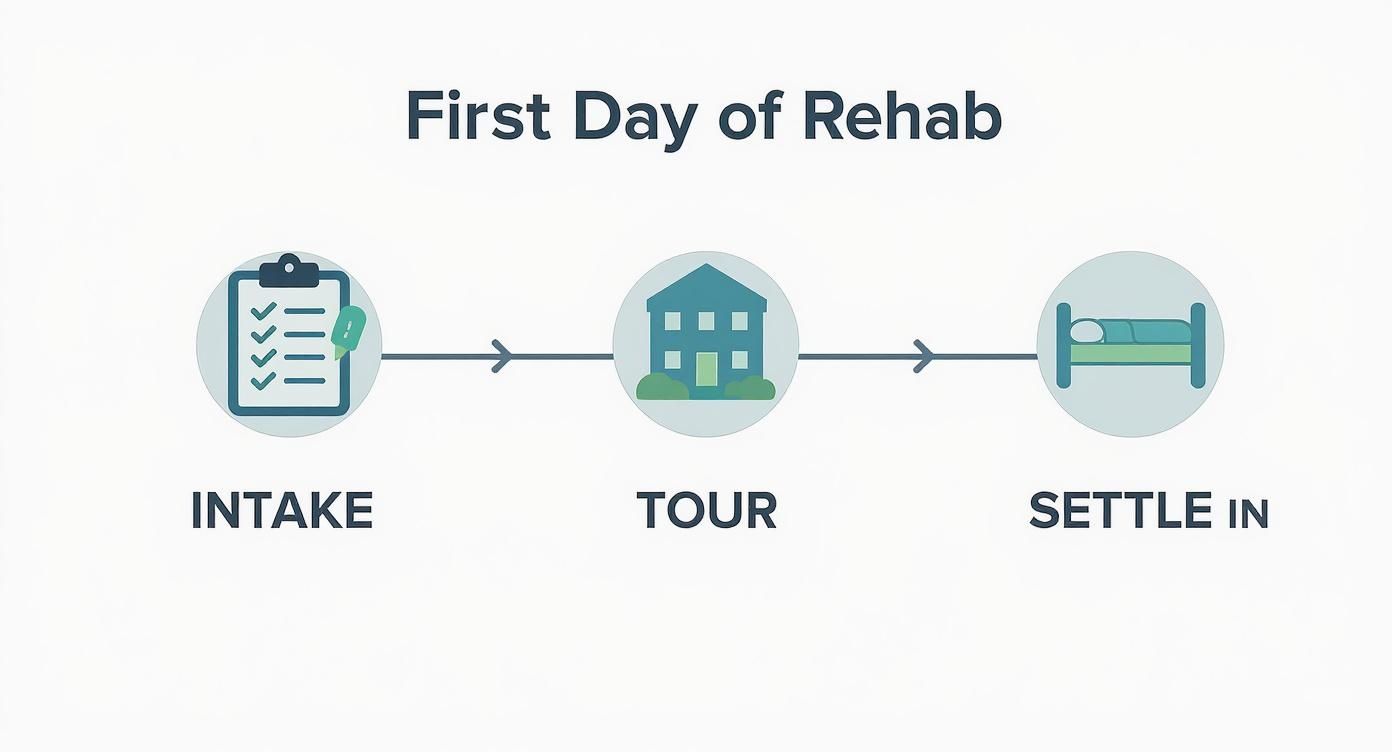
As you can see, the intake process is designed to ease you into the program, leading you straight into the structured rhythm of daily life.
To give you a clearer picture, here’s what a typical day might look like.
Sample Daily Schedule in a Residential Program
This table breaks down a common schedule in a residential program. While every facility is different, this gives you a good sense of the flow and the balance between different types of activities.
| Time Slot | Activity | Purpose |
|---|---|---|
| 7:00 AM | Wake-Up & Breakfast | Start the day with routine and proper nutrition. |
| 8:00 AM | Meditation or Yoga | Center the mind and set a positive intention. |
| 9:00 AM | Group Therapy | Share experiences and build community support. |
| 11:00 AM | Individual Therapy | One-on-one session to address personal root causes. |
| 12:30 PM | Lunch | Nutritious meal and a break from intensive work. |
| 2:00 PM | Educational Workshop | Learn about relapse prevention or coping skills. |
| 4:00 PM | Recreational Therapy | Activities like art, music, or fitness for healing. |
| 5:30 PM | Dinner | Community meal and social time. |
| 7:00 PM | 12-Step Meeting | Peer support in a structured format (e.g., AA/NA). |
| 8:30 PM | Free Time / Journaling | Quiet reflection, reading, or personal tasks. |
| 10:00 PM | Lights Out | Ensure adequate rest for physical and mental recovery. |
This schedule shows how every part of the day has a purpose, guiding you toward building a healthier lifestyle one step at a time.
Afternoons of Therapy and Skill-Building
After a healthy lunch, the afternoons are typically reserved for deeper, more focused therapeutic work. This is often when you'll have your individual therapy sessions. In these private meetings, you get to work one-on-one with a licensed therapist, digging into the personal issues and root causes behind your addiction and crafting coping strategies that work specifically for you.
Beyond that, afternoons are packed with specialized workshops and educational groups. These aren't boring lectures; they're practical sessions covering essential topics like:
- Understanding Addiction: Getting a handle on the science of how substance use affects the brain and body.
- Relapse Prevention: Learning to spot your personal triggers and building a solid plan to navigate them.
- Life Skills: Developing practical tools for healthy communication, conflict resolution, and managing stress without substances.
This highly structured approach is a hallmark of both residential and outpatient treatment. Of course, how that structure is implemented varies, so it's worth taking a moment to read our detailed guide on inpatient vs. outpatient rehab.
Evenings are for winding down. After dinner, you might have another group meeting, like a 12-step fellowship, followed by some quiet time for journaling or reading. Lights-out happens at a consistent, reasonable hour every night, ensuring your body gets the deep rest it needs to heal. It’s this steady, predictable rhythm that makes rehab such a powerful and effective place for real change.
The Core of Healing: Therapies That Build a New Foundation
If the daily schedule is the scaffolding of recovery, then therapy is the essential work of laying a new, solid foundation for your life. This is where the real change happens. It’s where you dig in, get honest, and start developing the insights and skills to understand your addiction and finally move forward.
This isn't just about stopping. It's about fundamentally changing how you think, feel, and react to life's curveballs. The goal is to give you a whole new toolbox for navigating the world without falling back on old, destructive habits.
Unpacking Your Thoughts with Individual Therapy
One-on-one therapy is one of the most powerful parts of any good rehab program. This is your time. It’s a dedicated, confidential space to work with a trained counselor and explore the personal roots of your addiction.
You’ll likely work with powerful methods like Cognitive Behavioral Therapy (CBT), a really practical approach to rewiring your brain. CBT helps you spot, challenge, and reframe the negative thought patterns that keep you stuck. For instance, you might learn to catch an all-or-nothing thought like, "I slipped up, so I might as well give up completely." CBT gives you the tools to change that into something more realistic: "I made a mistake, but I can learn from this and get right back on track."
These private sessions are a judgment-free zone where you can finally talk about past trauma, deep-seated fears, and personal struggles. This work is absolutely critical for understanding what rehab is really like because it gets to the why behind the substance use, helping you build self-awareness and personalized coping skills.
"Therapy in rehab is like learning a new language for your emotions. It gives you the vocabulary to understand what you're feeling and the grammar to express it in healthy, constructive ways."
Finding Strength in Shared Experiences
While individual therapy is deeply personal, group therapy offers something entirely different but just as vital: community. Addiction thrives in isolation and tricks you into believing you're the only one going through this. Group sessions completely shatter that illusion.
In a group led by a professional, you share your own story and hear from others who are walking the same path. It creates an incredible environment of mutual support and accountability. There’s a profound sense of relief that comes from hearing someone else put words to a feeling you thought was yours alone. It’s incredibly validating.
These sessions are usually focused on specific, practical topics, such as:
- Developing Communication Skills: Finally learning how to voice your needs and set healthy boundaries.
- Managing Triggers: Brainstorming real-world strategies as a group for handling the people, places, and things that set off cravings.
- Building Trust: Practicing vulnerability in a safe space helps rebuild the trust that addiction so often destroys.
Healing the Whole Person
Modern rehab programs get it: recovery isn't just a mental game. It involves your mind, body, and spirit. This is where holistic and evidence-based therapies come into play, treating you as a whole person. If you want to go deeper on this, our guide on evidence-based addiction treatment is a great resource.
These well-rounded approaches often include things like:
- Mindfulness and Meditation: Practices that teach you how to stay grounded in the present moment and manage stress without reacting on impulse.
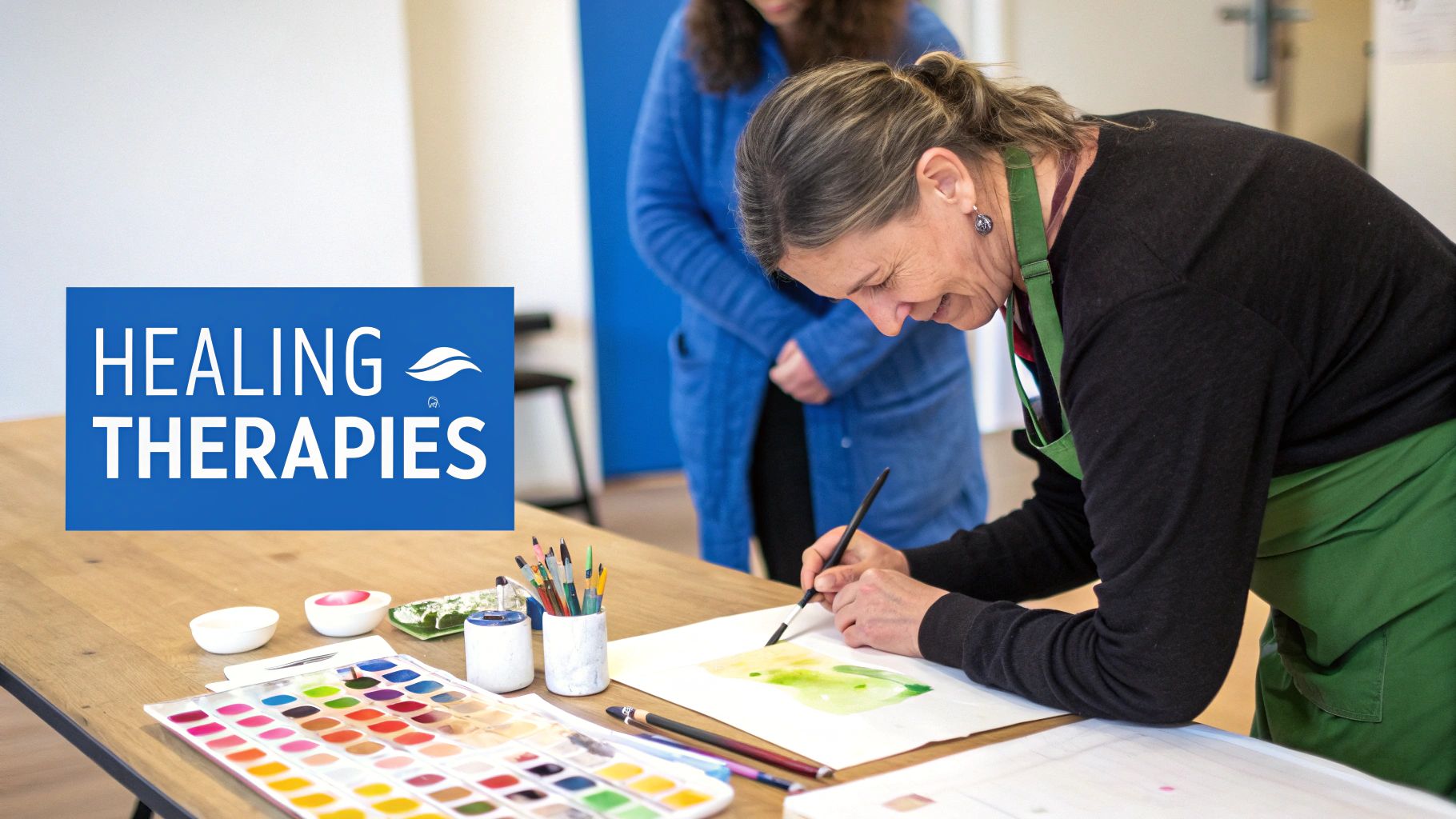
- Art or Music Therapy: Creative outlets that help you express complex emotions that are often too difficult to put into words.
- Fitness and Recreation: Getting your body moving is proven to slash cravings, boost your mood, and help you feel physically strong again.
It's also crucial to know that many people struggling with addiction are also dealing with co-occurring disorders like anxiety, depression, or PTSD. This is what’s known as a dual diagnosis. The best treatment programs address both conditions at the same time, making sure one doesn't derail progress with the other. This integrated approach is the key to building a recovery that’s not just sober, but truly resilient and lasting.
Community, Connection, and the Rules That Hold It All Together
Beyond the daily schedule of therapies and activities, the very environment of a rehab center is carefully designed to support your recovery. Think of it as a safe harbor, a place intentionally walled off from the triggers, temptations, and general chaos of the outside world. This isn't an accident; it's a core part of the healing process.
To create this safe space, there have to be clear rules and boundaries. These aren't there to punish you—they're there to protect you and everyone else in the program.
Why Rules Are So Important
Most facilities, for example, have strict policies around using your phone or accessing the internet, especially when you first arrive. This isn't about cutting you off from loved ones; it's about minimizing distractions and preventing contact with people or situations that could derail your hard work. Visitor schedules are also structured for the same reason—to ensure family involvement is a positive force, not a complication.
Every rule is put in place to help you focus completely on one thing: getting well.
Finding Strength in Shared Experience
While the rules provide the structure, the real magic happens in the community. Living alongside people who are walking the same difficult path is an incredibly powerful thing. For maybe the first time in a long time, you're surrounded by individuals who truly understand what you're going through, without an ounce of judgment.
This shared understanding shatters the deep sense of isolation that almost always comes with addiction. You start to feel it during late-night conversations in the common room, in the raw honesty of a group therapy session, and even just sharing a meal. You realize you are not alone.
This peer support system becomes a lifeline, offering:
- Mutual encouragement: You'll find yourself celebrating someone else's small win and getting a pat on the back for your own.
- Gentle accountability: Your peers will help you stay on track, not with criticism, but with a simple, "Hey, you got this."
- Practical wisdom: You learn real-world coping skills from people who are just a few steps ahead of you on the journey.
The bonds you build in rehab are often some of the most genuine and supportive you'll ever have. They're built on a foundation of raw honesty and a shared goal of creating a better life.
This sense of community is what makes rehab work. The professional therapy is absolutely vital, but the day-in, day-out support from people who just get it is irreplaceable.
Sadly, not everyone who needs this kind of healing environment can get it. Advocacy reports estimate that over 50% of people who need rehabilitation services worldwide never receive them, pointing to a major gap in global health. You can learn more about this in the global health imperative report about the need for rehabilitation for all.
Navigating the Emotional Journey of Recovery

Recovery isn’t just about stopping the use of a substance; it’s a profound emotional journey, and anyone considering rehab needs to understand this part of the process. It's a rollercoaster, plain and simple. You'll navigate some incredibly challenging lows, but you’ll also experience some of the most meaningful, life-affirming highs imaginable.
When you enter treatment, you’re finally forced to sit with the feelings you may have spent years trying to numb or escape. That initial thawing-out period can be intensely uncomfortable and even overwhelming, but it’s where real healing begins.
Confronting Difficult Feelings
In those first few days and weeks of therapy, expect a messy mix of emotions. It's common to feel resistance, anger, and a raw sense of vulnerability. Opening up and sharing your story—maybe for the very first time—can feel terrifying. You might find yourself becoming defensive or even resentful when therapists and others in your group gently question beliefs you've held onto for years.
This is all completely normal. Think of it as an emotional detox. Your body is purging the physical toxins, and now your mind and spirit have to do the same, clearing out the shame, guilt, and fear that have been fueling the addiction.
Therapy in rehab creates a safe container for all of this. It’s a space where you can be vulnerable and know you'll be met with understanding, not judgment. This is what allows you to finally process difficult experiences without reaching for a substance.
This stage is absolutely critical for building emotional resilience. It’s where you learn, moment by moment, that you can handle discomfort and come out stronger on the other side.
From Breakdown to Breakthrough
The emotional work in rehab isn't all pain and struggle, though. After pushing through that initial wall of difficulty, many people experience incredible breakthroughs. These are the "aha!" moments—the instant a new perspective just clicks, or when you finally connect a past trauma to a present-day behavior.
These moments are deeply rewarding and often bring an overwhelming sense of relief and hope. They're the turning points that clear the path for true self-forgiveness and help you start rebuilding your sense of self-worth. You begin to actually learn and practice healthy ways to cope with stress, sadness, and even joy.
This process involves a few key emotional shifts:
- Learning Emotional Regulation: You’ll finally get the tools to identify what you’re feeling and respond in a healthy way, rather than just reacting on impulse.
- Building Genuine Self-Esteem: Instead of looking for validation from others, you start to build a sense of worth from the inside out, based on your own progress and character.
- Developing Empathy: Hearing the stories of others in group therapy does something amazing—it helps you develop a deeper empathy for them, which in turn helps you find a little more compassion for yourself.
Ultimately, the emotional journey through rehab is about rediscovering who you are without the substance. It's about peeling back the layers that addiction built up to find the authentic, capable person who has been there all along. The process is intense, but the reward is a kind of emotional freedom that lays the foundation for a truly fulfilling life.
Taking that first step is often the hardest part, but you absolutely don't have to figure it all out by yourself. At StartDrugRehab.com, we're here to provide the support, resources, and connections you need to find the right path forward.
Explore our guides and find a treatment center that feels right for you or your loved one today.
Frequently Asked Questions About Rehab
What is a typical day in rehab like?
A typical day is highly structured to create a stable environment for recovery. It usually starts early with breakfast, followed by a mix of group therapy, individual counseling, educational workshops, and holistic activities like yoga or art therapy. Evenings often include support group meetings and time for personal reflection.
Can I have my phone or contact my family?
Most centers limit access to phones and the internet, especially during the initial phase of treatment, to help you focus entirely on recovery. However, family involvement is seen as crucial, so structured contact with loved ones through scheduled calls or visits is almost always part of the program.
What should I pack for my stay in rehab?
Facilities provide a specific packing list, but it generally includes comfortable clothing, personal toiletries, and any prescribed medications. Items that could be distracting or compromise the safety of the community, such as electronics or non-prescribed substances, are typically not allowed.
How long does a typical rehab program last?
The length of stay varies based on individual needs. Common program lengths are 30, 60, or 90 days. The ideal duration depends on factors like the severity of the addiction, the presence of any co-occurring mental health disorders, and your personal progress through the program.
What happens after I complete the rehab program?
Finishing rehab is the start of lifelong recovery. A good facility will work with you to create a comprehensive aftercare plan. This plan is your guide for staying sober and may include continuing therapy, joining support groups like AA/NA, or transitioning to a sober living environment.