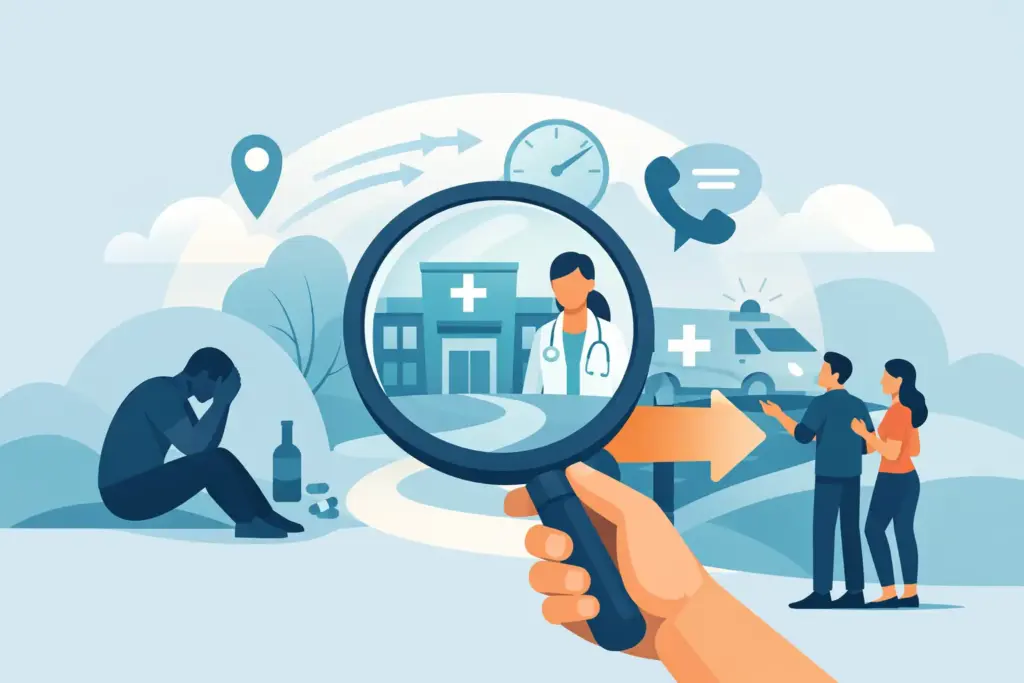
When someone is ready for treatment, the window to act can be short. Fear, withdrawal, denial, money concerns, and family stress can all delay the next step. If you need to find addiction treatment help, the goal is not to research every program in America. The goal is to get the right level of care quickly and safely.
That pressure is real. Whether you are looking for yourself, your spouse, your adult child, or a parent, you may be trying to make a serious medical and emotional decision while running on very little sleep. You do not need to have every answer before you reach out. You just need a starting point and a clear next move.
Find addiction treatment help by starting with urgency
The first question is simple: is this an emergency? If the person has trouble breathing, is unconscious, has chest pain, is having seizures, is severely confused, or may be at risk of overdose, call 911 immediately. Emergency care comes before rehab planning.
If the situation is not a 911 emergency but still feels urgent, same-day guidance matters. That can include heavy alcohol use, opioid dependence, severe withdrawal symptoms, relapse after a period of sobriety, or behavior that has become unsafe at home. In these moments, waiting a week to “think it over” can make things worse.
Many people lose time because they start by comparing amenities instead of clinical needs. A private room, a gym, or a beautiful campus may sound reassuring, but the more important questions are whether detox is available, whether the program can admit quickly, and whether it is equipped for the substance use and mental health issues involved.
What kind of treatment does this person actually need?
This is where many families get stuck. Addiction treatment is not one single service. It is a range of care options, and the right fit depends on the person’s substance use, physical health, mental health, relapse history, and daily environment.
Detox
Detox is often the first step when someone is physically dependent on alcohol, opioids, benzodiazepines, or other substances that can cause withdrawal. Detox is designed to help manage withdrawal safely. It is not the full treatment plan by itself, but it can be the safest way to begin.
For some substances, trying to quit alone at home can be dangerous. Alcohol and benzodiazepine withdrawal, in particular, can become life-threatening. Opioid withdrawal is usually not fatal, but it can be so intense that people return to use quickly just to stop the symptoms. If you suspect physical dependence, ask specifically whether medical detox is needed.
Inpatient or residential rehab
Inpatient treatment gives a person a structured setting away from daily triggers. This may be a strong option if there have been repeated relapses, unstable housing, severe cravings, co-occurring mental health concerns, or a home environment that makes sobriety hard to maintain.
Residential care is not automatically “better” than outpatient care. It is better for some people and unnecessary for others. The right question is whether the person needs 24-hour support and a controlled environment to stabilize.
Outpatient treatment
Outpatient care allows a person to live at home while attending therapy and treatment services on a schedule. This can work well for people with strong support at home, lower medical risk, work or caregiving responsibilities, or a treatment team that believes they can stay safe without round-the-clock supervision.
There are different levels of outpatient care. Some programs meet a few times a week, while others are more intensive. If someone has tried basic outpatient counseling before and kept using, they may need a higher level of structure this time.
How to choose a program when everything feels overwhelming
The easiest mistake is calling one center, hearing a polished pitch, and assuming the search is over. Some programs may be a good fit. Others may not. A short conversation can reveal a lot if you ask direct questions.
Ask about admission today, not eventually
If someone is ready now, ask whether an assessment can happen immediately and whether a bed or placement is actually available. A great-sounding program that cannot admit for several days may not be the best option in a crisis.
Ask what substances and conditions they treat
Not every facility handles every situation well. Ask whether they regularly treat alcohol, opioids, meth, prescription drug misuse, or multiple substances. Also ask whether they can manage anxiety, depression, trauma, or other mental health concerns at the same time.
Ask what detox support looks like
Do not assume detox is included. Some programs provide medical detox on site. Others require a separate detox placement first. That distinction matters because it affects timing, transportation, and safety.
Ask about insurance, cost, and payment before admission
Money can stop families from acting, even when help is available. Ask what insurance is accepted, what the likely out-of-pocket cost will be, and whether preauthorization is required. If someone is uninsured, ask about self-pay options or alternative placements. Clear cost information reduces panic and helps you make a realistic decision quickly.
When a loved one says no
This is one of the hardest parts of trying to find addiction treatment help. You may be ready. They may not be. That does not mean you are powerless.
Start by speaking plainly. Focus on what you are seeing: missed work, dangerous mixing of substances, withdrawal symptoms, driving impaired, disappearing for long stretches, or changes in mood and behavior. Avoid long lectures and arguments about character. Keep the conversation centered on safety and treatment.
If the person refuses care, you can still gather information, verify insurance, ask about admission steps, and prepare for the moment they become willing. Many admissions happen after a crisis, a relapse, a family boundary, or a health scare. Preparation can turn that moment into action instead of another delay.
If minors are involved, or if the person cannot make safe decisions due to severe impairment, the options may be different. In those cases, getting immediate guidance is especially important.
Find addiction treatment help without getting lost in jargon
A lot of treatment language sounds technical when you are already under stress. You do not need to become an expert overnight. You just need to know what matters most.
An assessment is a conversation used to determine what level of care may fit. Dual diagnosis means the program addresses substance use and mental health together. Aftercare refers to the support that follows primary treatment, such as therapy, peer support, relapse prevention planning, or sober living.
What matters is not memorizing every term. What matters is making sure the program can safely take the person from where they are now to where they need to be next.
What to have ready before you call
You do not need paperwork perfectly organized, but a few details can speed things up. Try to have the person’s age, the substances being used, how often they are used, when they were last used, whether withdrawal symptoms have started, any current medical or mental health diagnoses, and insurance information if available.
If you do not know all of that, call anyway. Families often hesitate because they feel unprepared. A good support team can help you sort through missing details and focus on the safest next step.
Why fast action matters
Addiction rarely improves because people wait. Motivation changes. Withdrawal gets worse. A person who says yes this morning may say no tonight. Someone who looks stable may be at risk after one more binge, one more pill, or one more return to fentanyl-laced drugs.
That is why a clear path matters more than endless research. If you are trying to compare every option alone, the process can feel impossible. Guided support can help you narrow down choices, understand what level of care makes sense, and move toward admission faster.
If you need help now, do not try to carry the whole decision by yourself. StartDrugRehab.com exists to help people move from confusion to action with support, treatment guidance, and immediate next-step help.
You do not have to know exactly how recovery will unfold today. You only have to take the next step while the chance to get help is still open.