The 12 step spiritual principles aren't a set of religious rules. Think of them more as universal guides for real personal change—they're the engine that makes each of the 12 Steps actually work. Concepts like honesty, hope, faith, and humility become a practical toolkit for rebuilding your life, not some abstract dogma.
Key Takeaways
- Principles are the "How," Steps are the "What": The 12 Steps provide a clear action plan for recovery, while the 12 spiritual principles (like Honesty, Hope, and Courage) are the internal virtues and attitudes you cultivate by taking those actions.
- Spirituality, Not Religion: The term "spiritual" is intentionally broad. It refers to personal growth and connecting with a purpose larger than oneself, not adherence to a specific religious doctrine. Your "Higher Power" can be whatever provides you strength and hope.
- A Progressive Journey: The principles are designed to be worked in order, building on each other. The journey starts with radical honesty and surrender, moves into character-building and mending relationships, and culminates in a life of daily maintenance and service to others.
- Practical Tools for Life: Beyond addiction, these principles offer a universal framework for navigating life's challenges, improving relationships, and building a life of integrity, purpose, and peace.
Unpacking the 12 Step Spiritual Principles
The 12 step spiritual principles are the core ideas that give the 12 Steps their true power. While the Steps themselves lay out a clear path of action, the principles are the internal attitudes and virtues you develop as you walk that path. They are the "how" that drives the "what" of recovery.
A common misconception is that these principles are strictly religious. The truth is, they were designed to be accessible to anyone, regardless of their faith—or lack thereof. The word "spiritual" here simply points to the focus on growing as a person, connecting with others, and finding a purpose bigger than yourself.
From Action to Attitude
Each of the 12 Steps is directly connected to a core spiritual principle that brings it to life. For instance, Step One ("We admitted we were powerless over alcohol—that our lives had become unmanageable") is built on the bedrock principle of Honesty. This isn't just about not telling lies; it's about a profound, gut-level honesty with yourself about how things really are.
This marriage of a principle and a step creates a clear roadmap from inner reflection to real-world action. The success of this model is undeniable; programs like Alcoholics Anonymous (AA) have millions of members around the world. In fact, major studies have found that 12-Step Facilitation is just as effective as therapies like cognitive behavioral therapy for maintaining long-term abstinence. This is likely why a staggering 95% of inpatient alcohol treatment programs weave these principles into their care. You can review the full research from Harvard to learn more about the data behind their effectiveness.
Mapping the 12 Steps to Their Spiritual Principles
To make this connection clearer, here’s a quick-reference table that maps each Step to its underlying spiritual principle. It helps to see how the actions of the Steps are designed to cultivate specific internal virtues.
| Step | Corresponding Spiritual Principle |
|---|---|
| Step 1 | Honesty |
| Step 2 | Hope |
| Step 3 | Faith |
| Step 4 | Courage |
| Step 5 | Integrity |
| Step 6 | Willingness |
| Step 7 | Humility |
| Step 8 | Self-Discipline |
| Step 9 | Love |
| Step 10 | Perseverance |
| Step 11 | Spiritual Awareness |
| Step 12 | Service |
This table shows the progression—starting with radical Honesty and moving all the way to a life centered on Service to others. Each principle builds on the last, creating a comprehensive framework for change.
The Foundation for Change
When you start to grasp these principles, the whole recovery process becomes less intimidating. Instead of a daunting checklist, the 12 Steps transform into a guided journey of personal growth.
These principles are not about becoming perfect; they are about becoming more honest, hopeful, and willing. They are a design for living that helps restore sanity and build a life of purpose, one day at a time.
The infographic below really brings this to life, showing how the principles for the first three steps build on each other. They create the solid foundation you need for the rest of the journey.
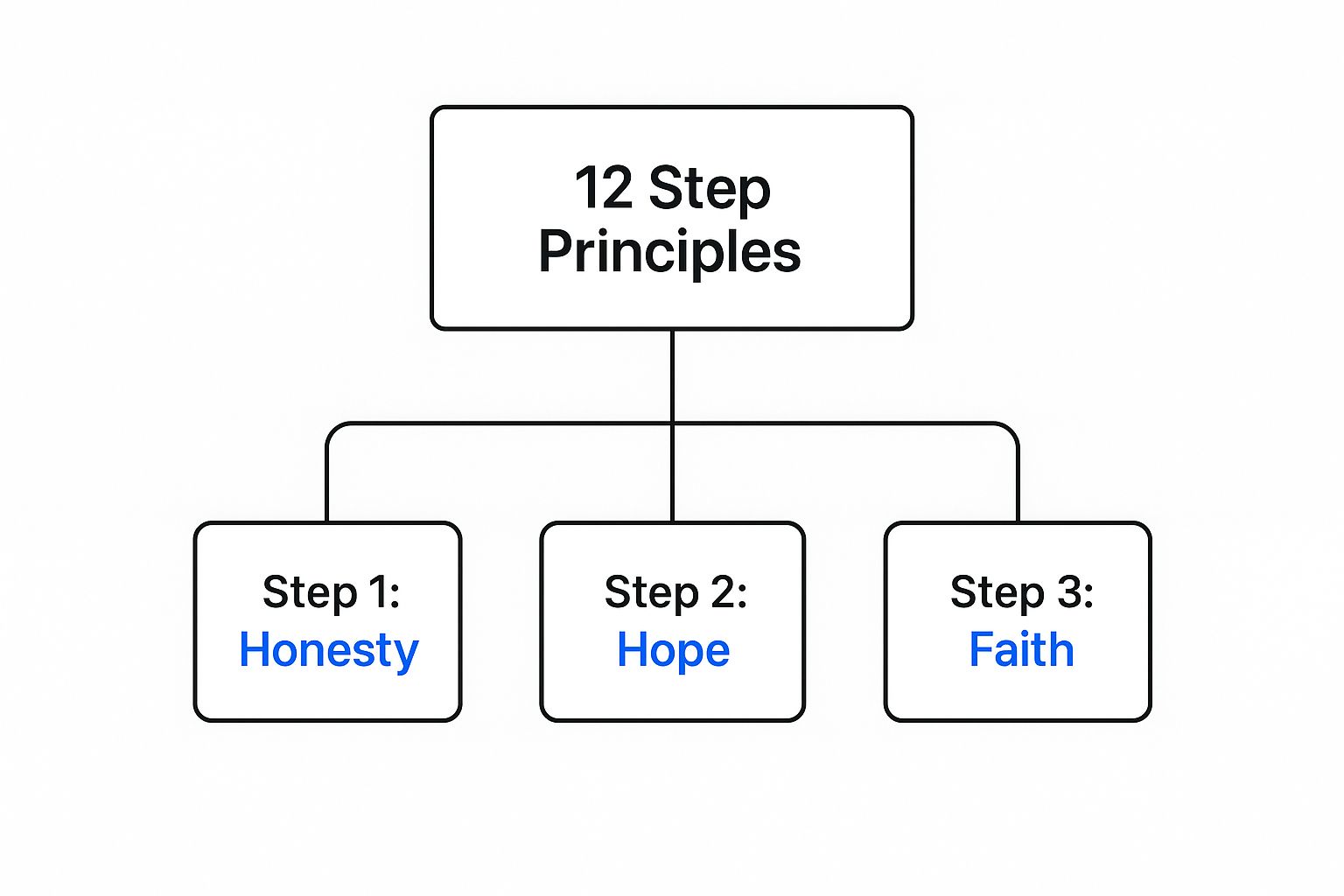
As you can see, recovery kicks off with Honesty. That raw honesty is what opens the door to Hope, which in turn makes it possible to practice Faith.
The Journey Begins: Surrender and Hope

The path into the 12 step spiritual principles doesn't start with a heroic show of strength. It begins with something far more powerful: surrender. This first phase is built on a trio of principles—Honesty, Hope, and Faith—that work in sequence to dismantle the fortress of denial and clear the ground for a new way of living.
Think of these first three principles as building blocks. You can't get to the second without laying down the first, and the third is impossible to reach without the other two firmly in place. They mark a crucial turning point—the moment we stop fighting a battle we can't win and start accepting help to build a future free from active addiction.
Step One: The Power of Radical Honesty
The very first spiritual principle is Honesty. But this isn't just about telling the truth to other people. It's a much deeper, more personal admission: that you are powerless over your addiction, and your life has spun out of control.
It’s like trying to hold a giant beach ball underwater. You might manage it for a while, but it takes every bit of your energy and focus. Your muscles scream in protest. Sooner or later, you have to let go, and the ball erupts from the surface with incredible force. That moment of letting go—that’s honesty.
This admission isn't a confession of weakness; it's the bravest thing a person can do. It's where the pretending stops and reality begins, creating the only solid ground from which you can start to rebuild.
Step Two: Finding Hope in Something Greater
Once honesty lifts the crushing weight of denial, a little bit of space opens up. Into that space comes the next principle: Hope. Step Two asks us to "come to believe that a Power greater than ourselves could restore us to sanity." After admitting you're drowning, hope is the lifeline that suddenly appears within reach.
For many people, the term "Higher Power" is an immediate stumbling block. That's why the program is designed to be incredibly flexible here. Your Higher Power can be anything you choose that offers strength beyond your own depleted self.
- It could be God, as traditionally understood.
- It could be the shared experience and strength of your recovery group.
- It could be nature, the universe, or a deep spiritual feeling.
- It could even be the 12-step process itself—trusting that it has worked for millions.
The only thing that matters is finding a flicker of belief that some force outside of your own exhausted willpower can help guide you back to clarity. That glimmer of hope is what makes the next step possible.
"Hope is the thing with feathers—that perches in the soul—and sings the tune without the words—and never stops—at all." – Emily Dickinson
This beautiful sentiment gets to the heart of Step Two. It’s about finding a reason, no matter how small, to believe that a better life isn't just a fantasy, but something you can achieve with help.
Step Three: Making the Leap of Faith
With honesty clearing the way and hope lighting the path, the third spiritual principle, Faith, invites you to start walking. Faith isn't a passive feeling; it's an active decision. Step Three is about "making a decision to turn our will and our lives over to the care of God as we understood Him."
If Honesty is admitting you can't steer the ship and Hope is spotting a lighthouse in the storm, then Faith is actually letting someone else take the helm. It’s a conscious choice to trust the process, your support system, and the Higher Power you’ve come to believe in.
This doesn't mean you need absolute, unshakable certainty. It simply asks for a willingness to act as if you believe. By taking this leap, you begin to move from a life defined by resistance to one of acceptance and trust, creating the foundation where the rest of the principles can finally take root.
Building Character Through Action and Integrity

Once you’ve grounded yourself in Honesty, Hope, and Faith, the journey through the 12 spiritual principles takes a very practical turn. It shifts from acceptance to action. This is where you start to build a solid moral foundation, laying the bricks of Courage, Integrity, and Willingness, one by one. These principles are your guides for the tough but essential work of looking in the mirror.
This is the point where recovery stops being just an idea in your head and becomes something you do. It demands a brutally honest look inward, followed by the act of sharing what you find with someone else. It's a process that helps clear away the wreckage of the past, making space for a new and more authentic way to live.
Finding the Courage for a Fearless Inventory
The first principle in this active phase is Courage. It’s the engine behind Step Four: "Made a searching and fearless moral inventory of ourselves." Let's be honest, this step can feel incredibly intimidating, but the principle of courage is what gives you the strength to walk right into it.
Think of it as finally deciding to clean out a messy, cluttered room you’ve kept locked for years. Courage isn’t about pretending you're not scared; it’s about opening the door and turning on the light, even though you’re anxious about what you’ll find. This inventory isn't a tool for self-punishment. It's an honest accounting of your past actions and behaviors—the good, the bad, and the ugly—so you can finally see what needs to change.
Taking this step requires real guts because it forces you to confront parts of yourself you’ve spent years trying to ignore. It’s a cornerstone for building a life based on self-awareness, not self-deception.
The Power of Integrity: Sharing Your Truth
Integrity flows directly from Courage. This principle is the very heart of Step Five: "Admitted to God, to ourselves, and to another human being the exact nature of our wrongs." Simply put, integrity is about making your outward actions match your inner truth.
After you've done the work of uncovering your patterns and flaws in Step Four, integrity asks you to drag them out of the shadows. Sharing your inventory with another person is a game-changer. It shatters the isolation that addiction thrives on. You quickly find that the shame and guilt that fester in darkness lose a lot of their power when brought into the light of day.
This act creates a profound sense of personal accountability. It’s one thing to admit your faults to yourself in the quiet of your own mind; it's another thing entirely to say them out loud to a trusted person. That makes it real.
This shared confession isn't just about listing off bad deeds; it's a profound exercise in vulnerability that chips away at ego and pride. It's where you stop performing and start living honestly, building a character defined by truth.
Cultivating the Willingness to Let Go
The last principles in this character-building set are Willingness and Humility, which are deeply connected to Steps Six and Seven. Step Six asks that you become "entirely ready to have God remove all these defects of character," while Step Seven involves humbly asking your Higher Power to "remove our shortcomings."
After taking a courageous inventory and sharing it with integrity, you've got a pretty clear picture of the character defects that have been running the show. Willingness is the genuine desire to finally let them go. It’s that moment you stop making excuses for destructive behavior and truly open yourself up to a different way.
This isn't about white-knuckling it and trying to "fix" yourself through sheer willpower. It's about surrender. It's an admission that your own best efforts to control these things have failed.
- Step Six (Willingness) is about opening the door to the possibility of change. You don't have to know how these defects will be removed, you just have to become willing to part with them.
- Step Seven (Humility) is about actually walking through that door. It's the humble recognition that you need help from a power greater than yourself to do what you can't do on your own.
Together, these principles set the stage for the next phase of recovery: repairing the damage from your past. By building a solid foundation of Courage, Integrity, and Willingness, you gain the self-awareness and moral fortitude needed to make meaningful amends and begin healing broken relationships. You're no longer just wishing for a different life—you're actively building one.
Mending Relationships with Humility and Justice

After all the deep, intensive work of looking inward, the 12 step spiritual principles gently turn your focus outward. It’s time to start healing the connections that were strained or broken by addiction. This is where you begin the delicate, but absolutely vital, process of repairing relationships. This whole phase is powered by Humility, Brotherly Love, and Justice—principles that shift you from internal inventory to meaningful external action.
The earlier steps laid a solid foundation of self-awareness. Now, you’re asked to take that awareness and start cleaning up the wreckage of the past. It’s not about trying to pretend things didn't happen. It's about taking full responsibility for your part and, wherever you can, bringing a sense of balance and trust back to those you've hurt.
The Driving Force of Humility
The spiritual principle of Humility is the real engine that powers this entire process. It’s tied directly to Step Seven ("Humbly asked Him to remove our shortcomings"), and it’s what gives you the strength to finally set your ego aside. Humility is that quiet, honest recognition that you aren't the center of the universe and that your choices have very real consequences for others.
Without it, any attempt to make amends can quickly turn into a self-serving performance. True humility lets you approach people with a genuine desire to listen and understand where they are coming from, instead of just defending your own point of view. It’s the one quality that makes a sincere apology possible and turns the act of making amends from a dreaded chore into a real opportunity for healing.
Taking Honest Stock with Self-Discipline
Right on the heels of humility comes the principle of Self-Discipline, which is the backbone of Step Eight: "Made a list of all persons we had harmed, and became willing to make amends to them all." This is so much more than a quick mental checklist. It's a disciplined and painfully honest accounting.
Putting this list together means looking at your past without any blinders on. It’s about clearly seeing the harm you caused, whether you meant to or not, and owning it without making a single excuse. This act of self-discipline isn't meant to make you feel terrible; it’s for clarity. It prepares you to act with purpose, not from a place of lingering guilt or shame.
This step is not about figuring out who was “more wrong.” It is a one-sided inventory focused solely on your behavior. The goal is to clean your side of the street, regardless of what anyone else did.
This can be a tough road to walk alone. Getting guidance from a sponsor or working with a professional in recovery coaching can give you the perspective you need to get through this step thoroughly and honestly.
Acting with Brotherly Love and Justice
The principles of Brotherly Love and Justice finally come to life in Step Nine: "Made direct amends to such people wherever possible, except when to do so would injure them or others." This is where your humility and willingness turn into real, tangible action. Making amends isn't just about saying, "I'm sorry." It’s about restoring justice where you created an imbalance.
- Brotherly Love guides the spirit of your amends. It means you approach people with compassion, respect, and a genuine wish to repair the connection.
- Justice informs the action of your amends. This might mean paying back money, admitting you lied to clear someone’s name, or simply becoming the consistent, reliable person you weren't for years.
Think about it: a simple apology for borrowing money and disappearing is incomplete. Justice demands that you create a plan to pay it back. An apology for years of broken promises feels hollow unless it's backed up by new, consistent, and dependable behavior. This is the principle that transforms guilt into freedom and isolation into renewed connection.
Research has actually shown that working through these later steps is linked to greater spiritual growth and well-being. Studies have found that people who actively engage in the 12-step process often start feeling these benefits within the first four to six months, because these actions naturally build gratitude and a deeper satisfaction with life. You can read the full study about spiritual growth in recovery to see exactly how these practices support long-term wellness.
Maintaining Recovery with Daily Spiritual Practices
Getting through the first part of the 12 step spiritual principles is all about laying the groundwork for a new way of life. But real, lasting recovery isn't something you finish, like a project. It’s a way of living that you have to practice every single day. The final set of principles—Perseverance, Spiritual Awareness, and Service—are what keep you spiritually fit for the long haul.
These aren't just abstract ideas; they're the daily actions that make sure you don't just get sober, but that you stay connected, aware, and truly fulfilled. If the first nine principles are about building a sturdy ship, these last three are about learning how to sail it, whether the water is calm or you're navigating a storm.
The Principle of Perseverance
At the heart of Step Ten is the spiritual principle of Perseverance. The step reads, "Continued to take personal inventory and when we were wrong promptly admitted it." This is about sticking with it and making self-correction a daily habit. Recovery doesn’t make you perfect, but it does make you accountable.
Think of perseverance like routine car maintenance. You don't just fix your car once and expect it to run forever. You have to change the oil, check the tires, and listen for anything that sounds off to prevent a major breakdown. A daily inventory works the same way—it helps you catch little things like resentments, fears, or dishonest thoughts before they snowball into huge problems that could threaten your sobriety.
This ongoing practice keeps the lessons from the earlier steps fresh and active. It makes course correction feel like a normal, healthy part of your day instead of a crisis. This is a crucial element in any solid strategy for staying on track. If you're building your own foundation, it helps to learn more about creating a comprehensive relapse prevention plan template.
Deepening Spiritual Awareness
Next up is Spiritual Awareness, which is the core idea of Step Eleven: "Sought through prayer and meditation to improve our conscious contact with God as we understood Him, praying only for knowledge of His will for us and the power to carry that out." This is all about deliberately strengthening your connection to your Higher Power or your own inner wisdom.
The program doesn't push any specific religion. Instead, it offers prayer and meditation as practical tools to find guidance and a sense of peace.
- Prayer is the part where you talk—you can ask for help, show gratitude, or just get things off your chest.
- Meditation is the part where you listen—it’s about quieting your mind enough to hear that inner voice or feel a sense of direction.
Practices like these help you break free from the reactive, fear-driven thinking that so often fuels addiction. They build mindfulness, giving you the ability to respond to life's curveballs with a bit of calm and intention, rather than just panicking. This daily spiritual exercise strengthens your core and makes you more resilient.
"Recovery is a journey, not a destination. It is an ongoing process of growth and maintenance that requires continuous self-reflection, commitment, and effort."
This quote really nails the spirit of these final principles. They aren't just tasks to check off a list. They are lifelong practices that grow deeper over time, offering support and growth for years to come.
The Ultimate Goal of Service
Finally, everything comes together in Service, the cornerstone of Step Twelve: "Having had a spiritual awakening as the result of these steps, we tried to carry this message to alcoholics, and to practice these principles in all our affairs." In many ways, service is the whole point of recovery.
After you've been given the incredible gift of a new life, the final step is to share it. This doesn't mean you have to become a therapist or a preacher. It's often as simple as sharing your experience, your strength, and your hope with someone who's still in the thick of it. The amazing thing is, the act of service often does more for the person giving it than the one receiving it. It solidifies your own recovery and gives all that past pain a new, powerful purpose.
And what about practicing these principles "in all our affairs"? That just means taking the honesty, humility, and compassion you’ve found and bringing it into every part of your life—at your job, with your family, and in your community. This is how the 12 step spiritual principles stop being a "program" and start becoming a design for a genuinely useful, happy, and meaningful life.
Frequently Asked Questions
When you first encounter the 12 step spiritual principles, it's natural to have questions. This whole world can feel a bit overwhelming at first. Let's clear up some of the most common points of confusion to help you get a better handle on things.
Do I have to believe in God to follow these principles?
Not at all. This is probably the biggest myth out there, and it keeps a lot of people away. The language in the original texts can feel a bit dated, but the core idea is about finding a "Higher Power as we understand Him." The last part of that phrase is the most important. Your Higher Power can be anything that you see as greater than yourself—it’s intentionally open-ended.
For some, that might be the collective wisdom and support of their recovery group. For others, it's nature, the universe, the principles themselves, or simply a deep inner sense of what's right. The goal is to find a source of strength and hope outside of your own ego, not to sign up for a specific religion.
How are the principles different from the Steps?
It's easy to mix these up, but they're really two parts of a whole. Think of them as the "what" and the "how" of recovery.
The Steps are the "what"—the specific actions you take on your journey. For example, Step Four is the action of writing down a searching and fearless moral inventory.
The Principles are the "how"—the inner qualities you build by taking those actions. The principle you practice in Step Four is Courage.
So, the Steps give you the roadmap, and the principles are the positive character traits that you develop along the way. One is the action, the other is the result of that action.
Can these principles help with things besides addiction?
Absolutely. While they got their start helping people recover from alcoholism, the ideas at their core—like honesty, humility, and making amends—are universal. People have successfully applied this framework to work through all sorts of challenges: codependency, grief, gambling, overeating, or just learning how to live a more fulfilling, emotionally balanced life. They offer a powerful toolkit for personal growth, no matter what you're facing.
What does a “spiritual awakening” actually mean here?
The term "spiritual awakening" in Step Twelve can sound pretty dramatic, but it's usually not a lightning-bolt moment. For most people, it's a slow, quiet change in how they see the world and themselves. It’s that gradual shift where you start reacting to life's ups and downs with a new set of tools. It's the growing sense of inner peace, purpose, and compassion that comes from consistently putting these principles into practice. Simply put, it's about learning to live life on life's terms, guided by healthier values instead of old, destructive impulses.
At StartDrugRehab.com, we're committed to giving you the support and information you need for every part of the recovery process. Dive into our guides and join a community that truly gets it. To find out more and take your next step, visit our website.