Effectively identifying and addressing a potential substance use disorder begins with a crucial first step: a thorough and accurate assessment. For healthcare professionals, counselors, and even concerned family members, navigating the wide array of available substance abuse assessment tools can be a significant challenge. Choosing the right instrument is essential for developing an appropriate treatment plan, gauging the severity of substance use, and guiding individuals toward the most effective level of care. An incorrect or poorly matched tool can lead to misdiagnosis, delayed treatment, or an inefficient use of resources, ultimately hindering the path to recovery.
This resource list is designed to eliminate that confusion. We provide a comprehensive, practical overview of the leading assessment instruments used in clinical and community settings today. Forget sifting through dense academic papers or promotional websites. Here, you will find a curated guide to the most reliable tools, from broad screeners like the CAGE-AID to comprehensive multidimensional assessments such as the Addiction Severity Index (ASI) and the SASSI.
Each entry in this guide details the tool's specific purpose, intended population, and administration guidelines. We offer an honest look at the pros and cons, practical implementation considerations, and direct links to official sources like The SASSI Institute, SAMHSA, and the World Health Organization. Whether you are a clinician selecting a screener for a primary care setting, a therapist conducting an in-depth evaluation, or a community leader seeking resources, this article will help you confidently select the most appropriate substance abuse assessment tools for your specific needs.
Key Takeaways
- Diverse Tools for Diverse Needs: There is no single "best" tool. The choice depends on the setting (e.g., primary care vs. specialized treatment), the population (adolescent vs. adult), and the goal (brief screening vs. comprehensive assessment).
- Screening vs. Assessment: Screening tools (like AUDIT, CRAFFT) identify potential risk quickly, while comprehensive assessments (like ASI, SASSI, ASAM Criteria) provide in-depth information needed for diagnosis and treatment planning.
- Accessibility Varies: Many high-quality tools (e.g., AUDIT, ASI, NIDA screeners) are free and publicly available, while others (SASSI, GAIN) are proprietary, requiring purchase, licensing, and specialized training.
- Implementation is Key: The effectiveness of any tool depends on proper implementation, which includes training for administrators, fidelity to the model (like SBIRT), and integration into clinical workflows, often supported by resources from SAMHSA or ASAM.
1. The SASSI Institute
The SASSI Institute is the official publisher and primary source for the Substance Abuse Subtle Screening Inventory (SASSI-4 and SASSI-A3), a widely respected family of substance abuse assessment tools. This platform stands out by offering a comprehensive ecosystem around its instruments, moving beyond simple distribution to provide robust support, training, and multiple administration formats. It serves as a one-stop-shop for clinicians who have integrated the SASSI into their practice.
Unlike websites that merely list various public domain tools, The SASSI Institute provides proprietary, empirically validated instruments designed to identify individuals with a high probability of having a substance use disorder. A key differentiator is its dual-format availability. Clinicians can purchase traditional paper-and-pencil kits or utilize the modern SASSI Online platform for immediate scoring and detailed report generation. This flexibility is crucial for adapting to different clinical settings, from private practices to large institutions. The platform also offers a "SASSI to Go" feature, allowing offline administration with later online scoring.
Access and Implementation
Accessing the SASSI requires a purchase, and users must meet specific professional qualifications to ensure ethical and competent use. The website clearly outlines these requirements, typically limiting sales to qualified professionals like licensed psychologists, counselors, and social workers.
- Purchasing: Starter kits and refills are available directly through their online store. Pricing varies, with an Adult SASSI-4 Starter Kit costing around $200.
- SASSI Online: This web-based service operates on a per-use credit system. An annual subscription provides access, and users purchase administrations as needed, with costs decreasing with volume.
- Support: The institute offers extensive clinical and technical support, along with continuing education (CE) training, to help practitioners properly administer, score, and interpret the results.
This structured approach ensures the tool's integrity and is a hallmark of professional-grade substance abuse assessment tools.
Website: https://sassi.com
2. ASAM CONTINUUM
ASAM CONTINUUM is an enterprise-grade software platform designed to operationalize the American Society of Addiction Medicine's (ASAM) renowned criteria for patient assessment and level-of-care placement. Developed by ASAM and FEi Systems, it standardizes the complex decision-making process for addiction treatment. The platform transforms the six-dimensional biopsychosocial assessment into a structured, computer-guided interview, ensuring that every evaluation is comprehensive and consistent with national standards. It serves as a powerful decision-support tool for clinicians and care managers.
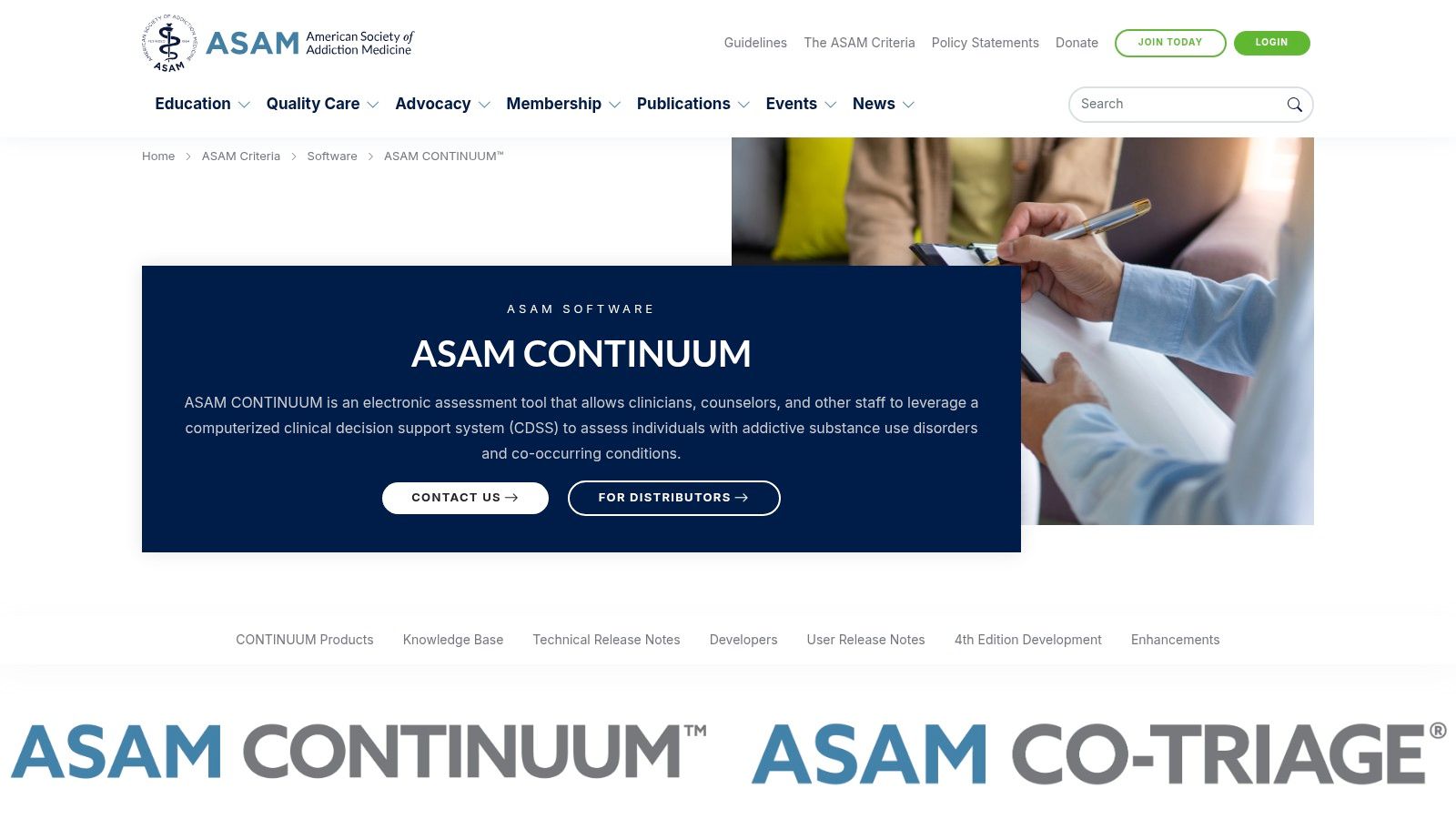
Unlike simple screening questionnaires, ASAM CONTINUUM provides a full-continuum assessment that generates a clear, evidence-based level-of-care recommendation, streamlining utilization review and placement. A key differentiator is its integration capability; it uses SMART on FHIR technology to connect with Electronic Health Record (EHR) systems, embedding these critical substance abuse assessment tools directly into clinical workflows. The platform also includes CO-Triage, a companion tool for rapid, provisional level-of-care decisions in settings like emergency departments, which can be completed in about 10 minutes.
Access and Implementation
Access to ASAM CONTINUUM is designed for healthcare organizations and requires an institutional commitment. It is sold as a software-as-a-service (SaaS) solution, necessitating organizational onboarding, user training, and workflow integration.
- Purchasing: The software is available via an annual subscription, with pricing typically based on the number of users. Organizations must contact FEi Systems directly for a demo and quote.
- Integration: Successful implementation requires technical setup to connect with existing EHRs and dedicated staff training to ensure clinicians are proficient with the guided assessment process.
- Support: Comprehensive implementation support, training, and ongoing technical assistance are core components of the service, ensuring the tool is used effectively to maintain fidelity to the ASAM Criteria.
This structured, system-wide approach is ideal for providers aiming to standardize patient placement and improve clinical outcomes across their entire network.
Website: https://www.asam.org/asam-criteria/asam-criteria-software/asam-continuum
3. ASAM Criteria, 4th Edition + Assessment Guides
The American Society of Addiction Medicine (ASAM) provides the foundational clinical framework used across the U.S. for addiction treatment placement. Its website is the primary source for the ASAM Criteria, a comprehensive set of guidelines for conducting a multidimensional assessment, determining the appropriate level of care, and guiding treatment planning. This resource is not a single, scored instrument but rather an entire clinical system for evaluating patient needs.
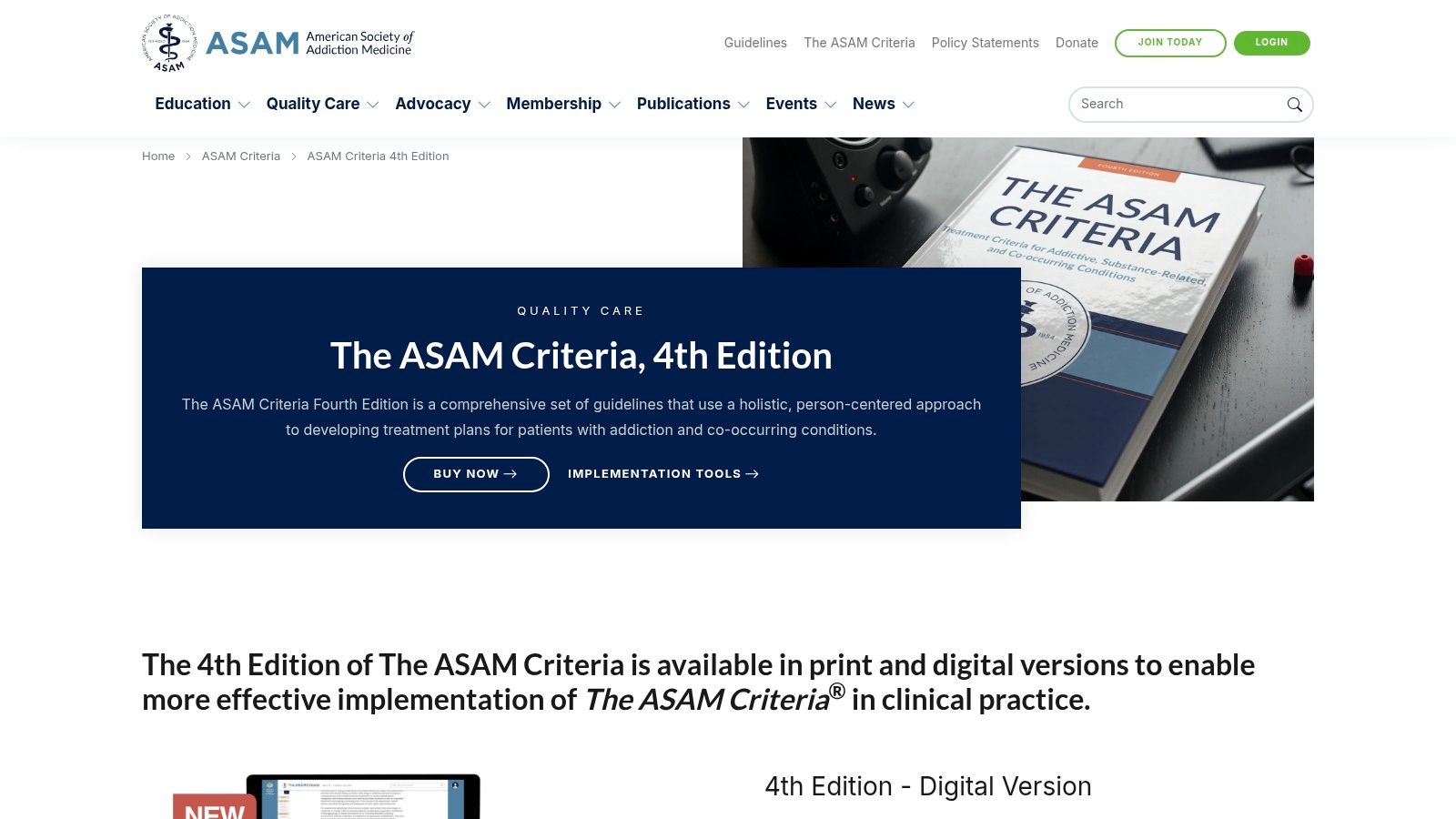
Unlike websites offering standalone screening tools, ASAM's platform provides the complete reference manual and essential implementation aids. The 4th Edition is available in both print and a dynamic digital format featuring bookmarks, notes, and interactive content. A key differentiator is the availability of free, downloadable Level of Care Assessment Guides. These guides help clinicians standardize the intake and assessment process, ensuring all six dimensions of the Criteria are covered consistently. This focus on a systemic, criteria-driven approach makes it an indispensable resource for licensed treatment facilities and clinicians aiming for standardized, evidence-based care placement.
Access and Implementation
The core ASAM Criteria reference text is a purchasable product, while key implementation tools are offered for free to promote wider adoption and fidelity to the model. Using the Criteria effectively requires training, which ASAM also offers.
- Purchasing: The print and digital editions of the ASAM Criteria, 4th Edition, can be purchased directly from the ASAM website, with print versions costing around $175 for non-members.
- Free Guides: The Level of Care Assessment Guides for adults and adolescents are available as free PDF downloads, providing structured interview questions to inform clinical judgment.
- Training: Proper application of the Criteria is complex. ASAM and its licensed partners offer extensive training to ensure clinicians can accurately assess patients across all dimensions and make appropriate level-of-care decisions.
This combination of a paid foundational text and free practical tools makes it a unique and authoritative hub among substance abuse assessment tools.
Website: https://www.asam.org/asam-criteria/asam-criteria-4th-edition
4. GAIN Coordinating Center (Chestnut Health Systems)
The GAIN Coordinating Center (GAIN CC), housed within Chestnut Health Systems, is the central hub for the Global Appraisal of Individual Needs (GAIN) family of substance abuse assessment tools. This platform is more than just a distributor; it provides a complete implementation ecosystem designed for large systems like treatment agencies, probation departments, and healthcare networks. It stands out by offering a tiered set of instruments, from very brief screeners to comprehensive clinical assessments, all integrated within a framework of training, certification, and data management.
Unlike websites offering standalone public domain tools, GAIN CC provides an evidence-based, copyrighted suite of instruments that work together. The brief GAIN-SS (Short Screener) can be used for initial triage, while the full GAIN-I provides a deep diagnostic picture used for treatment planning and outcome monitoring. A key differentiator is the emphasis on fidelity and quality improvement. The platform provides software, aggregate reporting, and site-profiling services, allowing organizations to measure client outcomes and improve service delivery, which can be critical for programs that utilize strategies like recovery coaching.
Access and Implementation
Implementing GAIN is a structured, organization-level process that requires a license and mandatory training to ensure the tools are used correctly. The website serves as the primary portal for organizations to initiate this process.
- Purchasing: Access is not available for immediate individual purchase. Organizations must contact GAIN CC for a quote, as pricing is based on the scale of implementation, software needs, and training requirements.
- Training & Certification: GAIN CC provides structured training, leading to certification for staff. This is a mandatory step to ensure the instruments are administered and interpreted reliably across an organization.
- Support: The center offers extensive implementation support, technical assistance with its software (GAIN-Abs), and data services to help agencies leverage their assessment data for program improvement.
This comprehensive, system-wide approach makes it a powerful choice for organizations committed to data-driven treatment and standardized assessment protocols.
Website: https://gaincc.org
5. NIDA NIDAMED Clinical Resources
The National Institute on Drug Abuse (NIDA) provides a vital public service through its NIDAMED initiative, a centralized hub for evidence-based clinical resources. This platform is a go-to source for healthcare professionals seeking validated, no-cost substance abuse assessment tools directly from a leading federal research institution. It offers a suite of screening instruments designed for seamless integration into general medical settings, helping to bridge the gap between primary care and specialized substance use treatment.
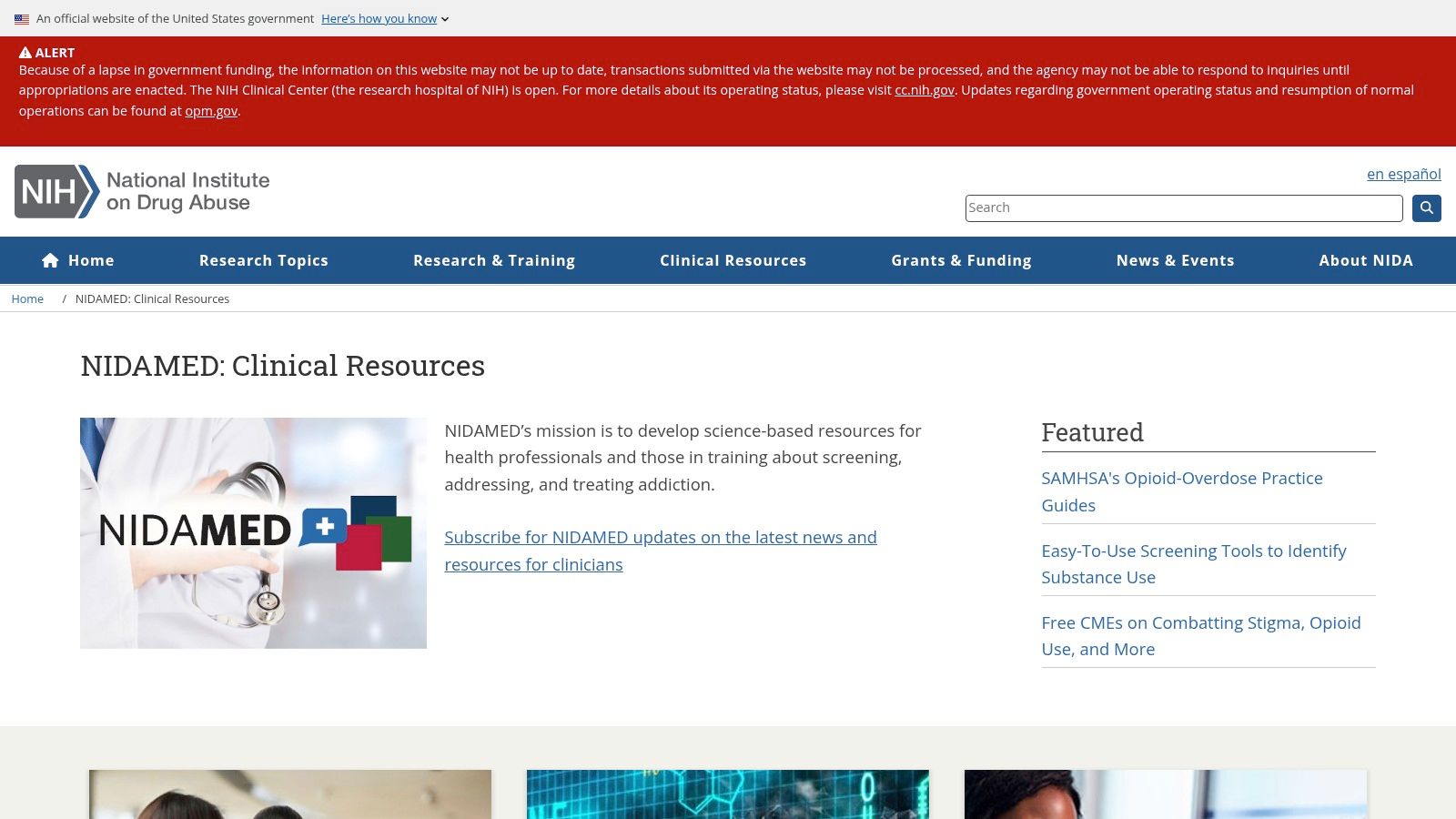
Unlike proprietary, commercial platforms, NIDAMED's primary distinction is that its resources are entirely free and in the public domain. Tools like the Tobacco, Alcohol, Prescription medication, and other Substance use (TAPS) Tool are provided with comprehensive implementation guides, scripting, and even interactive online modules for practice. This focus on practical application and training sets it apart, ensuring clinicians can not only access the tools but also use them effectively. The site eliminates financial and licensing barriers, making these essential instruments widely accessible.
Access and Implementation
All resources on the NIDAMED website are freely available to download, use, and reproduce without permission, requiring only proper citation. This open-access model is designed to encourage widespread adoption in clinical practice.
- Accessing Tools: Instruments are available as PDFs and online interactive pages directly on the website. There is no need to create an account or complete a purchase.
- Implementation Support: Each tool is accompanied by detailed instructions, FAQs, and often videos or CME/CE activities to guide proper administration and scoring.
- Cost: There is no cost associated with using any of the screening tools or resources provided by NIDAMED, a significant benefit for under-resourced clinics and public health initiatives.
This government-backed approach ensures that practitioners have access to reliable and current substance abuse assessment tools without the financial burden of commercial products.
Website: https://nida.nih.gov/nidamed
6. SAMHSA SBIRT Resource Hub and Library
The Substance Abuse and Mental Health Services Administration (SAMHSA) offers an essential resource hub dedicated to Screening, Brief Intervention, and Referral to Treatment (SBIRT). This platform is not a commercial vendor but a foundational, government-backed library of information. It provides clinicians, healthcare organizations, and public health professionals with the evidence-based frameworks, toolkits, and guidance necessary to implement SBIRT programs effectively, making it a critical repository for anyone using substance abuse assessment tools in a clinical workflow.
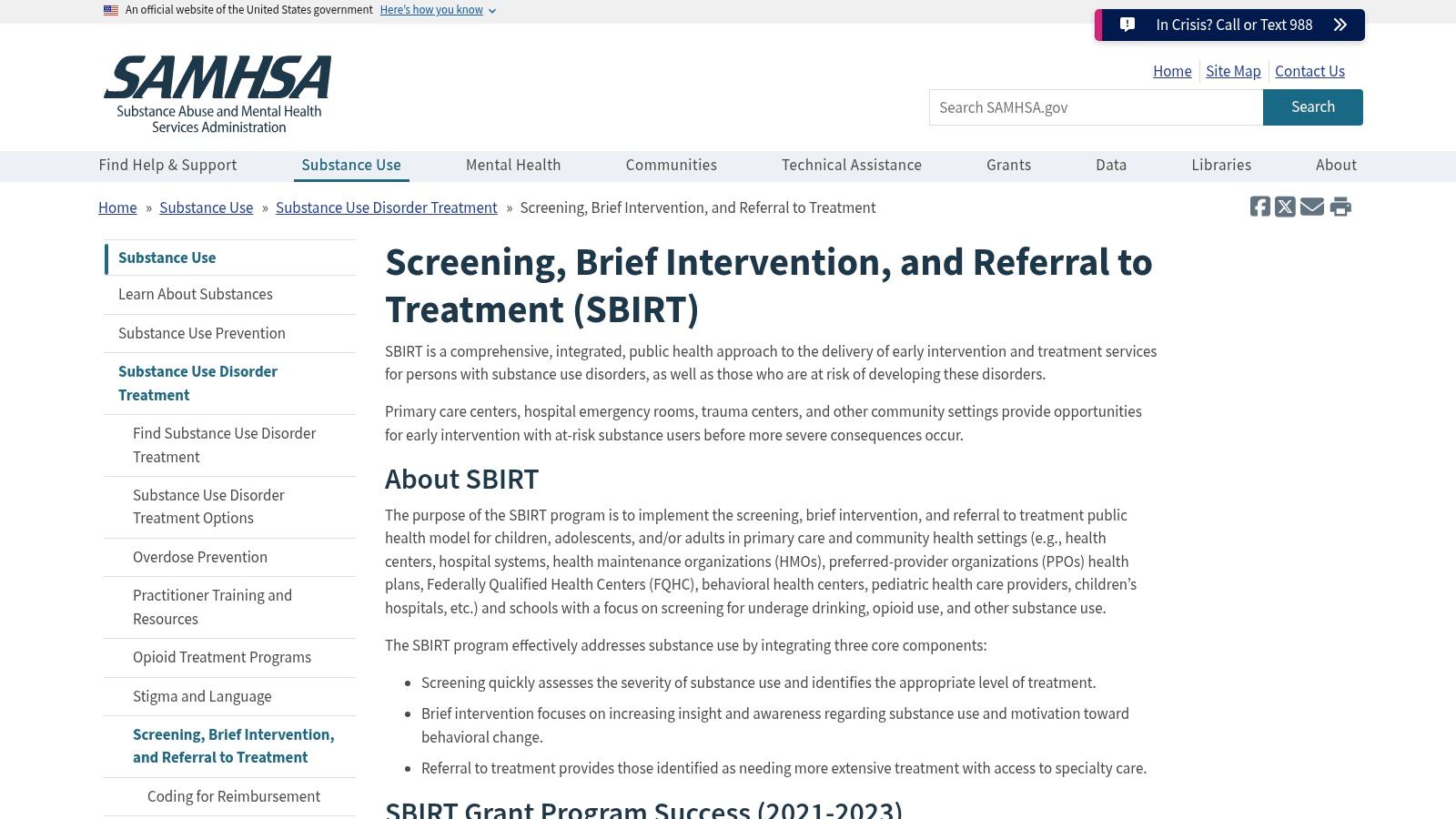
Unlike platforms that sell proprietary instruments, SAMHSA’s hub is a free, public-service resource focused on implementation. It provides direct links to validated, public-domain screening tools like the AUDIT, DAST, and CRAFFT, but its main value lies in the surrounding content. Users can find detailed toolkits for integrating SBIRT into different medical settings, from primary care to emergency departments. It also offers crucial information on billing codes, reimbursement, and training resources, including materials on motivational interviewing, which is a core component of the brief intervention phase. Explore motivational interviewing techniques for deeper insight.
Access and Implementation
All resources on the SAMHSA SBIRT hub are free and publicly accessible. The website acts as a centralized library, organizing critical information for healthcare providers looking to adopt or refine their substance use screening processes.
- Access: The website is open to everyone, with no qualifications required. Most materials, including clinical guides and toolkits, are available as downloadable PDFs.
- Content: It features a comprehensive collection of resources, including implementation guides, fact sheets, webinar recordings, and summaries from successful grantees.
- Application: The focus is on practical application, providing the "how-to" for screening protocols rather than just the tools themselves. This makes it an invaluable resource for program development and staff training.
By offering this wealth of free, authoritative guidance, SAMHSA empowers professionals to use substance abuse assessment tools as part of a standardized, effective public health strategy.
Website: https://www.samhsa.gov/sbirt
7. World Health Organization (WHO) – AUDIT and ASSIST
As the global authority on public health, the World Health Organization (WHO) provides the definitive, original source materials for two of the most widely used substance abuse assessment tools: the Alcohol Use Disorders Identification Test (AUDIT) and the Alcohol, Smoking and Substance Involvement Screening Test (ASSIST). This platform is not a commercial service but rather a public health resource, offering direct, free access to the complete manuals, guidelines, and supporting documentation for these critical instruments. Its primary role is to ensure standardized, evidence-based screening can be implemented globally.
What makes the WHO website indispensable is its focus on authenticity and accessibility. Unlike other sites that may feature modified or unverified versions, WHO offers the official, validated tools in multiple languages. It provides not just the screening questions but comprehensive manuals detailing their development, scoring instructions, and how to conduct linked brief interventions. This makes it an essential resource for researchers, public health programs, and primary care providers who need reliable, no-cost tools that have been validated for international use. The information can then be used to inform more intensive strategies, such as developing a relapse prevention plan template.
Access and Implementation
The WHO provides all materials as free downloadable PDF documents, removing any cost barriers to implementation. The focus is on dissemination for public health benefit rather than commercial sales, ensuring these foundational tools are available to any qualified professional worldwide.
- Purchasing: There is no cost. All manuals and screening questionnaires for both AUDIT and ASSIST are free to download directly from the WHO website or its partner portals.
- Format: The resources are available in a manual, paper-and-pencil format. There is no proprietary software or online scoring platform offered directly by the WHO.
- Support: The manuals themselves serve as the primary support, containing exhaustive guidance on administration, scoring, and interpretation for brief interventions in primary care settings.
This open-access model has cemented the AUDIT and ASSIST as cornerstone substance abuse assessment tools in diverse clinical and research environments.
Website: https://www.who.int
8. Hazelden Publishing
Hazelden Publishing is a prominent U.S.-based resource for evidence-based curricula and professional materials, particularly known for its focus on adolescent substance use. Rather than offering a single assessment instrument, the platform provides comprehensive, structured programs like Teen Intervene, which integrates screening, brief intervention, and referral to treatment (SBIRT). This makes it a go-to source for schools, clinics, and youth organizations looking for a complete, ready-to-implement intervention package rather than just a standalone screening form.
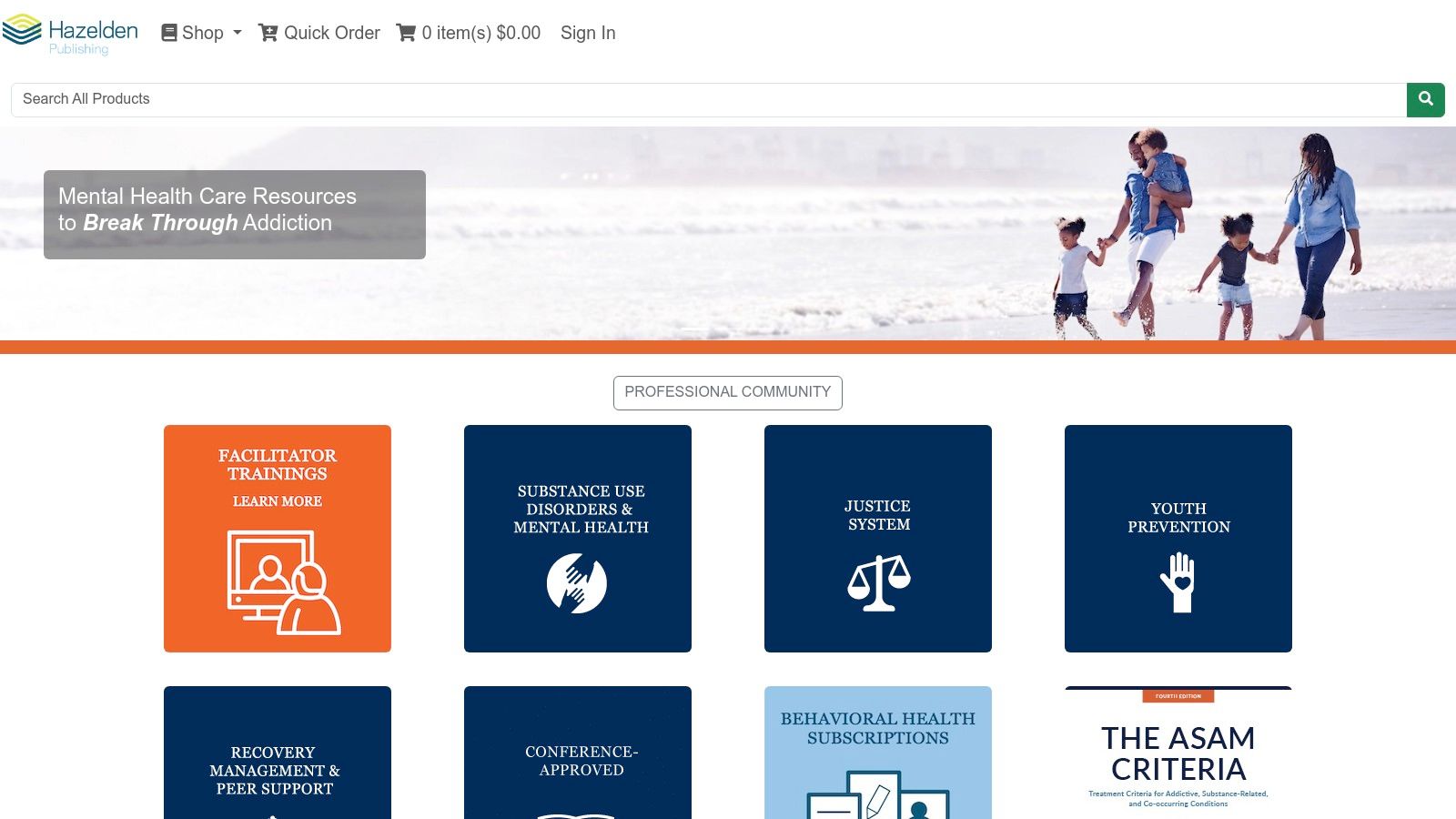
What sets Hazelden Publishing apart is its turnkey approach. Their products are not just substance abuse assessment tools; they are complete facilitator kits that often include reproducible materials, manuals, and video content. This model is designed to accelerate adoption and ensure fidelity to evidence-based practices. While many sources provide public domain screeners, Hazelden offers a more robust, albeit higher-cost, solution that includes the "how-to" of intervention. Their extensive catalog also covers co-occurring mental health disorders, providing a holistic view of youth and adult care.
Access and Implementation
The resources on Hazelden Publishing's website are available for direct purchase, targeting professionals and organizations rather than the general public. The platform is organized like a professional bookstore, with clear categories for different needs.
- Purchasing: Products like the Teen Intervene program can be purchased as complete kits, with prices for such comprehensive packages typically running several hundred dollars.
- Training: A significant advantage is the availability of CE-accredited training for their programs. This ensures practitioners are not just buying a product but are also learning to implement it effectively.
- Support: As an established publisher, Hazelden offers reliable customer support and U.S.-based fulfillment, simplifying the procurement process for institutions.
This curriculum-focused model is ideal for settings that require a structured, evidence-based program to guide their screening and brief intervention efforts from start to finish.
Website: https://www.hazelden.org/store
9. CRAFFT Official Site (Boston Children’s Hospital)
The official CRAFFT website, hosted by Boston Children’s Hospital, is the definitive source for the CRAFFT 2.1 and 2.1+N screening tools, which are considered the gold standard for adolescent substance use assessment. This platform is not a software provider but rather a centralized hub for accessing the official tool, obtaining physical copies, and securing permissions for electronic integration. It ensures that clinicians, researchers, and developers are using the most current, validated version of one of the most essential substance abuse assessment tools for young people.
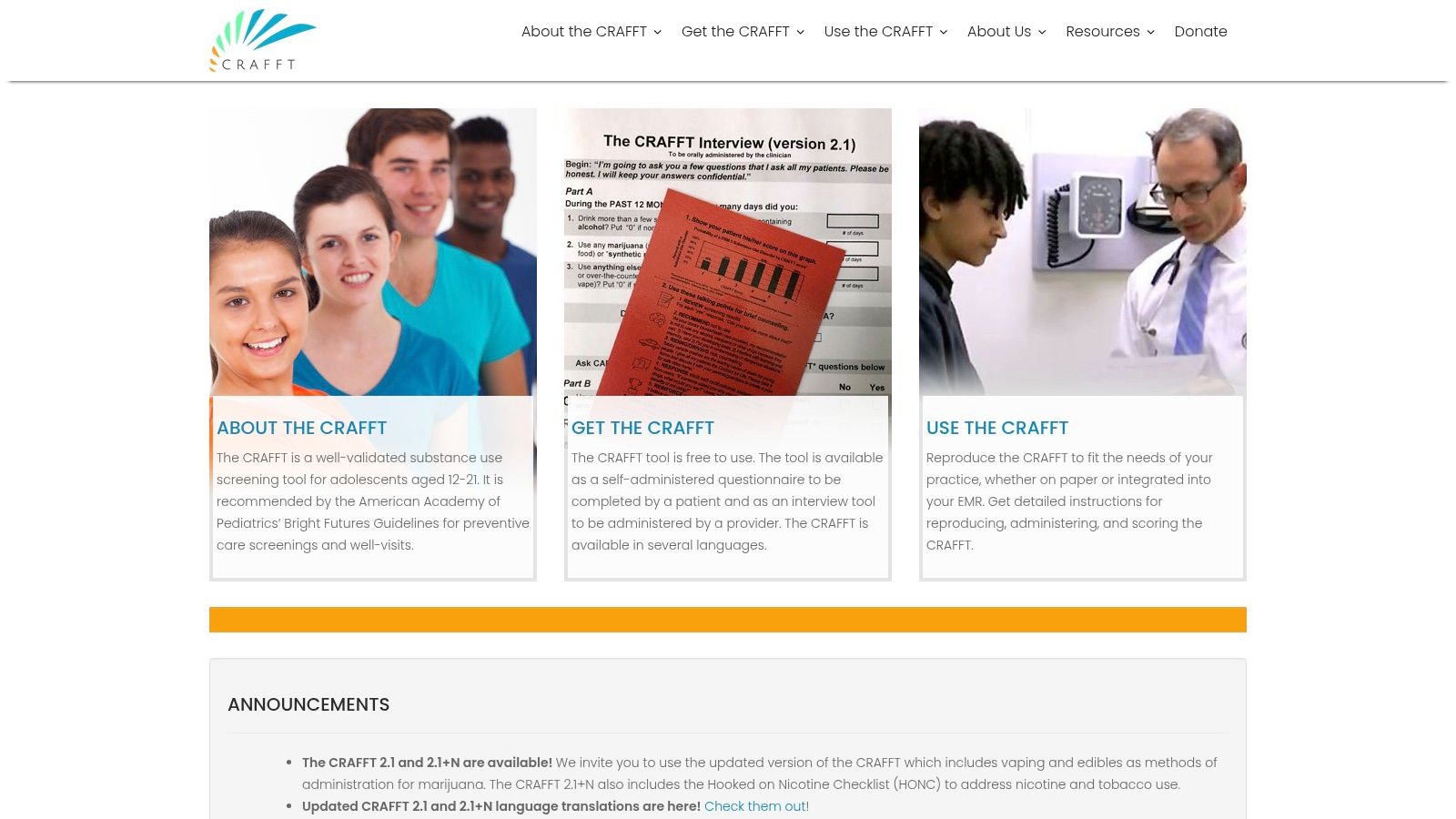
Unlike repositories of public domain tools, this site provides direct access to the creators' resources, including the updated version that screens for nicotine use. Its primary function is distributing low-cost, high-quality clinician pocket cards and managing the formal permission process for anyone wishing to reproduce the CRAFFT in software or print. This gatekeeping function is crucial for maintaining the tool's integrity and ensuring its standardized application across different platforms and healthcare systems. The site offers clear, downloadable PDFs of the tool in multiple languages for immediate clinical use.
Access and Implementation
The CRAFFT screen itself is free to use in clinical practice, but the website provides specific channels for obtaining physical materials or permissions for wider distribution. The process is straightforward, emphasizing proper use and attribution over commercialization.
- Purchasing: Clinicians can order durable, laminated pocket cards directly from the site. A pack of 10 cards costs $10 plus shipping, requiring a mailed check for payment.
- Permissions: For integration into electronic health records (EHRs) or other software, users must submit a formal request through the website. Permission is typically granted free of charge for non-commercial use.
- Support: The site offers email-based support for questions regarding orders, translations, or the permission process, ensuring users receive authoritative guidance.
This centralized model ensures that all adaptations and reproductions of the CRAFFT meet the developers' standards for clinical validity.
Website: https://crafft.org
10. PHMC (Public Health Management Corporation) – Addiction Severity Index (ASI)
The Public Health Management Corporation (PHMC) serves as the official repository for the Addiction Severity Index (ASI), one of the most widely used and respected substance abuse assessment tools. This website is an essential resource for researchers and clinicians, providing no-cost access to the instrument's manuals, forms, and implementation guidelines. It stands out by making a comprehensive, evidence-based tool freely available to the public health community, removing cost barriers to high-quality assessment.
Unlike platforms that offer proprietary screeners, PHMC focuses on the dissemination and proper use of the ASI, a semi-structured interview designed to assess problem severity across seven functional areas, not just substance use. The website provides direct downloads for the core instrument (ASI-5), its shorter version (ASI-Lite), and Spanish language editions. A key differentiator is the direct support offered; PHMC provides an email and phone helpdesk for individuals and organizations seeking guidance on implementing the ASI, ensuring the tool is used with fidelity.
Access and Implementation
All materials related to the ASI are provided free of charge, reflecting the tool's public domain status and PHMC's commitment to public health. However, effective use requires specific training due to its interview-based format.
- Downloading: The ASI-5 and ASI-Lite manuals, interview forms, and composite score calculation guides are available as direct PDF downloads from the PHMC website.
- Training: While the forms are free, the ASI is not a self-administered questionnaire. It requires a trained interviewer to administer correctly, and the website's resources are designed to support that training.
- Support: PHMC offers direct implementation support. Users can contact their team for assistance with integrating the ASI into clinical workflows or research protocols, a unique service for a free tool.
This open-access approach, backed by expert support, makes the ASI a foundational tool for programs needing a thorough, multidimensional client assessment.
Website: https://research.phmc.org/products/addiction-severity-index
11. MDCalc
MDCalc is a widely-used, free medical reference platform offering a massive library of clinical calculators and decision support tools created "by physicians, for physicians." While its scope is broad, it is an invaluable resource for quickly accessing evidence-based substance abuse assessment tools directly within a clinical workflow. The platform excels at providing rapid, on-the-spot screening capabilities for front-line healthcare providers who need to integrate substance use assessments into routine patient care.
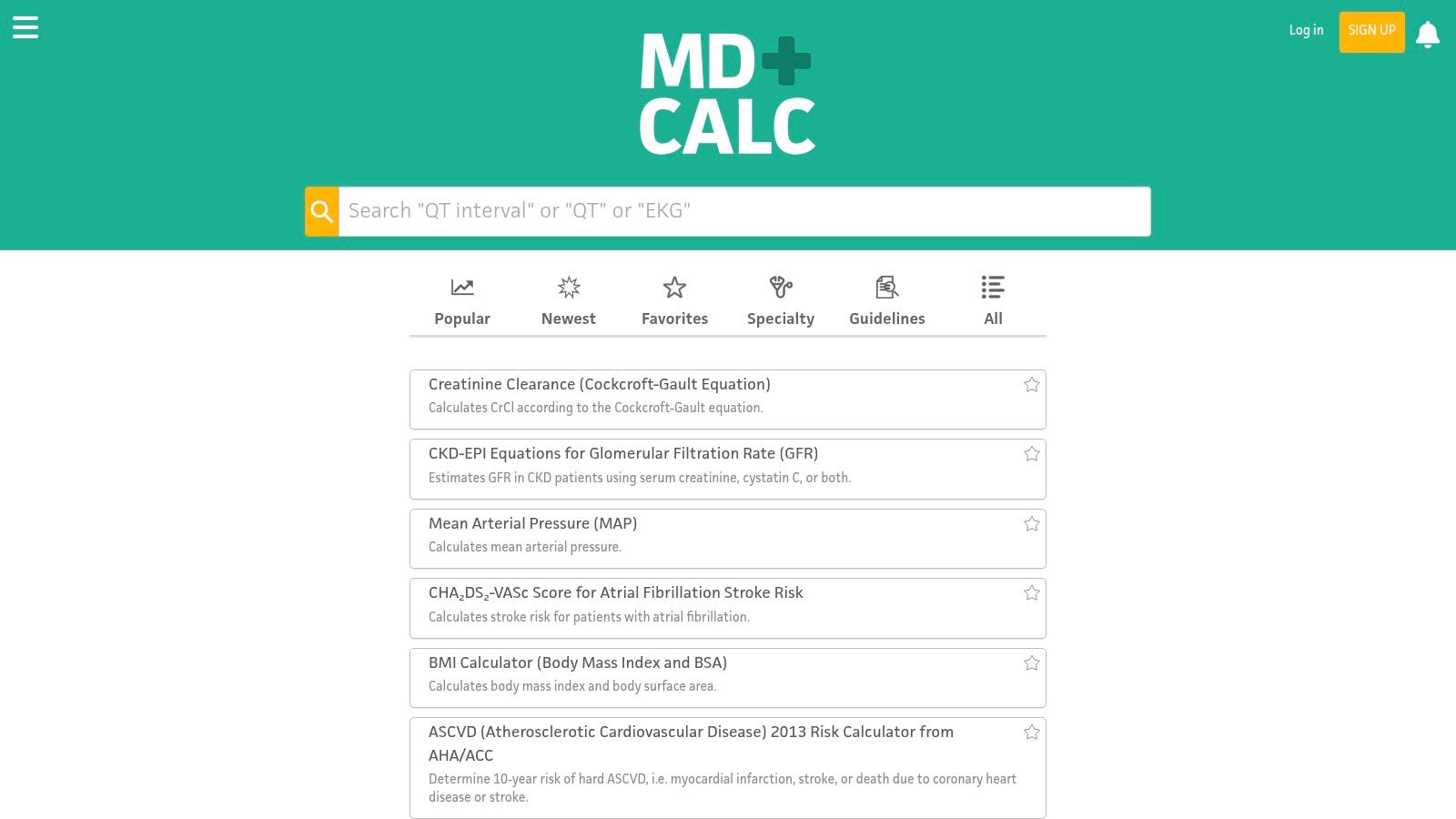
Unlike dedicated substance abuse assessment platforms, MDCalc's key differentiator is its integration into the general medical practice. It houses essential tools like the AUDIT-C for alcohol use and the CAGE-AID Questionnaire alongside hundreds of other calculators for different medical specialties. Each tool is presented with a clean interface and is accompanied by detailed notes on evidence, creator insights, and interpretation pearls. This context is crucial for professionals who may not specialize in addiction but frequently encounter it. Its robust mobile apps, with offline functionality, ensure these tools are always accessible.
Access and Implementation
MDCalc is entirely free to use, removing any financial barrier to accessing validated screening instruments. Its design prioritizes speed and ease of use, making it an ideal choice for busy clinical environments like emergency departments or primary care offices.
- Access: The website and mobile apps (iOS/Android) are free, with optional registration for features like saving favorite calculators.
- Integration: For larger institutions, MDCalc offers EHR integration via SMART on FHIR, allowing seamless use of calculators directly within a patient's electronic health record.
- Content: The platform contains over 900 calculators, and users can quickly search for specific substance abuse assessment tools. Content is physician-authored and regularly updated with the latest evidence.
The platform's "no-frills" approach to delivering these tools makes it a highly practical and efficient resource for any clinician.
Website: https://www.mdcalc.com
12. Boston Medical Center – SBIRT Training/Resources
Boston Medical Center (BMC) provides a valuable hub for programmatic training and resources centered on Screening, Brief Intervention, and Referral to Treatment (SBIRT). Rather than selling a specific tool, BMC leverages its extensive experience, particularly in emergency department settings, to offer a comprehensive implementation ecosystem. This makes it a crucial resource for healthcare systems and providers looking to integrate evidence-based substance use screening into their standard workflow.
Unlike platforms that focus on a single assessment instrument, BMC’s approach is holistic, emphasizing the entire SBIRT process. The B-SMART program, for example, is a flagship training initiative designed to equip providers with the skills to address risky alcohol use. A key differentiator is the wealth of free, practical materials available, including communication cards, infographics, and organizational toolkits. These resources are not just theoretical; they are field-tested tools designed to support providers at the point of care, making BMC an indispensable partner for organizational adoption of substance abuse assessment tools.
Access and Implementation
The resources are primarily geared toward training and system-level implementation rather than direct purchase of assessment forms. Most materials are freely accessible, though formal training programs may have associated costs or specific enrollment periods.
- Free Resources: The website offers numerous downloadable toolkits, guides, and communication aids designed to support SBIRT practices at no cost.
- Training: BMC provides structured training programs like B-SMART, which often include valuable continuing education credits (CME/CNE). Availability and costs for these programs can vary.
- Focus: The emphasis is on practical application, including motivational interviewing techniques and workflow integration, which is ideal for organizations seeking to build internal capacity.
This focus on education and real-world implementation makes it a unique and valuable resource for healthcare providers aiming to improve patient outcomes.
Website: https://www.bmc.org/addiction/training-education/b-smart
Substance Abuse Assessment Tools Comparison
| Product | Core Features/Characteristics | User Experience / Quality ★ | Value Proposition 💰 | Target Audience 👥 | Unique Selling Points ✨ |
|---|---|---|---|---|---|
| The SASSI Institute | Substance use screening; web & paper kits | ★★★★ | Licensed tool; instant online scoring | Clinicians, treatment centers | Multi-mode delivery; adolescent & adult versions 🏆 |
| ASAM CONTINUUM | Standardized multidimensional assessment SaaS | ★★★★★ | Annual subscription; org onboarding | Substance use professionals | EHR integration; rapid placement tool ✨ |
| ASAM Criteria, 4th Ed + Guides | Reference & assessment guides for treatment planning | ★★★★ | Purchase + free guides | Clinicians, treatment planners | Widely adopted clinical framework 🏆 |
| GAIN Coordinating Center | Screening & assessments with software & certification | ★★★★ | Quote-based pricing | Programs, justice systems | End-to-end screening & outcomes solution |
| NIDA NIDAMED Clinical Resources | Free validated adult & youth screening tools | ★★★★ | Free access with citation | Clinicians, researchers, public | Federal endorsement; free & updated |
| SAMHSA SBIRT Resource Hub | Federal guidance, toolkits, billing info | ★★★★ | Free downloadable resources | Health providers, organizations | Comprehensive federal SBIRT support |
| WHO – AUDIT and ASSIST | Manuals for global screening & brief interventions | ★★★★ | Free downloadable PDFs | Global healthcare providers | Multilingual, authoritative manuals 🏆 |
| Hazelden Publishing | Curricula with CE training for youth substance use | ★★★ | Higher cost | Schools, clinics, educators | Turnkey kits with videos & trainings |
| CRAFFT Official Site | Adolescent screening tools & clinician pocket cards | ★★★★ | Low-cost physical aids | Pediatric clinicians, schools | Standardized adolescent screens & permissions |
| PHMC Addiction Severity Index (ASI) | Interview-based multidomain addiction assessment | ★★★★ | Free manuals & support | Researchers, treatment programs | Long-standing validated assessment tool |
| MDCalc | Clinical calculators incl. substance use tools | ★★★★ | Free access | Clinicians, physicians | Mobile apps; CME; EHR integration |
| Boston Medical Center SBIRT Training | Provider training & free implementation resources | ★★★★ | Free resources with CME | Health systems, ED staff | Real-world ED experience; organizational support |
Final Thoughts
Navigating the landscape of substance abuse assessment tools can feel overwhelming, but understanding the distinct purpose and application of each instrument is the first crucial step toward effective intervention and personalized care. Throughout this guide, we have explored a comprehensive suite of resources, from broad screening questionnaires like the CAGE and AUDIT to in-depth, multi-dimensional evaluations such as the Addiction Severity Index (ASI) and the tools aligned with ASAM Criteria. The ultimate goal remains the same: to gain a clear, accurate, and compassionate understanding of an individual's relationship with substances to guide them toward the most appropriate level of care and support.
The right tool is not a one-size-fits-all solution; it is a carefully selected key designed to unlock a specific door. A primary care physician might use the quick and efficient SBIRT model with the AUDIT to initiate a conversation, while a specialized addiction treatment center will rely on the comprehensive framework of the ASAM Criteria to develop a multifaceted treatment plan. Similarly, tools like the CRAFFT are specifically validated for adolescents, acknowledging that the factors influencing youth substance use are unique. This diversity in substance abuse assessment tools is their greatest strength, allowing for a tailored approach that respects the individual's unique circumstances.
Armed with this information, the next step is to apply it thoughtfully. For healthcare professionals, this means reviewing your current assessment protocols. Are you using the most appropriate and up-to-date substance abuse assessment tools for your patient population? For individuals and families, understanding these tools demystifies the first steps of seeking help. Knowing what to expect during an assessment can reduce anxiety and empower you to be an active participant in the treatment planning process. Ultimately, these assessments are not about labeling or judging; they are about illuminating the path forward to recovery and well-being.
Finding the right treatment program after an assessment is the critical next step. At StartDrugRehab.com, we connect individuals and families with vetted and accredited treatment centers that align with the specific needs identified during the assessment process. Let us help you translate your assessment results into a concrete, actionable recovery plan by visiting StartDrugRehab.com today.
Frequently Asked Questions (FAQ)
1. What is the difference between a substance abuse screening and an assessment?
A screening is a brief, preliminary step used to detect the potential for a substance use problem. Tools like the AUDIT or CAGE-AID are common screeners. If a screening is positive, a comprehensive assessment is then conducted. An assessment, like the ASI or one guided by ASAM Criteria, is a much more in-depth evaluation that diagnoses a substance use disorder, determines its severity, and informs a treatment plan.
2. Who can administer these substance abuse assessment tools?
This varies by the tool. Simple screening tools are often designed for use by a wide range of professionals, including primary care physicians, nurses, social workers, and school counselors. Comprehensive assessment tools like the SASSI or ASI require administration by trained and often licensed clinicians, such as psychologists, licensed professional counselors (LPCs), or certified addiction specialists, to ensure accurate interpretation.
3. Are substance abuse assessments confidential?
Yes. When conducted in a clinical setting by a healthcare provider, the results of a substance abuse assessment are protected health information (PHI) under laws like HIPAA in the United States. Information can only be shared with the patient's explicit consent, except in specific situations where there is a clear danger to the individual or others.
4. Can I take a substance abuse assessment online by myself?
While some websites offer self-assessment questionnaires, these are not a substitute for a professional evaluation. They can be a helpful first step to gain personal insight, but they cannot provide a formal diagnosis. A true assessment involves a conversation with a trained professional who can interpret the results in the context of your unique life circumstances to recommend the right level of care.